Content

New Atlanticist

Oct 3, 2018

So much for US-Iran amity

By Ashish Kumar Sen

“Theater is part of diplomacy... In this case, we have a largely symbolic US action regarding a mainly obsolete treaty in response to another largely symbolic Iranian action regarding a generally ineffectual court,” said William F. Wechsler, interim director of the Atlantic Council’s Rafik Hariri Center for the Middle East.“

Iran Politics & Diplomacy

MENASource

Oct 3, 2018

Yemen’s humanitarian crisis persists, despite humanitarian funding

By Afrah Nasser

When over $2 billion was pledged for the 2018 Yemen Humanitarian Response Plan (YHRP) earlier this year, it was considered not only a success but also the best funded response plan worldwide according to anonymous aid workers who spoke to the author during the UN General Assembly. So far, 65% of the pledged funds have been delivered. The delivery of the remaining funding is expected throughout this year.

Yemen

New Atlanticist

Oct 3, 2018

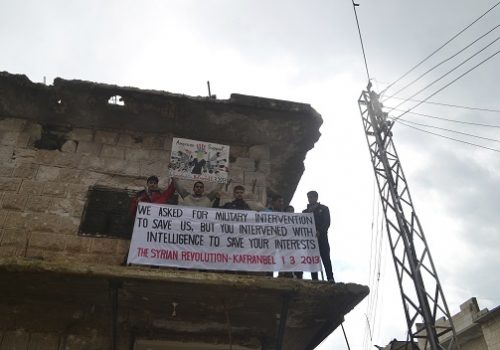
South Sudan’s first vice president optimistic about peace, but no one is buying It

By Ashish Kumar Sen

The almost 400,000 people killed over the past five years “is a higher mortality rate vis-à-vis population than the civil war in Syria,” said J. Peter Pham, director of the Atlantic Council’s Africa Center.

Conflict Crisis Management

EnergySource

Oct 3, 2018

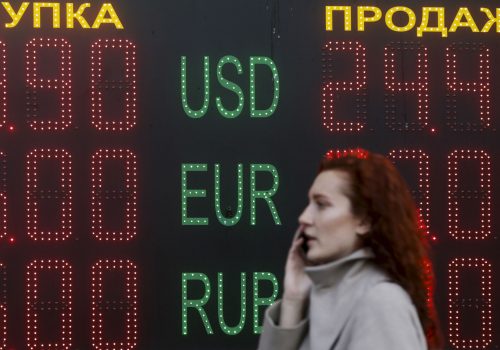
What role can Energy Bridge play in Ukraine’s energy resilience?

By Melissa Hersh and Edward Kee

The following is the first installment in a three-part series on the proposed Energy Bridge project, an energy development and regional energy interconnection initiative for Ukraine and its neighbors. The series covers issues and opportunities related to Energy Bridge from three viewpoints: Ukraine, the European Union (EU) and other international parties (e.g., the US), and […]

Europe & Eurasia Geopolitics & Energy Security

New Atlanticist

Oct 3, 2018

Here’s how 3D printers could become a global nonproliferation nightmare

By Spandana Singh

Widespread 3D printing could enable nations that are the target of international sanctions to sidestep regulations and print restricted items. This would undermine the legitimacy and effectiveness of this vital foreign policy instrument.

Non-Traditional Threats Nuclear Nonproliferation

New Atlanticist

Oct 3, 2018

Macedonia vote is not the end of the road

By Sarah Bedenbaugh, Damon Wilson, and Graham Brookie

Voter turnout on September 30 was disappointing by some measures, but the vote and the result itself was cause for great optimism as citizens made clear their preference for a European future.

Disinformation Elections

IranSource

Oct 3, 2018

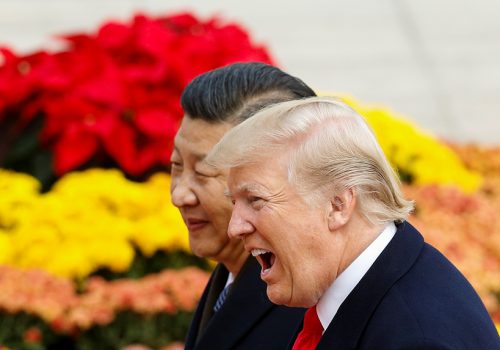
China: Iran’s Lifeline to Overcome Oil Sanctions

By Brendon Hong

If the relationship between Iran and China is not severed, US sanctions on the Tehran will never be fully effective, and the Trump administration’s dream of forcing a new deal will never come to fruition.

China Iran

New Atlanticist

Oct 2, 2018

Here’s how to fight disinformation

By David A. Wemer

In the case of the 2016 US election, Russian actors took advantage of a “massively fragmented media market” to promote fake news stories and disseminate stolen material, according to Atlantic Council Senior Fellow Laura Galante.

Disinformation English

New Atlanticist

Oct 1, 2018

A modernized NAFTA

By Ashish Kumar Sen

In negotiations that went down to the wire, Canada agreed on September 30 to join the United States and Mexico in a revised version of NAFTA. The new agreement will be referred to as the United State-Mexico-Canada Agreement (USMCA).

Economy & Business Mexico

New Atlanticist

Oct 1, 2018

Macedonia’s European dream: what next?

By David A. Wemer

“If Macedonia wants to be in NATO and the European Union, it by definition must come to an agreement with its neighbor Greece,” said Damon Wilson, executive vice president of the Atlantic Council. 

NATO Politics & Diplomacy