Our programs and centers deliver in-depth, highly relevant issue briefs and reports that break new ground, shift opinions, and set agendas on public policy, with a focus on advancing debates by integrating foundational research and analysis with concrete policy solutions.
When major global news breaks, the Atlantic Council’s experts have you covered—delivering their sharpest rapid insight and forward-looking analysis direct to your inbox.
Reports from the front lines of global policy—by the experts shaping it.
A weekly column by Atlantic Council President and CEO Frederick Kempe, Inflection Points focuses on the global challenges facing the United States and how to best address them.
UkraineAlert is a comprehensive online publication that provides regular news and analysis on developments in Ukraine’s politics, economy, civil society, and culture. UkraineAlert sources analysis and commentary from a wide-array of thought-leaders, politicians, experts, and activists from Ukraine and the global community.
MENASource offers the latest news from across the Middle East, combined with commentary by contributors, interviews with emerging players, multi-media content, and independent analysis from fellows and staff.
Econographics provides an in-depth look at trends in the global economy utilizing state-of-the-art data visualization tools.
Translate this site
Translate the page or open accessibility tools from the same menu.
Choose a language for this page.
No matching languages found.
Current language: English
Adjust text size, contrast, link visibility, and motion from the same menu.
Accessibility tools are set to default.
SouthAsiaSource is the Atlantic Council’s premier publication for South Asian affairs, covering areas such as economics and trade, governance, education, climate and environmental issues, politics and diplomacy, migration, security, and other areas.
SouthAsiaSource Mar 31, 2023
By Shuja Nawaz and other experts
Terrorism is reemerging in Pakistan. To understand how it should respond to this heightened threat, Distinguished Fellow Shuja Nawaz moderated a series of conversations with experts about fighting terrorism and militancy.
SouthAsiaSource Nov 16, 2022
By South Asia Center experts
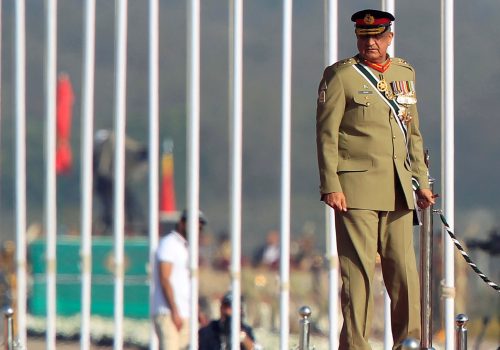
With Chief of Army Staff General Qamar Javed Bajwa set to retire on November 29, 2022, the appointment of a new army chief prompts a new set of challenges. South Asia Center experts provide their analyses of the situation.
SouthAsiaSource Nov 7, 2022
By Ali Hasanain
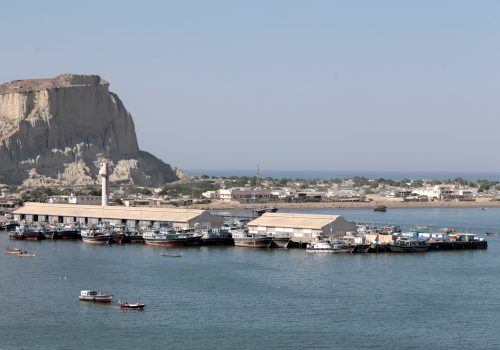
As the China-Pakistan Economic Corridor enters its second phase, each side needs to review how they can improve the program’s effectiveness for mutual benefit.
SouthAsiaSource
By Rudabeh Shahid and Kaveri Sarkar
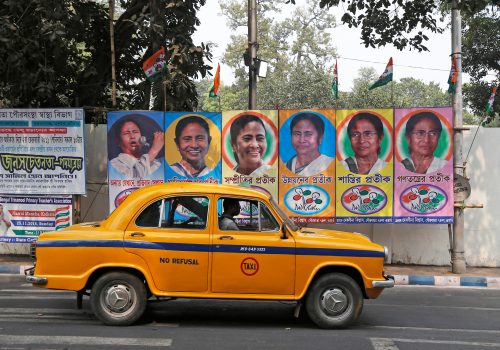
Away from India's awful COVID-19 scenes playing out are elections Washington should not ignore. The ongoing state elections in India’s east, specifically the states of West Bengal and Assam, are characterized by dynamics central to today’s India and their results will have long-lasting implications for national politics. The fanning of toxic identity politics, compromising of democratic institutions, the worrisome rise of COVID-19 cases, and the effect on foreign relations are aspects of these elections that deserve Washington’s serious attention.
Event Recap
By Damola Aluko
It is a good start that President Biden’s Leaders Summit on Climate invited three South Asian nations and five African countries to present their perspectives to the world; however, Biden’s efforts were not adequate. Western world leaders need to pay special attention to what South Asian and African experts have to say. This moment in history provides a critical opportunity for enlightened policymaking that could enable African and South Asian nations to be a force for clean, green, and sustainable economic growth and industrialization; a failure to seize this moment by excluding their voices will undermine global climate action and lead to a ruinous future for over half the world’s population.
By Ejaz Ahmad Malikzada
When the United States and its allies entered Afghanistan following the 9/11 attacks, it did not merely sign up to bring human rights to the Afghan people or to fight a local insurgent group. Indeed, the intervention was driven just as much by the US-led global war on terror, a fight in which we, the people of Afghanistan, have bled and sacrificed thousands of military and civilian lives alongside our US and NATO partners.
By Shuja Nawaz
20 years after invading Afghanistan to punish the Taliban for harboring Osama bin Laden, President Joe Biden is saying goodbye to Afghanistan. Regardless of the main reason why President Biden is extracting the US military and hence NATO from Afghanistan, the people of Afghanistan may end up being sacrificed and left to the depredations of the Taliban and Islamic State.
By Muska Dastageer
The United States must realize that securing a peace as just as the Afghan war has been unjust will require time. Degrading the conceptual integrity of peace has meant a dilution of the moral force behind the peace process.
By Harris A. Samad
Returning the United States to a nuclear agreement with Iran represents one of the Biden-Harris administration’s most standout foreign policies. However, to succeed in the short-, medium-, and long-term, this goal will require a revamped approach to engaging Tehran that pointedly includes Pakistan.
By Tamim Asey
The United States, as it pushes for a political settlement and withdraws its troops from Afghanistan, needs to leave a credible and professional Afghan intelligence partner behind with whom it must partner for counter-terrorism (CT) missions post-withdrawal.
By *Popal
In recent months, Afghan journalists and media workers have been subjected to unprecedented levels of attacks. In just four months, twelve journalists have been killed and many more have been targeted. The chilling effect of this violence is the creation of a kind of fear that we have never felt before.
By Shashank Jejurikar
The brief period of clean air during India's lockdown offered a glimpse of what can be gained by building a cleaner, more sustainable Indian economy. To explore how that can materialize, this piece will first examine the opposing ecological and economic impacts of India’s lockdown, and then pose policy recommendations that balance sustainability and economic growth.
By Makhfi Azizi
Over the last two years, many experts in Afghanistan and the international community have increasingly viewed the 2020 US-Taliban peace deal to be largely skewed to advantage the Taliban. The Biden administration’s step to review the agreement has thus been welcomed by many. In this blog, five Afghans who have lived under the increased threats and violence of the past year share their perspectives.
If refreshing the page doesn't resolve the issue you could try clearing the sites browser cache.