Recent analysis

Programs

The Global Energy Center develops and promotes pragmatic and nonpartisan policy solutions designed to advance global energy security, enhance economic opportunity, and accelerate pathways to net-zero emissions.

Events

Transcript

Jan 11, 2020

Energy security, energy access, and clean air: Meeting the challenges

By Atlantic Council

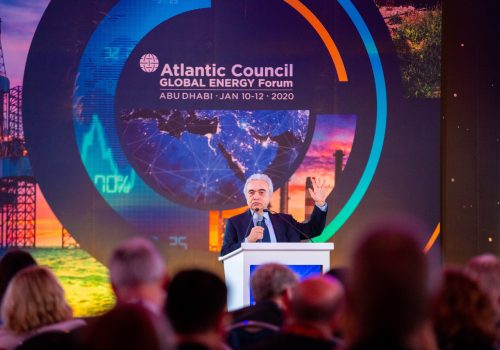
Atlantic Council 2020 Global Energy Forum Setting the Scene: Energy Security, Energy Access, and Clean Air: Meeting the Challenges Speaker: Fatih Birol, Executive Director, International Energy Agency Location:  Abu Dhabi, United Arab Emirates Time:  10:15 a.m. Local Date:  Saturday, January 11, 2020 FATIH BIROL:  Excellencies, dear colleagues, a very good morning to all of you.  […]

Energy & Environment Energy Markets & Governance

Report

Jan 9, 2020

International grid integration: Efficiencies, vulnerabilities, and strategic implications in Asia

By Phillip Cornell

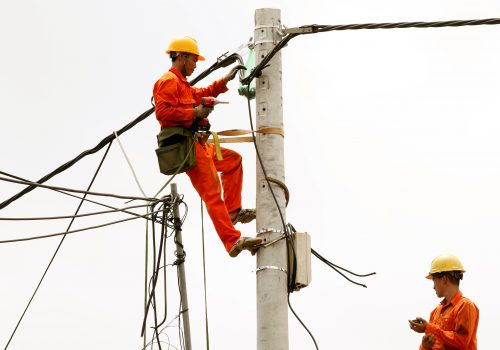
In order to meet growing global demand for electricity, and in response to an increase in renewables, power networks and markets are evolving and becoming increasingly interconnected. South and Southeast Asia have already had some success with interconnections, and China’s vision and Belt and Road Initiative loom large in the region, but there are geopolitical concerns to contend with. Could a US model manage these concerns? What is the state of regional power markets in Asia and investment in regional grid infrastructure, and what responses are we already seeing to emerging trends?

Climate Change & Climate Action Energy Markets & Governance

Report

Jan 9, 2020

Energy sector diversification: Meeting demographic challenges in the MENA region

By Bina Hussein

The Middle East and North Africa (MENA) region is projected to experience significant demographic growth by 2050, growth which will have to be met with commensurate economic expansion and job opportunities, or the region will risk an increase in political instability. To meet this challenge, countries in the region must diversify their economies beyond the energy sector and expand their energy sector beyond hydrocarbons. What are the key trends that MENA countries will have to contend with, what is already being done, and what further steps should be taken?

Energy Markets & Governance Energy Transitions

Content

Inflection Points

Apr 25, 2020

Here’s how the U.S. could lead energy rethink post-COVID-19

By Frederick Kempe

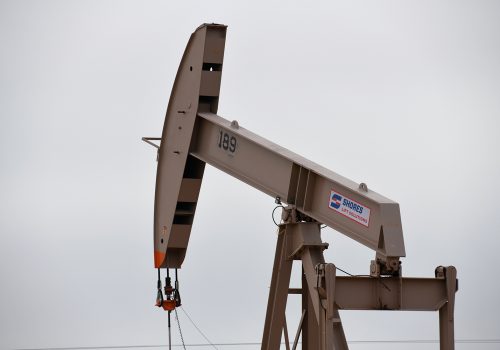
U.S. role as the world’s leading oil and gas producer doesn’t feel as empowering as it recently did, with oil prices heading into negative territory for the first time ever this week. Yet there is an opportunity in the oil industry’s unprecedented crisis – and in the further months of market volatility that will come with it. This period presents a chance for the United States to forge a better and more sustainable path to global energy leadership than can be found even within the vast riches of U.S. shale.

Energy Transitions Renewables & Advanced Energy

EnergySource

Apr 14, 2020

Can hydrogen reconcile energy demand with climate concerns?

By Mitali Mirle

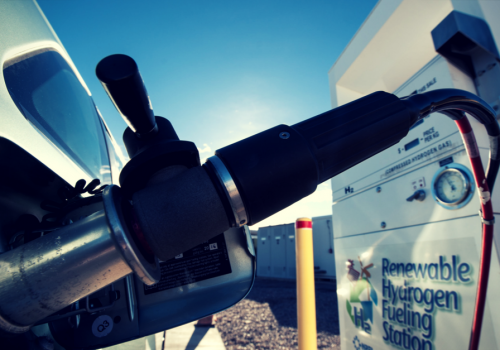
Hydrogen technology represents a promising, multifaceted pathway that could offer many industries a new strategy for navigating the transition to net zero emissions. However, the current cost of deployment seems to be the biggest obstacle for widespread adoption.

Climate Change & Climate Action Energy Transitions

In the News

Apr 8, 2020

Bell quoted in International Business Times on coronavirus’s energy impact

By Atlantic Council

Coronavirus Energy & Environment

New Atlanticist

Mar 26, 2020

Dual demand and supply shocks have created historic oil crisis, IEA executive director says

By David A. Wemer

Dramatically lower oil demand due to the coronavirus pandemic and an emerging supply glut caused by the failure of major oil producers to cut production has slammed the global oil market with a crisis “unique in history,” according to Dr. Fatih Birol.

Climate Change & Climate Action Energy Markets & Governance

Report

Mar 6, 2020

A new energy strategy for the Western Hemisphere

By David L. Goldwyn

The Western Hemisphere is full of potential and we have the opportunity to galvanize it into an energy powerhouse. This new US energy strategy for the Western Hemisphere will help raise the global competitiveness of the hemisphere, advance its shared prosperity, and improve national and energy security as a result.

Americas Climate Change & Climate Action

EnergySource

Feb 25, 2020

Global challenges require global solutions

By Ryan Edwards

What will it take to drive more sustainable investing to keep our planet temperature below a 1.5 degree Celsius increase?

Climate Change & Climate Action Energy Transitions

New Atlanticist

Feb 20, 2020

Transatlantic cooperation key to Europe’s Green Deal, EU official says

By David A. Wemer

As the European Union aims to become carbon neutral by the year 2050, cooperation with the United States on energy technology, financing, and imports will be critical to helping transition the European energy sector towards a low-carbon future, Director General for Energy at the European Commission Ditte Juul Jørgensen said on February 20.

Climate Change & Climate Action Energy Markets & Governance

EnergySource

Feb 10, 2020

The climate and equity dilemma: Bending the coal curve in South and Southeast Asia

By Robert F. Ichord, Jr.

South and Southeast Asia are leading the world in terms of developing countries’ energy growth—how can need be met while avoiding new coal investments?

Bangladesh Energy Transitions
Speaker at podium

Timely Commentary & Analysis

Feb 7, 2020

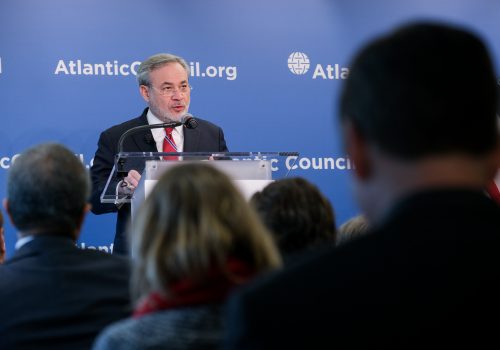
“US energy priorities abroad,” a conversation with US Secretary of Energy Dan Brouillette

By Global Energy Center

The Hon. Dan Brouillette, secretary of the US Department of Energy, discusses his priorities for international cooperation to provide safe, secure, and affordable energy sources in Latin America and Europe.

Climate Change & Climate Action Energy Markets & Governance

New Atlanticist

Feb 7, 2020

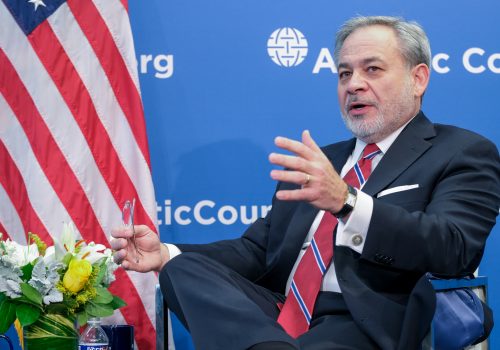
US will use energy revolution to transform its foreign policy, energy secretary says

By David A. Wemer

The United States’ transformation into a net exporter of energy “has revolutionized our foreign policy, and it frees us to pursue options that we have not had at least in my lifetime,” US Secretary of Energy Dan Brouillette said on February 7. Speaking at the Atlantic Council, Brouillette argued that “with US energy production now at record levels, the world is no longer subject to the will of countries who seek to do us harm,” such as Russia and Iran, and allows the United States to use energy cooperation and investment as a key tool to advance its foreign policy aims.

Brazil Energy Markets & Governance

Experts