Security & Defense

One of the most fundamental responsibilities of governments is to protect their citizens from all threats, internal or foreign. Policy makers must prepare for potential conventional warfare, terrorism and other asymmetrical attacks, and the repercussions of natural disasters and climate change to ensure the safety of their citizens. The motivation to protect against future threats must also be partnered with regular dialogue and partnership with allies and neighbors to prevent the triggering of violent conflict or destabilizing arms races.

Content

Dispatches

Mar 25, 2026

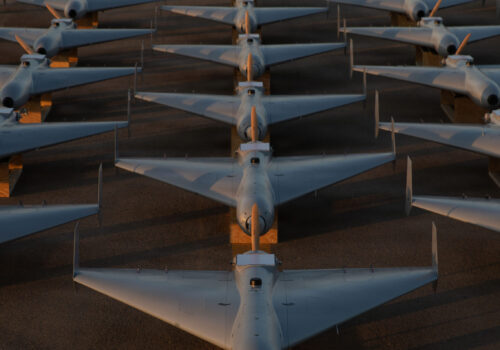
From drones to rocket fuel, China and Russia are helping Iran through supply chains

By Kimberly Donovan and Emily Ezratty

The US will need to confront China and Russia about their support for the Iranian regime and their schemes to evade sanctions and export controls.

China Conflict

Dispatches

Mar 25, 2026

How ISIS and its affiliates might capitalize on the Iran war

By Morgan Tadych

ISIS is poised to exploit the ongoing regional instability in the Middle East and US policymakers must closely monitor the threats it poses.

Conflict Middle East

MENASource

Mar 25, 2026

Amid the Hormuz crisis, an Iraq-Jordan-Egypt oil pipeline can no longer wait

By Maisoon H. Kafafy

Iraq is hemorrhaging oil revenue. Egypt is absorbing shocks on every front. The infrastructure that could have changed both equations has been forty years in the making. It still doesn’t exist.

Conflict Iraq

In the News

Mar 25, 2026

Wilkening quoted in Indo-Pacific Defense Forum on hypersonic threats

By Atlantic Council

On March 25, Forward Defense nonresident senior fellow Dean Wilkening was quoted in an Indo-Pacific Defense Forum article, titled “Indo-Pacific allies join to counter hypersonic threats.” Wilkening discussed the impacts of hypersonic capabilities on air and missile defense systems, highlighting the capability enhancements needed to counter these threats.

Defense Technologies Indo-Pacific

In the News

Mar 25, 2026

Kroenig quoted in The New York Times on NATO, Trump, and Iran

On March 25, Atlantic Council vice president and Scowcroft Center senior director Matthew Kroenig was quoted in The New York Times on NATO Secretary General Rutte's praise of the war in Iran, arguing that Rutte openly criticizing President Trump would undermine the alliance.

Iran NATO

Issue Brief

Mar 25, 2026

Negotiating an EU-US biometric information-sharing agreement

By Kenneth Propp

Amid tensions between the US and Europe over trade, tech, and now the war in Iran, Washington and Brussels are negotiating over the US Department of Homeland Security’s request for access to European biometric data. What does each side want—and what is achievable?

Cybersecurity Digital Policy

Report

Mar 25, 2026

Toplines: Deterring Putin’s aggression against NATO

By Richard D. Hooker, Jr.

Five key places in the Nordic and Baltic region are in the Kremlin's crosshairs. How should NATO prepare?

Defense Policy Eastern Europe

In the News

Mar 25, 2026

Rosenstein quoted in Indo-Pacific Defense Forum article on hypersonic capabilities

By Atlantic Council

On March 25, Forward Defense assistant director Jonathan Rosenstein was quoted in an article from the Indo-Pacific Defense Forum on “Indo-Pacific allies join to counter hypersonic threats.” Rosenstein highlighted the unique advantage that hypersonic weapons present for operational capabilities in the Indo-Pacific theater.

Defense Technologies Indo-Pacific

Dispatches

Mar 25, 2026

How the Iran war could change the US relationship with Gulf states

By Abram Paley

The war appears to have opened the door to a new wave of uncertainty in the Gulf, which might threaten the very regional stability and economic prosperity it is meant to ensure.

Conflict Iran

Uncategorized

Mar 25, 2026

Kafafy for Foreign Policy: Empty Words Don’t Open Straits

By Atlantic Council

Critical Infrastructure Policy Energy & Environment

Experts

Events