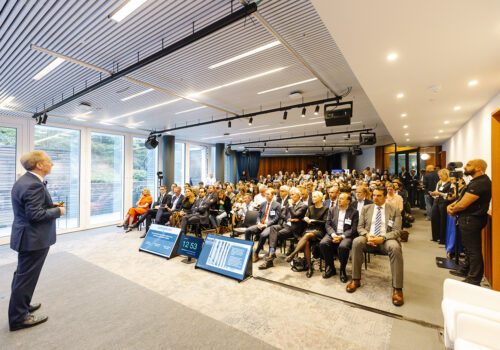

The Digital Forensic Research Lab (DFRLab) is a first of its kind organization with technical and policy expertise on disinformation, connective technologies, democracy, and the future of digital rights. Incubated at the Atlantic Council in 2016, the DFRLab has conducted over 1,000 investigations exposing influence operations and emerging digital threats worldwide.

With a team rooted in diverse regional expertise and subject-matter knowledge, the DFRLab works to promote digital resilience, defend democratic institutions, and ensure that objective fact remains central to public discourse in an increasingly contested information space.

Read the DFRLab’s latest case studies, learn about our initiatives, and more at DFRLab.org

STAY CONNECTED

Receive the latest research, along with discussions about disinformation and tech issues.

ABOUT US
Programs

The Democracy + Tech Initiative creates policy practices that align global stakeholders toward tech and governance that reinforces, rather than undermines, open societies. It builds on the DFRLab’s established track record and leadership in the open-source field, empowering global communities to promote transparency and accountability online and around the world.
The Atlantic Council Technology Programs comprises five existing efforts—the Digital Forensic Research Lab (DFRLab), the GeoTech Center, the Cyber Statecraft Initiative, the Democracy + Tech Initiative, and the Capacity Building Initiative. These operations work together to address the geopolitical implications of technology and provide policymakers and global stakeholders necessary research, insights, and convenings to address challenges around global technology and ensure its responsible advancement.

LATEST RESEARCH
PROJECTS

Upcoming & Recent Events
Employment opportunities

There are no employment opportunities currently open.

From the archives

Experts

Content

AlertaVenezuela email banner

#AlertaVenezuela

Nov 12, 2019

#AlertaVenezuela: November 12, 2019

By Atlantic Council's DFRLab

The Maduro regime reacted to the resignation of one of its long-time allies, Bolivia’s Evo Morales, by showing support and denouncing what it referred to as “a coup.” After more than two weeks of protests in the country following claims of fraud in the October 20 election, Morales resigned on November 10. Because the resignation occurred after the heads of the Bolivian armed forces and national police called on Morales to step down, Morales himself as well as Nicolás Maduro and other left-wing world leaders described the event as “a coup.”

Disinformation Venezuela
AlertaVenezuela email banner

#AlertaVenezuela

Nov 5, 2019

#AlertaVenezuela: November 5, 2019

By Atlantic Council's DFRLab

Nicolás Maduro has been accused of being an instigator behind social unrest in Latin American countries, including in Chile and Ecuador. Twitter accounts operating from Venezuela have a history of attempting to influence domestic events in Catalonia and in the United States. The DFRLab analyzed 1.1 million tweets about protests in Chile, posted between October 16 and October 25, 2019, to measure the possibility of involvement of the Maduro regime’s digital militias in the country.

Disinformation Venezuela

In the News

Oct 30, 2019

Durakoglu quoted in Defense News on US-Turkey alliance

Politics & Diplomacy Turkey
AlertaVenezuela email banner

#AlertaVenezuela

Oct 29, 2019

#AlertaVenezuela: October 29, 2019

By Atlantic Council's DFRLab

On October 24, 2019, the U.S. Department of the Treasury issued an order giving Juan Guaidó’s team three months to "restructure or refinance payments" by suspending the terms of some financial sanctions, which – if implemented – would have foreclosed on Venezuelan-owned Citgo’s oil refineries in Texas and which were originally meant to pressure Nicolás Maduro from office. The move was intended to shield Guaidó, who is recognized as interim President of Venezuela by more than 50 countries as of June 2019, from losing control of Citgo.

Disinformation Venezuela

In the News

Oct 29, 2019

Emerson Brooking authors an op-ed for The Washington Post on US election interference from Russia

By Emerson T. Brooking

Last week, Facebook revealed details of a new Russian influence operation targeting the 2020 U.S. election. Sticking to the playbook they used in the 2016 presidential election, Russian operatives infiltrated both sides of contentious political debates, seeking to widen the fissures in American society. The operation focused on Instagram and reached roughly 147,000 U.S.-based Instagram users. The efforts concentrated on the swing state of Florida.

Disinformation English
AlertaVenezuela email banner

#AlertaVenezuela

Oct 22, 2019

#AlertaVenezuela: October 22, 2019

By Atlantic Council's DFRLab

In September, Twitter suspended one of the most active accounts involved in the Maduro regime's ongoing operation to position pro-regime hashtags among the trending topics on the platform. The account @tuiteros_vzla, also known as Tuiteros Patriotas, primarily amplified the daily hashtags posted by the Venezuelan Ministry of Communications and offered monetary compensation to users who tweeted out the hashtags.

Disinformation Venezuela

New Atlanticist

Oct 18, 2019

Richard Stengel on disinformation and the threat to democracy

By Zarine Kharazian

Disinformation—both foreign and domestic—is a catalytic harm that acts to magnify existing societal vulnerabilities. Forging digital resilience is an urgent priority—because, as Stengel said, disinformation is “an attack on our very democracy. And Americans need to be aware of it.”

Disinformation Russia
Turkish flag with Twitter logo superimposed

MENASource

Oct 17, 2019

Digital Forensic Research Lab explores disinformation campaigns in the Middle East

By MENASource

Online information and disinformation has been playing a pivotal role in shaping public opinion throughout the Middle East and North Africa for over a decade. In the past week alone, Atlantic Council researchers with the Digital Forensic Research Lab (DFRLab) have published four articles examining the origins of various MENA-based disinformation campaigns and the tell-tale […]

Disinformation Middle East

Press Release

Oct 16, 2019

StratComDC: Global Forum on Strategic Communications

By Atlantic Council

The Atlantic Council will host its third annual Global Forum on Strategic Communications (StratCom 2019) in Washington, DC on October 23-24, 2019.

Cybersecurity Disinformation

2018 Elections in Latin America

Jun 27, 2019

INFOGRAPHICS – Disinformation in democracies: Strengthening digital resilience in Latin America

2018 saw political tides turn in three of Latin America’s largest democracies. These elections also saw deep polarization and distrust in institutions among Brazilians, Mexicans, and Colombians in an information environment ripe with disinformation. And while disinformation and misinformation are nothing new, the spread o#f false information at alarming rates is more effective and worrisome […]

Brazil Colombia