The Gulf

As many of the Arab Gulf states make strides to reduce their dependence on oil and implement social and economic reforms, they continue to face political and security challenges from external and internal threats. The Gulf states must respond to evolving external relationships, threats from Iran, terrorism, and civil conflict spillover while also harnessing the powers of technological advances and innovative reforms to modernize their economies. A new generation of leadership must adapt to a booming, educated, and globally-connected youth population, often unemployed and increasingly raising concerns about the rule of law and their role as citizens.

Featured commentary & analysis

Counterterrorism Study Group

The Counterterrorism Study Group is a forum for former counterterrorism officials to review the latest threats, to understand emerging trends and future predictions, and to explore creative new proposals for improving the effectiveness of current policies and operations.

Podcast series

Listen to the latest episode of the China-MENA podcast, featuring conversations with academics, government leaders, and the policy community on China’s role in the Middle East.

Gulf Security Task Force

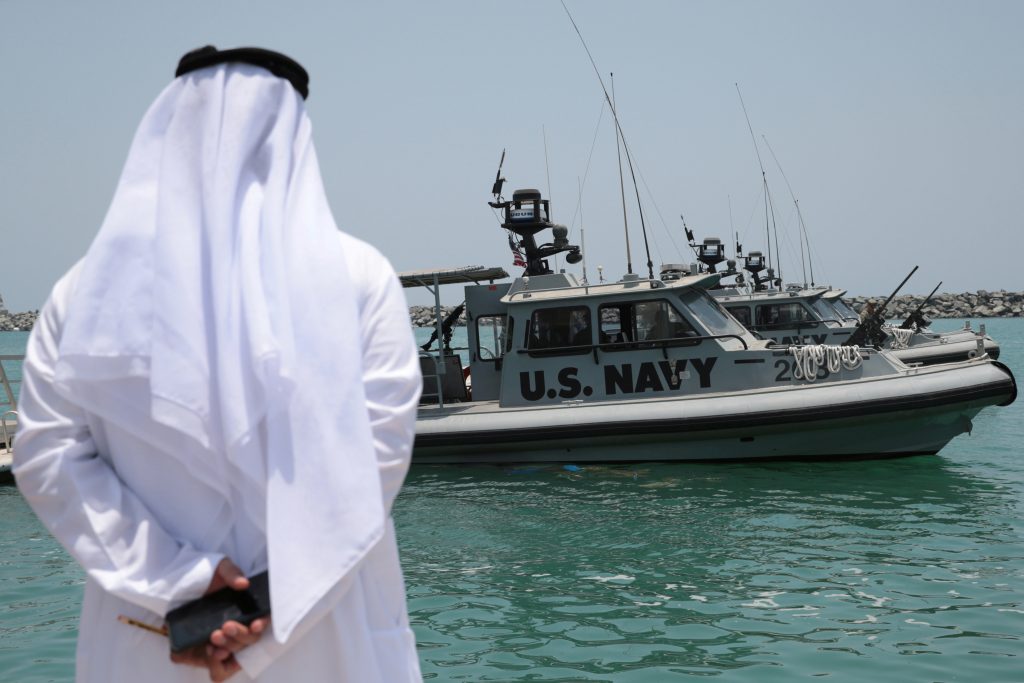
The Gulf Security Task Force is revisiting the question of how to best protect US interests in this sensitive, always relevant region. Our goal is to provide US decision-makers with an updated, fact-based strategy for protecting US interests in the air and maritime domain from the Persian Gulf to the Red Sea, and ensuring Gulf partners’ ability to assume this responsibility, with the assistance and leadership of the United States.
Content

EnergySource

May 11, 2020

Increasing mutual dependence in Sino-Gulf relations is changing the strategic landscape

By Christian Le Miere

The conventional wisdom that the United States is the only viable partner for Gulf states is now being challenged by a new reality: the main importer of Gulf oil is now China. At the same time, China’s strategic goals increasingly encompass stability in the Middle East, while a more activist foreign policy under Xi Jinping ensures greater involvement in the security, as well as economic, discourse in the region.

China Energy & Environment

New Atlanticist

May 6, 2020

ENEC’s Mohamed Al Hammadi: COVID-19 won’t delay Barakah nuclear plant

By Larry Luxner

Construction of the Barakah nuclear energy plant in the United Arab Emirates—the first commercial nuclear power station in the Middle East—won’t be significantly affected by the COVID-19 pandemic, despite the economic upheaval it has unleashed upon the world. That’s the word from Mohamed Al Hammadi, CEO of Emirates Nuclear Energy Corp. (ENEC), which is building […]

Nuclear Energy The Gulf

MENASource

May 4, 2020

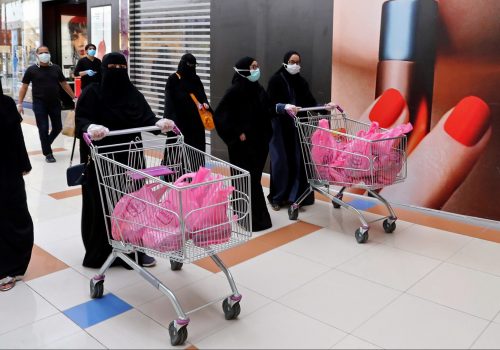
Will Saudi Arabia’s private sector be able to hold up during a pandemic?

By Abdullah F. Alrebh

On April 3, the Saudi government issued a royal decree allocating $2.4 billion to compensate citizens who work in the private sector in facilities affected by the pandemic. However, such bounteous support might only reduce the problem, not solve it.

Coronavirus Middle East

In the News

May 4, 2020

Fontenrose joins NPR’s Morning Edition to discuss Saudi oil tankers headed toward US

By Atlantic Council

Oil and Gas Saudi Arabia
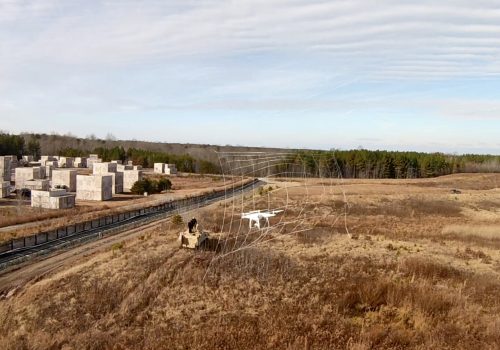
A net launched from a net-capture system just before catching its target, Quantico, Virginia (December 2018). Source: Red Six Solutions

Issue Brief

May 4, 2020

Drone attacks against critical infrastructure: A real and present threat

By Dr. Scott Crino and Conrad "Andy" Dreby

Read the Middle East Program's new paper on the use of weaponized drones in the Middle East, with recommendations for policymakers.

Drones Middle East

In the News

Apr 30, 2020

Blakemore quoted in Al Jazeera on oil price crisis and US-Saudi relations

By Atlantic Council

Oil and Gas Politics & Diplomacy

In the News

Apr 29, 2020

Cohen in Forbes: Oil Prices May Recover Before 2021

By Atlantic Council

Europe & Eurasia Oil and Gas

MENASource

Apr 24, 2020

Israel-Gulf ties, boosted by COVID-19 research, may trip over annexation plans

By Jonathan H. Ferziger

For policymakers, the prospect of West Bank annexation posed by Israel’s incoming coalition government is a reminder of the delicacy of Mideast peacemaking.

Coronavirus Israel
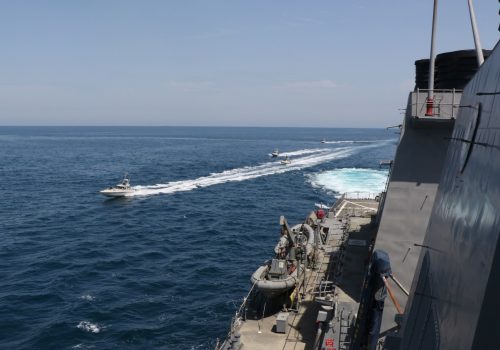
IRGCN Vessels Conduct Unsafe, Unprofessional Interaction with U.S. Naval Forces in Arabian Gulf

IranSource

Apr 23, 2020

Trump’s Twitter threat to destroy Iranian boats isn’t guidance

By John W. Miller

In a tweet on April 22, US President Donald Trump announced that he ordered the US Navy to destroy any Iranian boats harassing US warships. While the tweet may seem like new and escalatory guidance from the Commander in Chief to his forces in the region and an indication of a substantial increase in tensions between the United States and Iran, it is neither.

Iran Maritime Security

MENASource

Apr 21, 2020

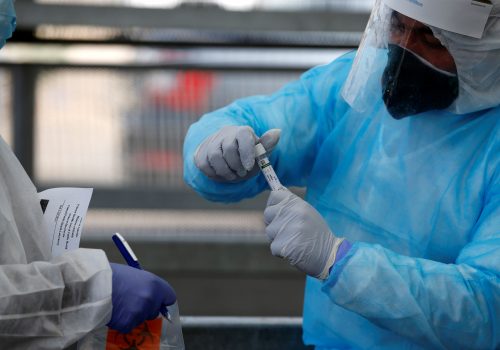
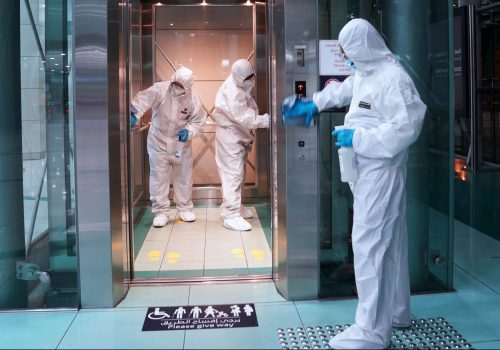
Lessons the US can learn from the UAE about the decontamination of COVID-19

By Theodore Karasik

Since Gulf countries faced the imported coronavirus prior to it reaching the United States, they were weeks ahead in their thinking on how to prevent a second spike in infection. The UAE has taken a blended civil-military approach that is worth watching.

Coronavirus Middle East

Experts

Events