The Gulf

As many of the Arab Gulf states make strides to reduce their dependence on oil and implement social and economic reforms, they continue to face political and security challenges from external and internal threats. The Gulf states must respond to evolving external relationships, threats from Iran, terrorism, and civil conflict spillover while also harnessing the powers of technological advances and innovative reforms to modernize their economies. A new generation of leadership must adapt to a booming, educated, and globally-connected youth population, often unemployed and increasingly raising concerns about the rule of law and their role as citizens.

Featured commentary & analysis
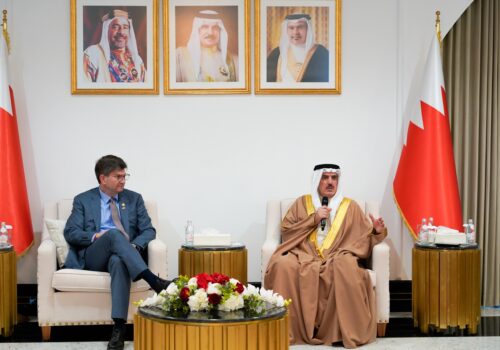

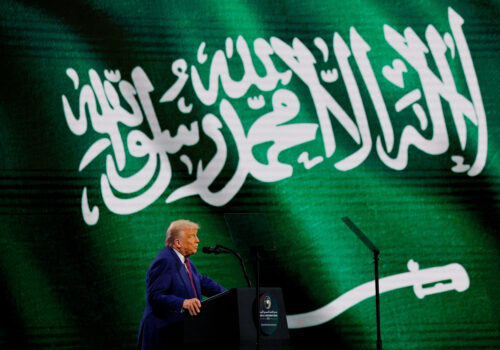
Counterterrorism Study Group

The Counterterrorism Study Group is a forum for former counterterrorism officials to review the latest threats, to understand emerging trends and future predictions, and to explore creative new proposals for improving the effectiveness of current policies and operations.

Podcast series

Listen to the latest episode of the China-MENA podcast, featuring conversations with academics, government leaders, and the policy community on China’s role in the Middle East.
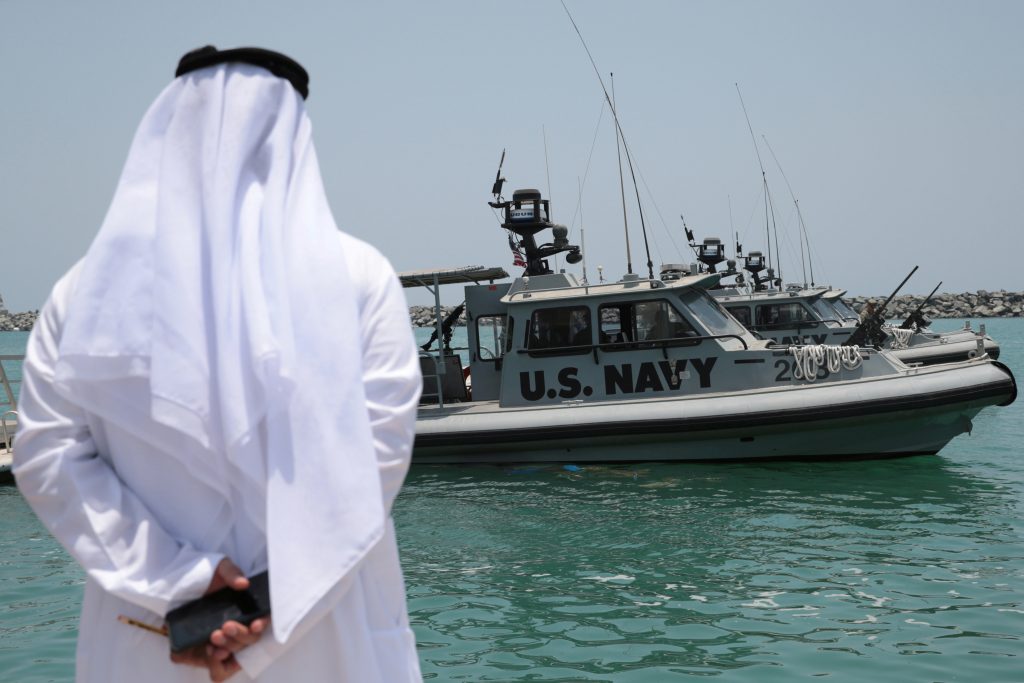

Gulf Security Task Force

The Gulf Security Task Force is revisiting the question of how to best protect US interests in this sensitive, always relevant region. Our goal is to provide US decision-makers with an updated, fact-based strategy for protecting US interests in the air and maritime domain from the Persian Gulf to the Red Sea, and ensuring Gulf partners’ ability to assume this responsibility, with the assistance and leadership of the United States.
Content

New Atlanticist

Nov 15, 2019

A crisis of commitment in the Middle East. But whose?

By Kirsten Fontenrose

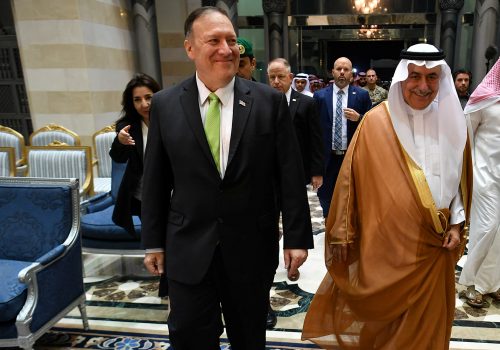
While US actions are causing confusion about Washington's commitment, regional actions are also calling into question the region’s commitment to its relationship with the United States and to its own stability.

Middle East Politics & Diplomacy
Saudi Stock Exchange (Tadawul)

EnergySource

Nov 13, 2019

The Saudi Aramco IPO: A valuation saga

By Private: Jean-François Seznec

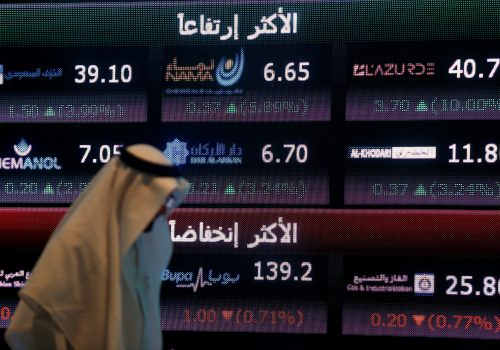
The Saudi stock exchange in Riyadh has approved the trading of Saudi Aramco’s shares on the local stock market, signaling a rapid start to the initial public offering (IPO). The various investment banks looking to place and sell the shares to their clients have given widely different, but generally low, value to the company and the shares.

Energy Markets & Governance Energy Transitions

MENASource

Nov 7, 2019

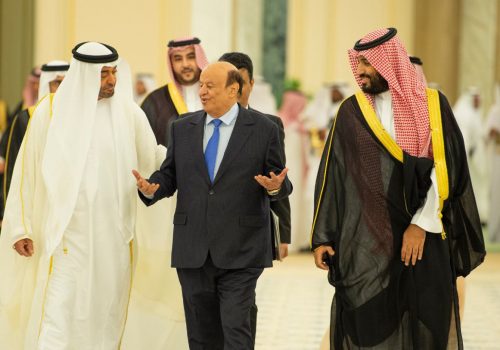
Saudi-backed Yemeni government and separatists sign power-sharing agreement

By MENASource

On Tuesday, November 5, the Hadi government signed a power-sharing agreement with southern separatists in Riyadh. The separatists and Hadi-led Yemen Government are backed by the Saudi-led coalition in Yemen, specifically by the United Arab Emirates. Infighting between them further fractured the civil war in August when the separatists seized Aden from Saudi-led forces. It […]

Peacekeeping and Peacebuilding Politics & Diplomacy

In the News

Nov 5, 2019

Livingston quoted in Axios on Saudi oil

By Atlantic Council

Energy & Environment Energy Markets & Governance
Saudi Aramco oil facility

EnergySource

Nov 5, 2019

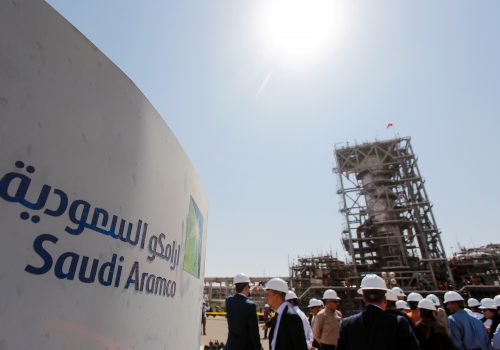
Two frameworks for understanding the Aramco IPO

By Randolph Bell

The recent announcement that the partial initial public offering (IPO) of Saudi Aramco is finally moving forward is either a cause for celebration or consternation, depending on your perspective. The divergence in views comes from the way in which market players and analysts understand the IPO and the role of Aramco in the Saudi economy.

Energy Markets & Governance Oil and Gas

In the News

Nov 4, 2019

Wald joins Bloomberg to discuss the Aramco IPO

By Atlantic Council

Energy Markets & Governance Geopolitics & Energy Security

In the News

Nov 4, 2019

Handler in Nextgov: The zero-day war? How cyber is reshaping the future of the most combustible conflicts

By Atlantic Council

Israeli-Saudi security cooperation quietly incubated over mutual intolerance toward an expansionist Iran is blossoming into a gradually open relationship, with cyber at its heart. Bonds such as these, forged behind closed doors, provide options for de-escalatory approaches to regional conflict.

Cybersecurity Israel

In the News

Nov 4, 2019

Katz quoted in TRT World on the potential sale of Russian S-400s to Saudi Arabia

By Atlantic Council

Missile Defense Russia

Conflict, Risk, and Tech

Oct 28, 2019

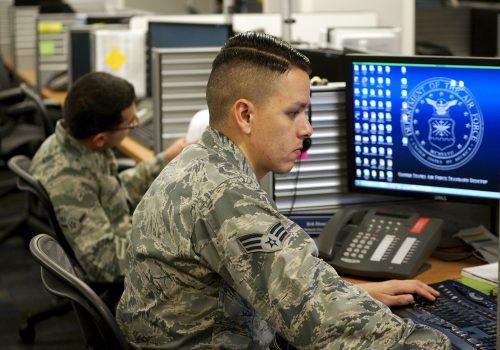
The zero-day war? How cyber is reshaping the future of the most combustible conflicts

By Simon Handler

Conventional wisdom would suggest that scaled-up capabilities, growing competition, and the proliferation of malware across cyberspace presents a legitimate risk of escalation in state conflict, transcending the cyber domain toward the kinetic. However, recent history has shown that states have more often availed themselves of their offensive cyber arsenals to achieve surprisingly de-escalatory effects.

Cybersecurity Iran

IranSource

Oct 21, 2019

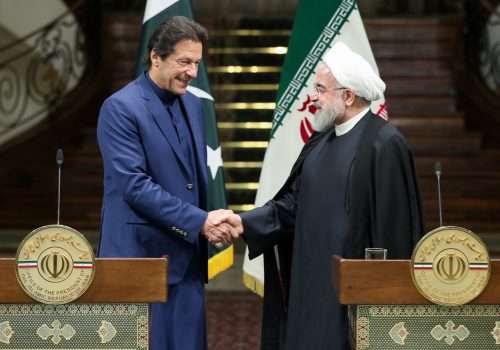
Kashmir is driving Pakistan’s mediation efforts between Tehran and Riyadh

By Fatemeh Aman

From Imran Khan’s perspective, the issue of Kashmir has not attracted enough international attention. Mediating de-escalation in the Persian Gulf could strengthen his ability to bring more attention to that crisis too.

India Iran

Experts

Events