Atlantic Council blogs

Atlantic Council blogs provide short-form analyses from Council experts and a wider community of global voices on the world’s most important news stories.
View all
of our blogs
Subscribe to our
newsletters

Latest from across our blogs

UkraineAlert

May 17, 2019

Nazi-Soviet Pact anniversary can help Zelenskiy heal Ukraine’s totalitarian trauma

By Peter Dickinson

Ukraine’s President-elect Volodymyr Zelenskiy waded into the bloodstained waters of the country’s memory wars during WWII memorial events in early May, posting a picture of himself alongside a Soviet veteran and a former member of Ukraine’s Insurgent Army with the message: “The key to peace today is unity among all Ukrainians.” This was something of […]

Civil Society Conflict

New Atlanticist

May 17, 2019

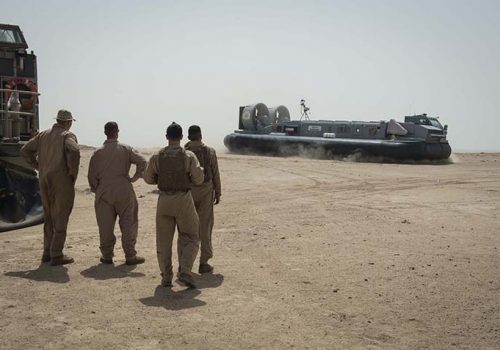
Iraq: In the crossfire of a potential US-Iran conflict?

By Abbas Kadhim

If a new conflict erupts in the region, it will complicate the situation for Iraq in some unimaginable ways, even if Iraq is not directly involved.

Iran Iraq

New Atlanticist

May 17, 2019

It’s time for the United States to lead (again) on Sudan

By Cameron Hudson

At this perilous moment, where there is an opportunity for the Trump administration to summon years of built up leverage to ensure a lasting transition to democratic rule and regional stability in Sudan, will Washington answer the call?

Democratic Transitions Sudan

New Atlanticist

May 16, 2019

Quiz: Celebrating Eurovision

By Atlantic Council

As we near the big night on May 18, do you have what it takes to be the world’s biggest Eurovision fan? Take twelve questions to prove you belong in the Grand Finale, but be careful to avoid the dreaded nul points!

Europe & Eurasia

UkraineAlert

May 16, 2019

Why the West must lean in now

By Michael Carpenter

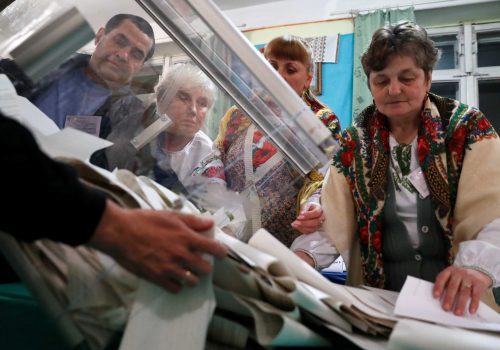
On April 21, TV comedian Volodymyr Zelenskiy won a landslide victory over incumbent President Petro Poroshenko in the second round of Ukraine’s presidential election. By winning an impressive 73 percent of the vote, Zelenskiy secured a strong popular mandate. Questions abound about Zelenskiy’s core political beliefs and whether his performance in office will match his […]

Conflict Corruption

UkraineAlert

May 16, 2019

Ukraine needs all the friends it can get. So why did it boot the American ambassador early?

By Mykola Vorobiov

Last week the Trump administration recalled US Ambassador to Ukraine Marie Yovanovitch two months earlier than expected. Various forces within Ukraine’s presidential administration, including the attorney general, had been calling for her head after she gave a speech that pointed out Ukraine’s lackluster commitment to reform on Poroshenko’s watch. The lack of an ambassador puts […]

Elections Political Reform

New Atlanticist

May 16, 2019

Strong support for the EU in Sweden ahead of European elections

By Anna Wieslander

Overall, the Swedish debate on the EU has been criticized by experts and journalists for failing to address central questions, such as how the EU should prevent another economic crisis and how the deepening defense cooperation could progress further.

Elections European Union

New Atlanticist

May 16, 2019

Europeans promise political and economic steps to salvage the Iran deal

By Barbara Slavin

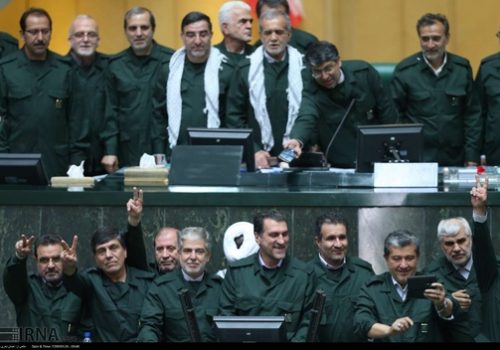
The twenty-eight members of the European Union (EU) are united in support of an Iran policy that opposes a military confrontation and prioritizes the continued existence of the nuclear deal, formally known as the Joint Comprehensive Plan of Action (JCPOA).

European Union Iran

New Atlanticist

May 15, 2019

Dial 911: Trump’s telecommunications national emergency

By Ashish Kumar Sen

US President Donald J. Trump on May 15 declared a “national emergency” that gives his administration the power to prevent US companies from doing business with foreign suppliers, including, potentially, Chinese telecommunications giant Huawei.

China Defense Technologies

New Atlanticist

May 15, 2019

Coherent US strategy seen key to effective sanctions

By David A. Wemer

“Sanctions can be a useful, precise, and effective tool of US foreign policy, so long as they are treated as a tool to implement a clear policy and a thought-out strategy,” David Mortlock said.

Financial Sanctions and Economic Coercion Iran