Atlantic Council blogs

Atlantic Council blogs provide short-form analyses from Council experts and a wider community of global voices on the world’s most important news stories.
View all
of our blogs
Subscribe to our
newsletters

Latest from across our blogs

New Atlanticist

Nov 5, 2018

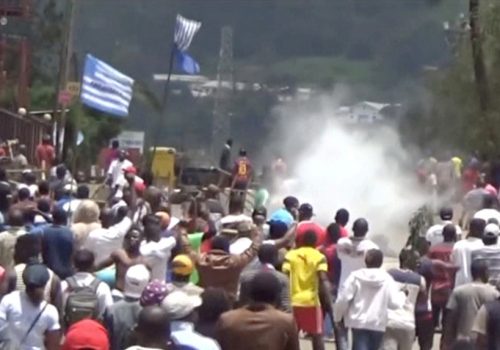
Will missionary’s death Be a tipping point for US position on Cameroon crisis?

By Jonathan Gass

For decades, Cameroon enjoyed much praise from the international community for its self-styled portrayal as an “island of peace” in a volatile region, and the United States has long considered Cameroon a strategic partner.

Conflict Elections

MENASource

Nov 5, 2018

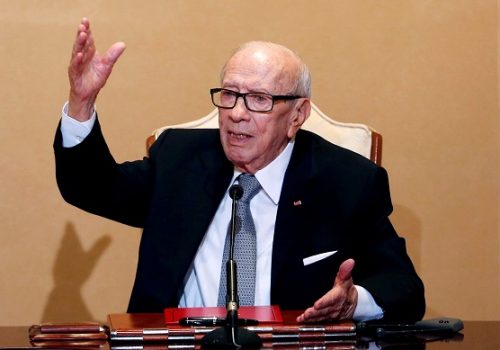
The end—or not—of Tunisia’s “Mut’ah”?

By Erin A. Neale

Tunisian President Beji Caid Essebsi announced in September the official end to the alliance between Nidaa Tounes Ennahda that had been holding on since February 2015. Termed a “mut'ah”—a temporary marriage of traditional Shia origin—by Tunisia expert Dr. Monica Marks, it was a marriage of convenience between the two main parliamentary parties to preserve stability and to focus on counterterrorism, improving the economy, and government efficiency during the critical transitional period following the ousting of former President Zine El-Abidine Ben Ali in 2011.

North Africa

IranSource

Nov 5, 2018

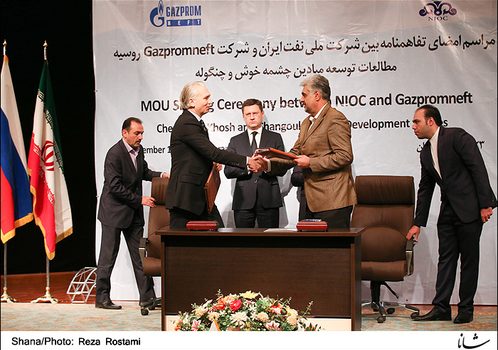
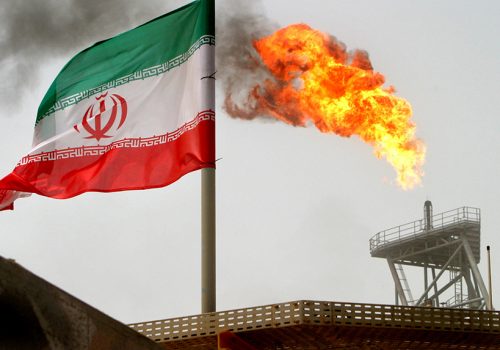
A Marriage of Convenience Between Natural Gas Giants Iran and Russia

By Thang Q. Tran and Alan W. Lancaster

Iran’s substantial natural gas reserves provide Russia with a significant strategic opportunity to solidify its role in the international arena. Although US secondary sanctions against Iran’s petroleum sector resumed on November 5, Russia will most likely defy them by continuing to invest in Iran’s natural gas sector. Russia may also seek to influence the flow […]

Iran Russia

IranSource

Nov 2, 2018

A Look at the Implications of Reimposed US Sanctions on Iran

By Brian O’Toole

US President Donald J. Trump’s administration will reimpose sanctions on Iran’s central bank, oil sales, and shipping companies on November 5. These sanctions, the last of those the US lifted in 2016 as a consequence of the Iran nuclear deal, are likely to be coupled with new sanctions that are designed to achieve greater pressure than […]

Iran
nov 2 tile

Trade in Action

Nov 2, 2018

TRADE IN ACTION November 2, 2018

By Global Business & Economics Program

Economy & Business Europe & Eurasia

UkraineAlert

Nov 2, 2018

Making Sense of Russia’s New Draconian Sanctions on Ukraine

By Anders Åslund

On November 1, the Russian government imposed severe economic sanctions on 322 Ukrainian individuals and 68 Ukrainian companies. These are the most extensive sanctions imposed by any country in the tit-for-tat confrontation between Russia and Western countries over Ukraine. Curiously, these sanctions are explicitly only economic, declaring that any assets on the territory of the […]

Russia Ukraine

New Atlanticist

Nov 1, 2018

John Bolton takes Latin American ‘troika of tyranny’ to task

By David A. Wemer

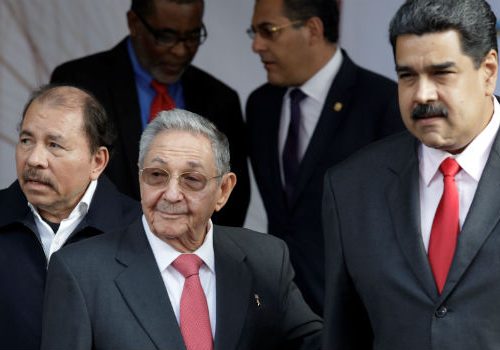
“John Bolton made it clear today where the administration is headed on Venezuela, Cuba, and Nicaragua,” Jason Marczak, director of the Atlantic Council’s Adrienne Arsht Latin America Center, said.

Central America Cuba

New Atlanticist

Nov 1, 2018

A look at the implications of reimposed US sanctions on Iran

By Brian O’Toole

The sanctions that snap back into place on November 5 largely mirror those that the Obama administration lifted in January 2016.

Financial Sanctions and Economic Coercion Iran

New Atlanticist

Nov 1, 2018

Quiz: Elections Bonanza

By Atlantic Council

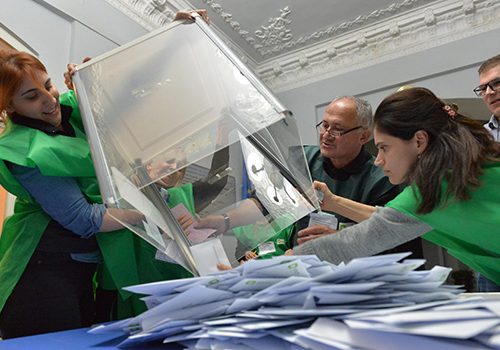
Tired of waiting for the US midterms? Voters went to the polls around the world last week, from Rio de Janeiro to Tbilisi. Test your knowledge about who won and lost, as well as the other major news from this past week.

New Atlanticist

Nov 1, 2018

Nukes in Europe: Facts, not hysteria

By Franklin C. Miller

Calls for the United States to continue to engage in a constructive dialogue with Russia on this issue bring to mind Albert Einstein’s definition of insanity: “doing the same thing over and over again, but expecting different results."

Europe & Eurasia Nuclear Nonproliferation