Stay updated

Subscribe to our daily newsletter to receive the best expert intelligence on world-changing events

Explore our unique analysis

Content

New Atlanticist

May 26, 2020

EU looks for next step in coronavirus economic response

By Bart Oosterveld

An agreement within the EU to not only jointly issue debt, but to disburse the proceeds of those debt issuances in the form of grants to financially weaker member states, would be an important moment in capital markets.

Coronavirus
European Union

New Atlanticist

May 26, 2020

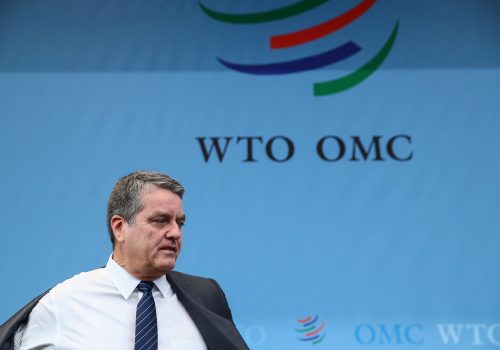
The WTO needs a new DG: No time for business as usual

By Marc L. Busch

Will the WTO finally pick a woman? Which continent “gets” the slot? And does the institution need someone from a developing country? These questions merit attention, but first, it’s time to ask why this isn’t “business as usual.”

International Financial Institutions
Trade and tariffs

New Atlanticist

May 26, 2020

The 5×5—Is it a game or is it real? Simulations and wargaming in cyber

By Simon Handler

Greater insight into risk and response allow public and private sector organizations to better prepare for crisis before it happens and rerun history to stave off defeat in future. Wargames can be complex live events or low-cost simulations. They can even be the basis for major reforms to policy and doctrine, giving us much to understand about them. Shall we play a game?

Cybersecurity

New Atlanticist

May 21, 2020

How societies can fight pandemics and climate change at the same time

By David A. Wemer

While many officials worry about their potential bandwidths to deal with two major problems at the same time, Dr. Aaron Bernstein explained that both crises “share the same causes and that means they share the same solutions.”

Climate Change & Climate Action
Coronavirus

New Atlanticist

May 21, 2020

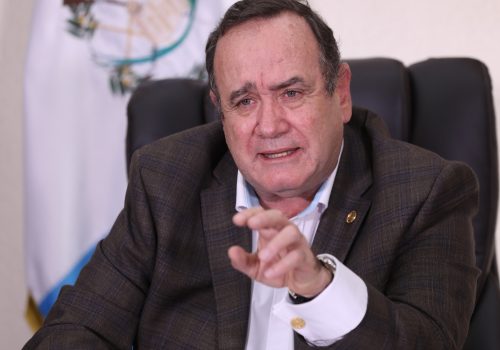
Guatemalan president criticizes US over lack of COVID-19 assistance

By Larry Luxner

“Guatemala is an ally of the United States, but I don’t believe the US is an ally to Guatemala, because they don’t treat us like one,” he said. “We’ve seen how they’ve assisted other countries with ventilators, and we haven’t even gotten a dime from them—not even one single mask from the United States. We don’t feel appreciated.”

Central America
Coronavirus

New Atlanticist

May 21, 2020

Will COVID-19 exacerbate or defuse conflicts in the Middle East?

By Masoud Mostajabi

With the virus has come the reshuffling of priorities needed to combat the pandemic, casting new light on these long-running conflicts. On May 20, 2020, the United Nations Under-Secretary General for Political and Peacebuilding Affairs Rosemary A. DiCarlo sat down with the Atlantic Council’s Future of Iran Initiative director Barbara Slavin to discuss potential new openings to advance peace in the region.

Coronavirus
Middle East

New Atlanticist

May 20, 2020

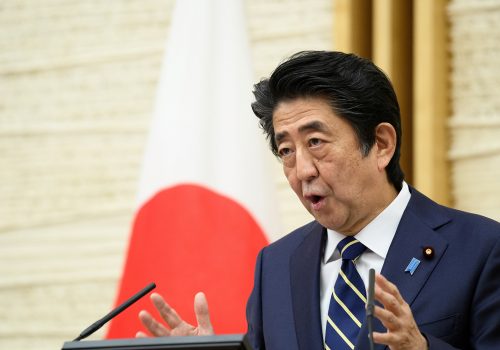
How the coronavirus impacts Japan’s prospects for constitutional revision

By Mirna Galic

Whether or not the Japanese public will face a choice on revising the constitution in the near future now seems inextricably tied with the coronavirus; either it will scuttle efforts to hold a constitutional referendum before the end of Abe’s term or it will be the impetus for an accelerated effort.

Coronavirus
Japan

New Atlanticist

May 20, 2020

The day after COVID-19 and saving emerging markets

By Mohammed Soliman and Francisco Campos

While developed markets have responded with historical levels of fiscal stimulus, globally there is immediate fiscal need in the emerging markets to tackle the health and economic fallout.

Africa
Coronavirus

New Atlanticist

May 19, 2020

Activists fight COVID-19 disinformation in the Caucasus

By Larry Luxner

Armenia, Azerbaijan, and Georgia now face a new and growing threat: the steady stream of propaganda related to how and why COVID-19 is spreading throughout the Caucasus.

Disinformation
The Caucasus

New Atlanticist

May 19, 2020

Seven perspectives on securing the global IoT supply chain

By Trey Herr

Many IoT devices are manufactured abroad and many of these are extremely low cost with little consideration made for security. There is nothing inherently untrustworthy or insecure about foreign manufacturing, and individual firm and product lines are much more fruitful levels of analysis in establishing good security practices from bad. Importantly however—the United States has limited means to enforce its standards in foreign jurisdictions, like China, where the bulk of IoT products are manufactured.

Cybersecurity
Internet