Content

New Atlanticist

Feb 19, 2020

Challenges and opportunities for Croatia’s new president

By Claudia Vaughn Zittle

Croatia’s new president Zoran Milanovic entered office on February 18 with a legacy to build upon and several challenges to overcome. Over the last fifteen years, Croatia has made remarkable progress as a democratic state, joining NATO in 2009 and the European Union (EU) in 2013. Even so, the uncertain future of European integration, uneven economic development, and malign foreign influence present challenges for Croatia and the Balkans region. The United States, other EU members, and NATO allies have a role to play in supporting Croatia’s efforts to tackle these challenges.

Economy & Business Elections

UkraineAlert

Feb 18, 2020

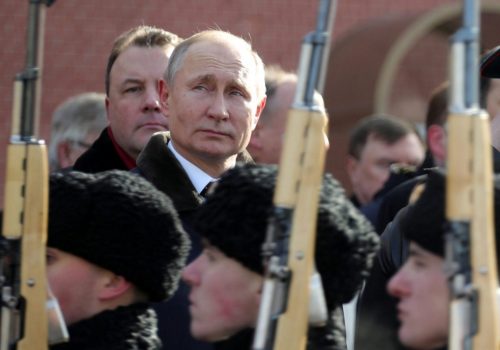
How Kyiv views the 12 step plan

By ROK Movement Against Capitulation / (Рух Опору Капітуляції)

Russia must take political and material responsibility for the consequences for the crime it committed: aggression and the occupation of the Ukrainian territory.

Conflict Crisis Management

UkraineAlert

Feb 18, 2020

Unsolved Maidan massacre casts shadow over Ukraine

By Bohdan Nahaylo

As Ukraine marks the sixth anniversary of the Maidan massacre the country is still waiting for justice. Could something akin to the kind of truth and reconciliation commissions that have proven effective in other countries also work in Ukraine?

Democratic Transitions Peacekeeping and Peacebuilding

UkraineAlert

Feb 18, 2020

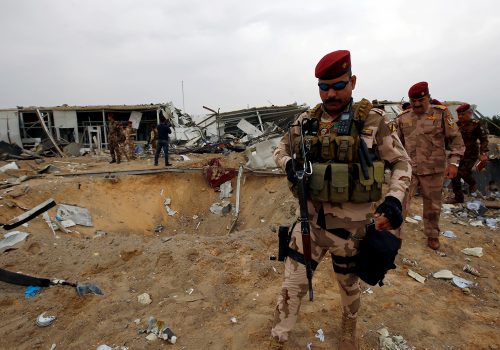
Russian escalation dampens hopes for peace in Ukraine

By Peter Dickinson

Russian hybrid forces in eastern Ukraine launched a series of artillery bombardments and localized advances early on February 18. What does this latest escalation mean for the already faint hopes of an end to the six-year conflict?

Conflict Russia

New Atlanticist

Feb 18, 2020

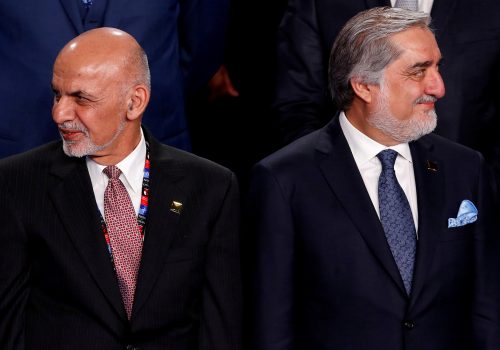
The next US-Taliban deal is just one step—and the Afghans must have their say—on the path toward peace in Afghanistan

By James B. Cunningham

The agreement now developing can be a vital first step toward the political solution we have long known is the only way to end the conflict, consistent with the interests of the Afghan people and their international partners. But there will be many more steps to come before that goal is achieved.

Afghanistan Conflict

New Atlanticist

Feb 18, 2020

Spain’s position on Venezuela jeopardizes unified fight for democracy

By Cristina Guevara

Support shown to the Maduro regime on ideological grounds serves to fuel further polarization, not only in Venezuela, but around the world. Whatever the nature of the relationship between the Maduro regime and Podemos, or ideological commonalities between the two, lending diplomatic support for Maduro is commending a dictatorship.

Democratic Transitions Southern & Southeastern Europe

UkraineAlert

Feb 18, 2020

Ukraine in a smartphone: Zelenskyy’s digital dream

By Anatoly Motkin

President Zelenskyy has called for a digital revolution to transform Ukraine into a "country in a smart phone" but is greater e-government the answer to Ukraine's long struggle against corruption and dysfunction within state institutions?

Democratic Transitions Internet

UkraineAlert

Feb 17, 2020

Why we welcome debate on Ukraine

By Eurasia Center

Ukraine can best advance its aspirations by ensuring all its citizens enjoy the right to express their views free from intimidation.

Political Reform Rule of Law

IranSource

Feb 14, 2020

Factbox: Iran’s 2020 parliamentary elections

By Arash Azizi

This guide aims to illuminate some of the basic procedures, conflicts inside the conservative camp and the likelihood of a low turnout with meager reformist participation.

Iran Middle East

MENASource

Feb 14, 2020

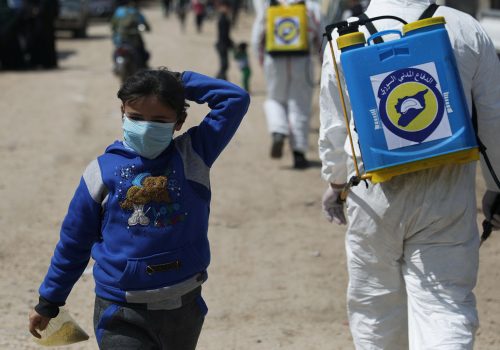
American passivity and weakness shine in Idlib province

By Frederic C. Hof

In a tribute to foreign policy continuity, the Trump administration upholds its predecessor’s Syria policy of gratuitously communicating passivity and weakness to adversaries.

Middle East Politics & Diplomacy