Category: Blogs

Content

German Chancellor Angela Merkel

New Atlanticist

Oct 31, 2018

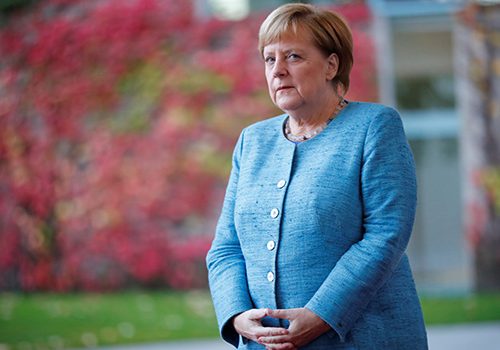
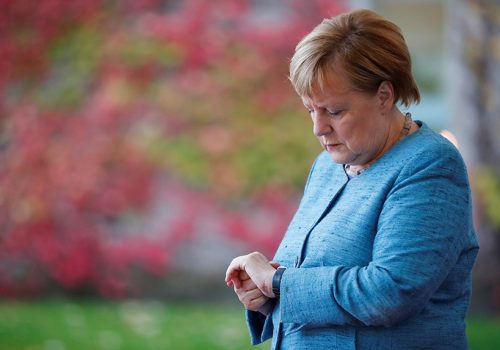
Merkel’s greatest legacy May be her unerring sense of style

By Thomas Klau

Can Germany’s leader for thirteen years last in the chancellery for another three? At this stage it is more than doubtful. Merkel herself left the door discreetly open to an earlier exit.

Elections Germany

UkraineAlert

Oct 31, 2018

Georgia, Where Everything Old Is Maybe New Again?

By Luis Navarro

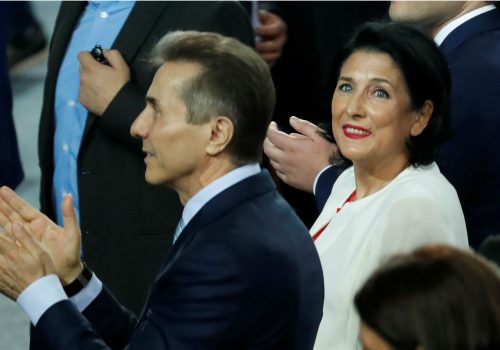
On October 28, Georgians went to the polls to elect their fifth president, possibly for the last time. Neither candidate, both former foreign ministers, won outright. An unprecedented run-off is slated for December 2.    The United National Movement (UNM) presidential candidate Grigol Vashadze achieved an unexpectedly strong showing (37.7 percent) against the ruling Georgian […]

Russia The Caucasus

MENASource

Oct 30, 2018

Sudan’s security services target refugees in Cairo

By Mat Nashed

When Sudan’s government was bombing hospitals in one of its own states in 2011, Kareem was among the activists detailing the atrocities. His work tracking the counterinsurgency in South Kordofan made him a target for Sudan’s security services, and in December 2012 he was accosted by two men who sprayed him with a nerve agent that put him in the hospital.

North Africa Sudan

New Atlanticist

Oct 30, 2018

As Angela Merkel begins her exit, what next?

By Jörn Fleck and Alex Baker

No matter who succeeds Merkel as leader of the CDU, it is difficult to imagine that person would be content with Merkel staying on as chancellor until her terms ends in 2021. That person will want the opportunity to connect with voters and chart his or her own course for the party.

Elections Germany

UkraineAlert

Oct 30, 2018

10 Names Russia Hopes You’ll Never Know

By Vitalii Rybak

Since Russia annexed Crimea in 2014, Moscow and its proxies have put dozens of Ukrainian and Crimean Tatar political prisoners behind bars. However, there are many other people in Russian prisons who have been incarcerated for their unwillingness to bow down to Russian President Vladimir Putin’s regime. The fabrication of these cases has been refined […]

Russia Ukraine

UkraineAlert

Oct 30, 2018

Five ways to entice Ukrainians to come home

By Andy Hunder

Approximately five million Ukrainians, roughly 25 percent of the country’s economically active population, work abroad.

Macroeconomics Migration

New Atlanticist

Oct 30, 2018

Rome’s options in budget battle with Brussels

By David A. Wemer

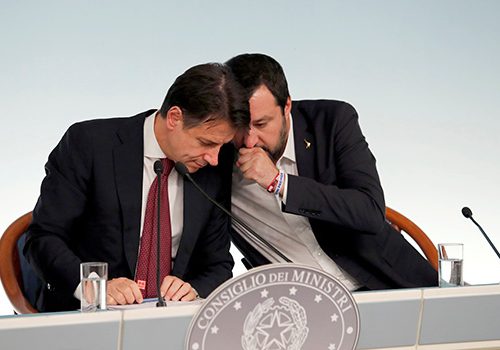
The Italian proposal violates a European Commission stipulation that budget deficits must decline year-on-year. Instead, under this proposal, Rome’s deficit would continue to grow.

Eurozone International Organizations

IranSource

Oct 30, 2018

The Future of the Dollar in a Post-Iran Deal World

By Michael B. Greenwald

The European Union’s announcement in September 2018 that it would begin to create a special payments channel with Iran in response to the US withdrawal from the Joint Comprehensive Plan of Action (JCPOA) once again raises the question of the role of the US dollar (USD) in the international economic order. Under the surface of […]

Iran

EconoGraphics

Oct 30, 2018

SWIFTly Disconnecting Iran

By Ole Moehr

With the snapback of significant US sanctions against Iran fast approaching on November 5th, speculation is mounting over how the Trump Administration will enforce the sanctions, and how its European allies might attempt to bypass them. The previous EconoGraphic outlined how a Special Purpose Vehicle (SPV) may facilitate trade between European small and medium-sized enterprises (SMEs) and Iran after US sanctions go back into effect. This edition of the EconoGraphic provides a primer on the Society for Worldwide Interbank Financial Telecommunication (SWIFT) and explains why sanctioning the financial messaging service would likely cause more harm than good.

Economy & Business Financial Sanctions and Economic Coercion

SyriaSource

Oct 29, 2018

In Istanbul, geopolitical maneuvering but no progress

By Aaron Stein & Faysal Itani

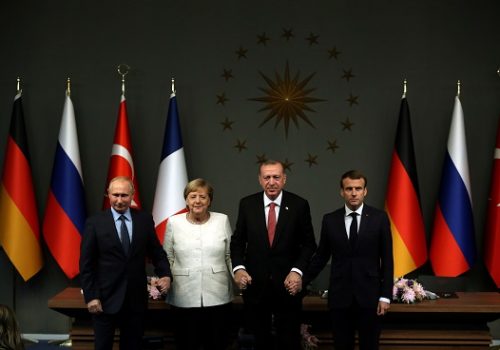
A summit held in Istanbul on Saturday failed to produce any breakthroughs in the core disagreements over the Syrian conflict. It did however have notable geopolitical implications that affect each of the four attendees Russia, Germany, and France, and Turkey – two of whom are new to an effort created to manage Russia and Turkish interests in Syria. Significantly, the United States took no part in the meeting despite the presence of two major European allies and NATO partner, Turkey.
Syria Turkey