About the Council

The Atlantic Council promotes constructive leadership and engagement in international affairs based on the Atlantic Community’s central role in meeting global challenges. The Council provides an essential forum for navigating the dramatic economic and political changes defining the twenty-first century by informing and galvanizing its uniquely influential network of global leaders. Through the papers we write, the ideas we generate, and the communities we build, the Council shapes policy choices and strategies to create a more secure and prosperous world.

NATO 20/2020

Twenty bold ideas to reimagine the Alliance after the 2020 US election

More than two decades after NATO’s inspired decision to invite former adversaries to join its ranks, the Alliance is in need of equally captivating ideas. The essays in this volume are intended to push the Alliance to think boldly and creatively in the service of recapturing the public’s imagination.
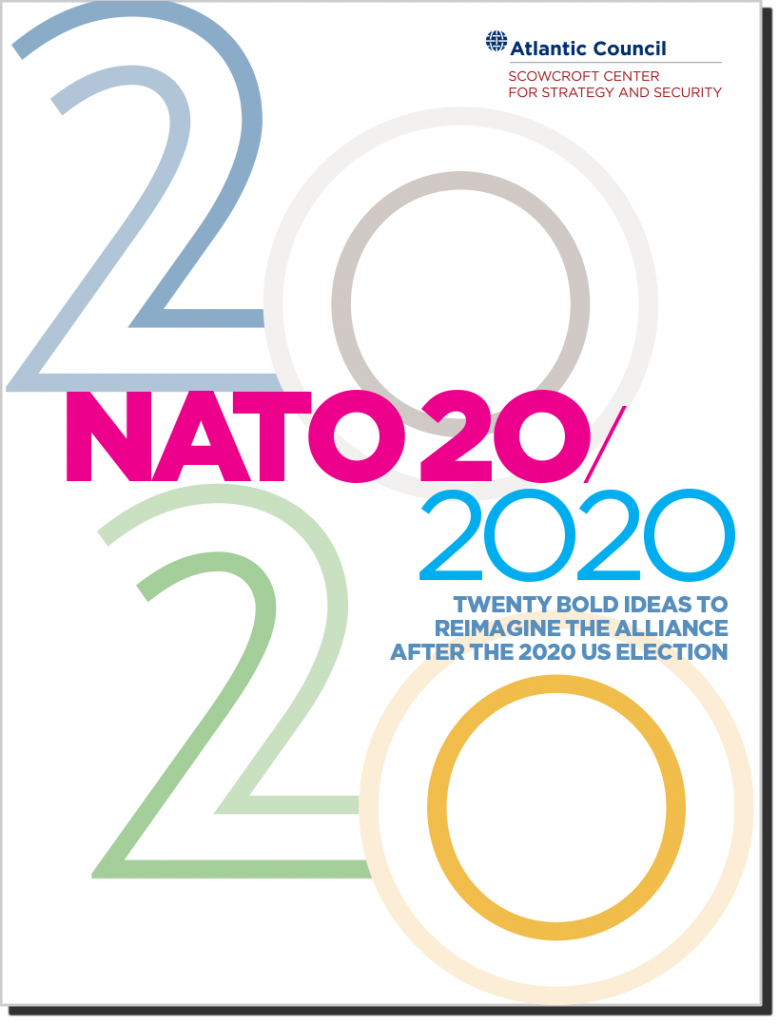
Read our provocative essays on the future of NATO

Explore the podcast series
Making a difference

Learn more about the Atlantic Council’s insights & impact through these stories of how our regional and thematic programs are making a difference not only in shaping how we view global issues but also in shaping their outcome.
Latest commentary and analysis

Latest in-depth research and reports

Content

In the News

Feb 16, 2021

Emadeddin Badi quoted in the New York Times on the interim Libyan government

Libya North Africa

In the News

Feb 16, 2021

Fontenrose joins Lawfare to discuss US-Iran relationship

Financial Sanctions and Economic Coercion Iran

In the News

Feb 16, 2021

Schuman in Politico: Europe can’t stay neutral in US-China standoff

By Atlantic Council

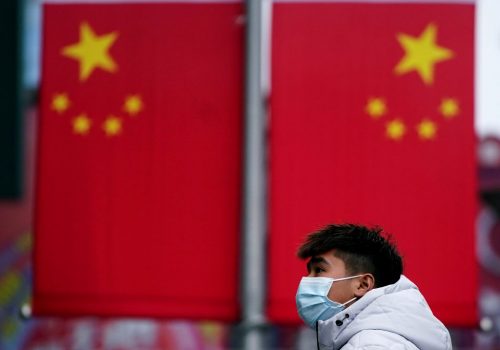
On February 16, 2021, Michael Schuman published an opinion piece in Politico. He argues that “China aims to create a world that is not safe for Europe — strategically, economically or ideologically,” leaving Europe with a stark choice: “Stand by the US, or become an international sideshow.”

China Europe & Eurasia

In the News

Feb 16, 2021

Lakhani joins Clubhouse to discuss what New State Bank Reforms mean for Pakistani Startups

By Atlantic Council

Economy & Business Financial Regulation

In the News

Feb 13, 2021

Fontenrose quoted in WSJ on US-Saudi ties

Middle East Politics & Diplomacy

In the News

Feb 13, 2021

Manning and Cooper in The Hill: How to fix the US public diplomacy deficit? Bring back USIA

By Atlantic Council

On February 13, Robert Manning and Evan Cooper published an op-ed arguing that the US needs to bring back the US Information Agency to address the collapse of public diplomacy. “A robust USIA with a modern approach to information ecosystems would be a valuable asset for combatting disinformation. The U.S. faces a global landscape saturated […]

Disinformation Politics & Diplomacy

In the News

Feb 12, 2021

Garlauskas in United States Institute of Peace blog: It’s time to get real on North Korea

On February 9, Markus Garlauskas published a blog post, “It’s Time to Get Real on North Korea” on the United States Institute of Peace website. In this piece, Garlauskas argues that the Biden administration should form a new, pragmatic strategy that shifts the focus away from near-term denuclearization toward preventing further expansion of nuclear capabilities […]

Arms Control Korea

In the News

Feb 12, 2021

Fontenrose quoted in the Guardian on whether the UK will follow the US in ending support for the Saudi-led offensive in Yemen

Defense Industry Defense Technologies

In the News

Feb 12, 2021

Snegovaya quoted by Troy on impact of Russian information operations in the US

By Atlantic Council

Digital Policy Disinformation

In the News

Feb 12, 2021

Nurkin discusses wargaming on Janes World of Intelligence podcast

By Atlantic Council

On February 12, Forward Defense Nonresident Senior Fellow Tate Nurkin appeared on the Janes World of Intelligence podcast to discuss wargames: how to run them, the requirements for them, and how they benefit us. Nurkin argued that wargames have been frequently misunderstood, yet offer a chance to craft sounder policies for handling foreign policy crises.

Defense Policy Education