Energy Markets & Governance
Energy markets are in flux as new energy production and delivery methods alter global supply chains, while economic growth and new desires for energy efficiency change demand in different parts of the world. Policy makers will need to be able to interpret these shifts in the energy market and build new frameworks to manage energy uncertainty.
Recent analysis
GeoTech Cues
May 21, 2025
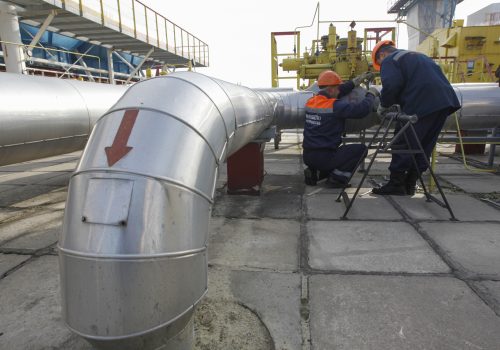
To build tomorrow’s power grid, the United States should look to geothermal energy
By
Sudeep Kanungo, Will LaRivee
Geothermal energy offers a promising solution for stable, reliable baseload power. But to unlock its full potential, the US government must take action to reduce the barriers to entry for industry.
EnergySource
Apr 29, 2025
Can Nord Stream really rise from the dead?
By
Alan Riley
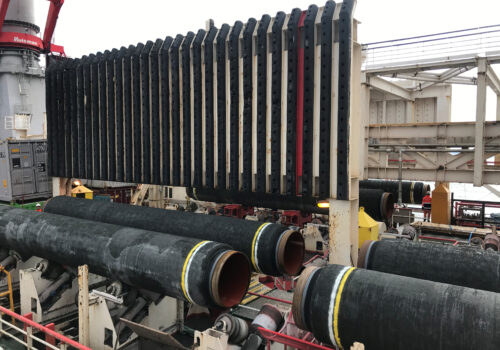
Despite recent discussions between Moscow and Washington over restarting the Nord Stream pipelines, legal, financial, and political hurdles make reopening them improbable. Multimillion dollar claims against Gazprom along with US stakes in the European LNG market are likely to severely limit support for Russian gas flows to the EU.
New Atlanticist
Apr 17, 2025
How the National Energy Dominance Council can set the US on the path to energy security
By
Ellen Wald
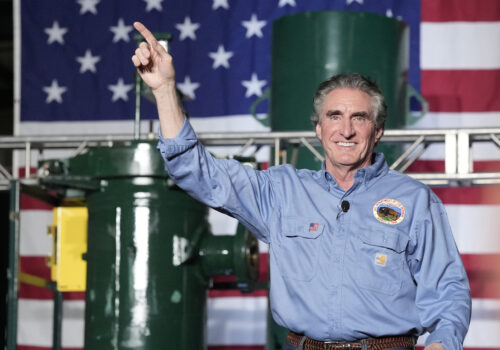
The National Energy Dominance Council must act quickly to restore stability to the energy industry amid geopolitical uncertainty.
Programs

The Global Energy Center develops and promotes pragmatic and nonpartisan policy solutions designed to advance global energy security, enhance economic opportunity, and accelerate pathways to net-zero emissions.
Events
Fri, February 7, 2020 • 11:00 am ET
Private Discussion with US Assistant Secretary Francis R. Fannon
Global Energy Forum
Jan 12, 2020
Election 2020: What’s at stake for energy policy?
By
David L. Goldwyn and Andrea Clabough
As the US presidential election in November 2020 draws nearer, the energy policy platforms—including domestic energy, climate change, foreign, and trade policies—from the Democratic candidates, as well as the energy policies of a potential second Trump Administration, have become increasingly clear. The competing visions of a Republican and a Democratic administration could hardly be more disparate, and industry and external stakeholders should prepare for a volatile outlook regardless of the outcome in November 2020—what are the salient energy policies under the two scenarios and how will they address the deep and entrenched energy challenges that face the United States?
Issue Brief
Jan 12, 2020
European energy diversification: How alternative sources, routes, and clean technologies can bolster energy security and decarbonization
By
Richard L. Morningstar, András Simonyi, Olga Khakova, Irina Markina
The European Union’s efforts to achieve a carbon-neutral economy present a unique and timely opportunity to strengthen European energy security. What is the EU currently doing to meet its decarbonization goals, address the role of natural gas in Europe’s low-carbon future, and explain the potential for new gas sources, alternative gas routes, and clean energy technologies to reduce carbon emissions? And how can this be done while simultaneously increasing European energy security and opportunities for transatlantic cooperation?
Content
Experts
Executive Leadership Intensive participant
Istvan-Lorant Antal
Executive Leadership Intensive participant