Content

Event Recap

Sep 3, 2020

Expert panel responds to incidents of North Korean sanctions evasion in the DRC

By Africa Center

On Thursday, September 3, the Africa Center hosted a virtual panel to discuss the latest report published by The Sentry: Overt Affairs: How North Korean Businessmen Busted Sanctions in the Democratic Republic of Congo. The Sentry’s Director of Illicit Finance Policy Ms. Hilary Mossberg provided opening remarks alongside Africa Center Director of Programs and Studies Ms. Bronwyn Bruton, […]

Africa Corruption

New Atlanticist

Sep 3, 2020

The ‘Holding Foreign Companies Accountable Act’ may harm US tech leadership

By Tianjiu Zuo

There is certainly a case to be made for increased financial transparency from Chinese companies for the safety of US investors. But this may come at greater cost to US interests, with the United States becoming more discriminatory towards business, less competitive in emerging markets, and more susceptible to harmful economic retaliation.

China Financial Regulation

Digital currencies

Aug 25, 2020

Advanced economies under pressure in the central bank digital currency race

By Barbara C. Matthews, Hung Tran

Advanced economy central banks are also actively engaged in CBDC research and development efforts. But as guardians of global reserve currencies, their approaches will necessarily be more deliberate and cautious than Beijing’s aggressiveness.

Digital Currencies Digital Policy

New Atlanticist

Aug 24, 2020

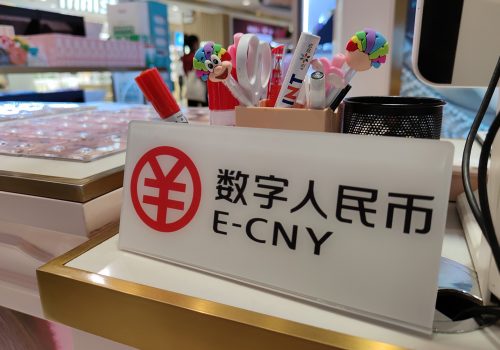
China’s Digital Currency Electronic Payment Project reveals the good and the bad of central bank digital currencies

By Hung Tran, Barbara C. Matthews

The development of the DCEP has revealed the significant advantages and potential drawbacks for both China’s digital currency project and the potential for widespread central bank digital currencies around the world.

China Digital Currencies

UkraineAlert

Aug 22, 2020

Top Ukrainian oligarch Ihor Kolomoiskiy faces growing international legal troubles

By Diane Francis

Ukrainian oligarch Ihor Kolomoiskiy is facing growing international legal troubles as a range of investigations into alleged corrupt practices at his former bank PrivatBank continue to gain momentum.

Corruption Financial Regulation

New Atlanticist

Aug 21, 2020

Unconventional monetary policy is not a free lunch in Europe or the United States

By Andrzej Rzońca and Grzegorz Parosa

The European Central Bank and the US Federal Reserve responded to the economic effects of the COVID-19 pandemic with a similar prescription to the one they used during the Global Financial Crisis (GFC), but this time they multiplied the dose.

Coronavirus European Union

New Atlanticist

Aug 18, 2020

Pakistan races to avoid financial watchdog blacklist

By Safiya Ghori-Ahmad

The Pakistani Senate is racing to approve multiple bills to prevent money laundering and terrorist financing—and fulfill a twenty-seven-point plan from global watchdog Financial Action Task Force (FATF). With thirteen remaining conditions and an eye on the mid-October deadline, Pakistan is hoping to avoid a demotion from the FATF’s grey list to the blacklist, joining countries such as Iran and North Korea.

Financial Regulation International Financial Institutions

New Atlanticist

Aug 11, 2020

Financial regulation in the face of COVID-19: Resilient but complex clockwork

By Emilie Bel

The COVID-19 outbreak has presented the financial system with its most challenging test since the global financial crisis ten years ago—and the system has held up.

Coronavirus Financial Regulation

New Atlanticist

Jul 28, 2020

As central banks implement coronavirus rescue plans, has moral hazard been forgotten?

By Hung Tran

With financial markets beginning to astoundingly recover, despite continued economic pain and an uncertain pandemic picture, the fear of moral hazard seems to have been forgotten.

Coronavirus Financial Regulation

Issue Brief

Jul 7, 2020

Trade and financial fragmentation: New challenges to global stability

By Robert A. Manning

There is greater uncertainty today about the future of global trade than at any time since the post-World War II trading system was created seven decades ago. This was true before the COVID-19 pandemic froze much of the world economy; the health crisis has added a new layer of uncertainty. We are at a historic inflection point: the global trade regime urgently needs renovation and updating to meet new challenges, yet it is fraying and fragmenting.

China Digital Policy

Experts

Events