Recent analysis

Programs and initiatives

The Global Energy Center develops and promotes pragmatic and nonpartisan policy solutions designed to advance global energy security, enhance economic opportunity, and accelerate pathways to net-zero emissions.

Events
Global Energy Forum

Jan 9, 2020

International grid integration: Efficiencies, vulnerabilities, and strategic implications in Asia

By Phillip Cornell

In order to meet growing global demand for electricity, and in response to an increase in renewables, power networks and markets are evolving and becoming increasingly interconnected. South and Southeast Asia have already had some success with interconnections, and China’s vision and Belt and Road Initiative loom large in the region, but there are geopolitical concerns to contend with. Could a US model manage these concerns? What is the state of regional power markets in Asia and investment in regional grid infrastructure, and what responses are we already seeing to emerging trends?

Climate Change & Climate Action Energy Markets & Governance

Global Energy Forum

Jan 9, 2020

Energy sector diversification: Meeting demographic challenges in the MENA region

By Bina Hussein

The Middle East and North Africa (MENA) region is projected to experience significant demographic growth by 2050, growth which will have to be met with commensurate economic expansion and job opportunities, or the region will risk an increase in political instability. To meet this challenge, countries in the region must diversify their economies beyond the energy sector and expand their energy sector beyond hydrocarbons. What are the key trends that MENA countries will have to contend with, what is already being done, and what further steps should be taken?

Energy Markets & Governance Energy Transitions

Issue Brief

Jan 9, 2020

Transforming the power sector in developing countries: Geopolitics, poverty, and climate change in Bangladesh

By Robert F. Ichord, Jr.

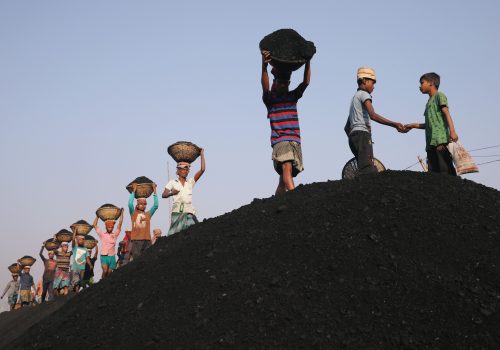
As the South and Southeast Asian region faces increasing energy demand due to both population and economic growth, countries like Bangladesh must meet that demand while facing and overcoming critical environmental and energy security challenges. How is Bangladesh seeking to diversify its energy mix and establish more local and decarbonized power systems, and what are key opportunities for future government and foreign investment?

Bangladesh Climate Change & Climate Action

Content

EnergySource

Nov 22, 2020

In states with key clean energy wins, utilities have a strong hand in driving or stalling progress

By Emily Burlinghaus

The 2020 US elections delivered some notable state and city-level wins for clean energy across the United States, notably in Nevada, Colorado, and Ohio. However, even in states that delivered victories for clean energy, utilities will still play a key role in driving—or stalling—the clean energy transition. The complex history of clean energy policy in each of these states points to the divergent paths both cities and states can take to decarbonize and the importance of striking a delicate balance between government, utilities, and public interests.

Climate Change & Climate Action Elections

Global Energy Forum

Oct 27, 2020

Enhancing US-Japan cooperation on clean energy technologies

By Reed Blakemore, David Yellen

Japan’s pledge to reach net-zero emissions by 2050 presents an opportunity to expand the robust US-Japan energy partnership into additional clean energy areas. But with a stark divide on energy policy in the United States, how can the US-Japan energy partnership appeal to disparate visions of the energy transition and is politically durable? In the wake of Japan's net-zero announcement, the Global Energy Center is launching this new report, "Enhancing US-Japan cooperation on clean energy technologies," which explores how the United States and Japan can increase the politically durable foundation for clean energy cooperation to their already robust energy partnership.

Energy & Environment Energy Transitions

New Atlanticist

Oct 9, 2020

Rising solar: Investing in Japan’s energy transition

By Alexis Crow

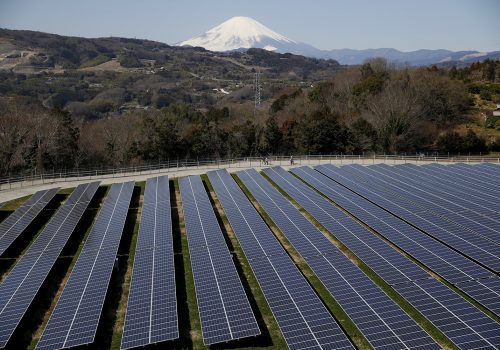
The ability to invest in renewable energy assets in Japan—and thus to contribute to the country’s energy transition—also presents a significant opportunity for long-term capital from around the globe

Climate Change & Climate Action Energy Transitions

Elections 2020

Oct 1, 2020

The surprise debate topic: Climate change

By Margaret Jackson

Chris Wallace unexpectedly deviated from his agenda to ask pointed questions about the science and economics behind each candidate’s respective climate plans, reflecting a recognition that, more so than in 2016, public pressure is forcing climate action to be a central issue in this year’s election.

Climate Change & Climate Action Elections

Press Release

Sep 28, 2020

Atlantic Council Global Energy Center announces 2020-2021 Veteran Advanced Energy Fellows

Fellows will participate in a yearlong policy and leadership development program for high-potential, high-performing veterans in advanced energy.

Energy & Environment Renewables & Advanced Energy

New Atlanticist

Sep 25, 2020

The ‘big three’ now rule the global energy market, says Daniel Yergin

By Katherine Golden

Pulitzer Prize winner and energy expert Daniel Yergin's insights into the progress of the energy transition worldwide are pivotal with the 2020 elections around the corner and the pandemic that has disrupted the energy industry.

China Coronavirus

Elections 2020

Sep 17, 2020

Five big questions as America votes: Energy

By Global Energy Center

As the US presidential election looms, the oil and gas industry has suffered from demand shocks during the COVID-19 pandemic, climate change is increasingly in the list of top concerns of US citizens, and there is little overlap between the likely policies of the two presidential candidates.

Climate Change & Climate Action Coronavirus

In-Depth Research & Reports

Sep 14, 2020

Innovation in Nuclear Energy Technologies: Implications for US National Defense

By Dr. Robert F. Ichord, Jr. and Dr. Jennifer T. Gordon

The US Department of Defense (DOD) has the potential to play a significant role bringing advanced reactor technology to demonstration and, ultimately, commercialization. Possible US military applications of advanced reactors—especially micro nuclear reactors (MNRs)—include deployment to remote bases that are challenging to supply with fuel; power systems for directed-energy weapons; and nuclear energy systems for space flight and off-world bases. This issue brief explores the challenges and opportunities inherent in DOD’s procurement of MNRs.

Defense Technologies Energy & Environment

EnergySource

Sep 2, 2020

California’s blackouts and renewable energy: Culprit or imperative?

By Leslie Hayward

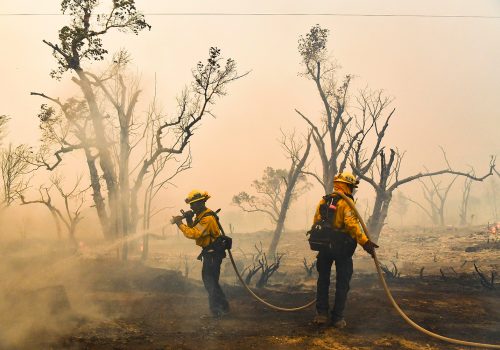
In mid-August, California made headlines when several days of rolling blackouts coincided with a massive heatwave, with up to three million residents facing up to four hours of power outages. For Californians, this crisis must prompt an examination of both the grid management practices that contributed to these blackouts, and the optimal way to store or supplement wind and solar power. And while many were quick to blame the blackouts on the states's growing reliance on renewables, the underlying causes for the crisis can only be mitigated with more clean energy.

Climate Change & Climate Action Energy & Environment

EnergySource

Aug 28, 2020

Microgrids: The NDAA’s crucial investment for energy resilience

By Katie Wimsatt

The National Defense Authorization Act (NDAA) sets the US Department of Defense’s (DoD) annual budget, but it has also become a key platform for implementing military climate resilience and emission reduction measures. By investing in microgrid systems, the military will increase its ability to maintain operations in a variety of adverse circumstances, lower carbon emissions, and spur widespread adoption of clean, resilient energy infrastructure across the United States.

Energy & Environment Energy Transitions

Experts

Events