The Scowcroft Center’s namesake, General Brent Scowcroft, was the chairman of the 1983 Scowcroft Commission that established the foundation for US nuclear deterrence and arms control policy through the present day. As the United States enters a new era of strategic challenges, the Scowcroft Center’s Forward Defense program is proud to play a central role in crafting an effective and nonpartisan strategic forces strategy and policy for the twenty-first century.

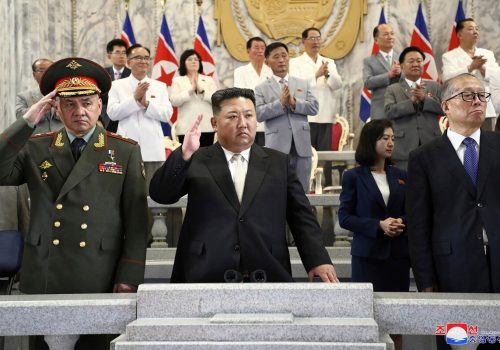
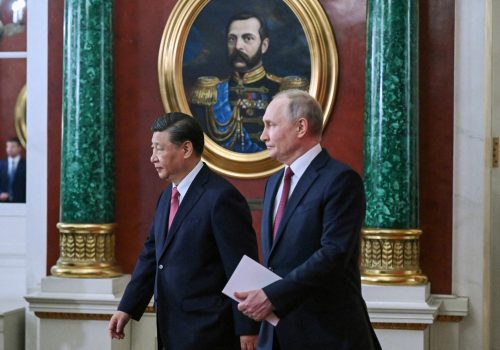
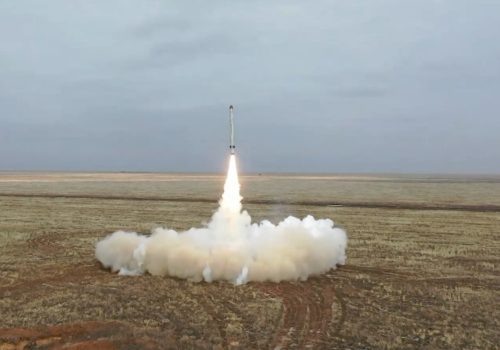
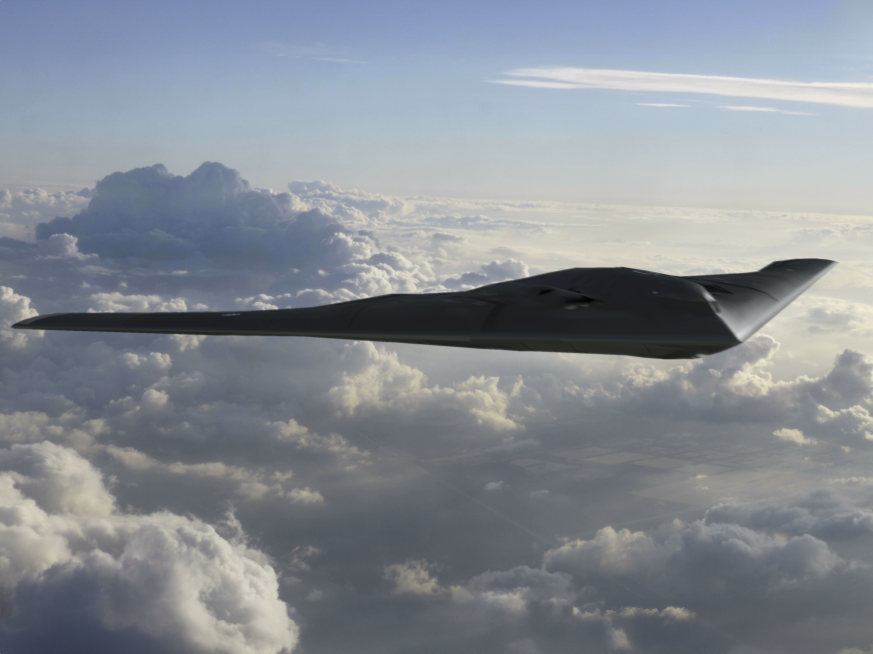
The 2022 National Defense Strategy and Nuclear Posture Review caution that the United States will, for the first time in its history, face the challenge of simultaneously deterring two nuclear great powers, each with aggressive revisionist goals. Our Nuclear Strategy Project, within the Forward Defense program, focuses on the role of nuclear deterrence, nuclear strategy and employment, missile defense, and arms control in deterring conventional aggression and nuclear escalation against the United States, its allies, and partners.

Principal research areas

Must Reads
Report

Jan 4, 2025

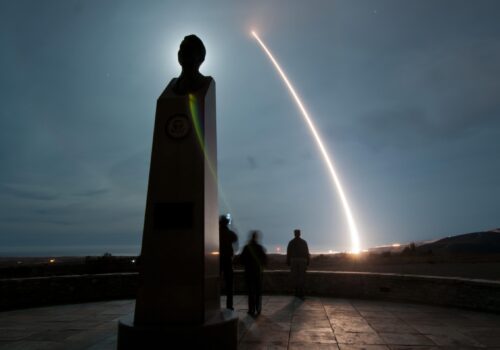
‘First, we will defend the homeland’: The case for homeland missile defense

By Robert Soofer with contributions from Kari Anderson, James McCue, Tom Karako, Mark J. Massa, Alyxandra Marine, and Jonathan Rosenstein

A comprehensive analysis of U.S. homeland missile defense, addressing policies, security challenges, and strategies to counter threats from North Korea, China, and Russia.

China Defense Technologies

Commentary & quick analysis
New Atlanticist

Nov 28, 2023

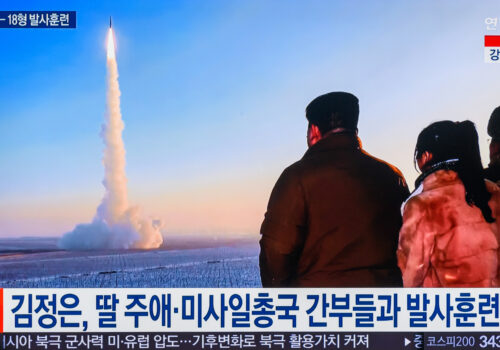
As the US faces down new nuclear threats, will Cold War solutions work once again?

By Alyxandra Marine

The tripolar nuclear power world is certainly new; but the deterrence theories of the Cold War may not need to be completely changed, our experts find.

China
Nuclear Deterrence

New Atlanticist

Nov 15, 2023

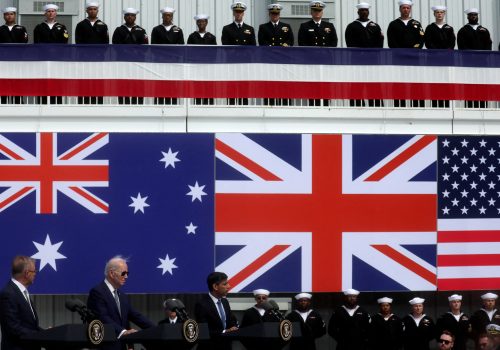
AUKUS is hamstrung by outdated US export control rules. Here’s what Congress can do.

By Deborah Cheverton, John T. Watts

US lawmakers must show that they are willing to make the necessary changes to a needlessly limiting export control regime that does more harm than good.

Arms Control
Australia

New Atlanticist

Oct 13, 2023

What needs to change about US nuclear weapons strategy?

By Atlantic Council experts

Our experts break down the 2023 Congressional Commission on the Strategic Posture of the United States report.

China
Indo-Pacific

New Atlanticist

Sep 13, 2023

What the Putin-Kim authoritarian get-together means for Russia’s war and North Korea’s capabilities

By Atlantic Council experts

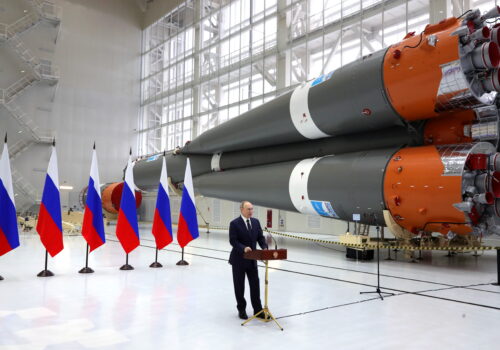
Experts react to Russian President Vladimir Putin and North Korean leader Kim Jong Un meeting at the Vostochny Cosmodrome in Russia.

China
Conflict

New Atlanticist

Aug 18, 2023

Experts react: The US-Japan-South Korea summit was ‘historic.’ But what did it accomplish?

By Atlantic Council experts

President Joe Biden, Prime Minister Fumio Kishida, and President Yoon Suk Yeol set forward a common security agenda at Camp David. Atlantic Council experts share their insights on what’s next.

China
East Asia

Reports & issue briefs

Issue Brief

Aug 27, 2025

Navigating the new normal: Strategic simultaneity, US Forces Korea flexibility, and alliance imperatives

By Bee Yun Jo

The future of deterrence on the Korean Peninsula—and indeed, the wider Indo-Pacific region—will hinge on Seoul’s ability to reframe US force realignments not as unilateral disengagements but as catalysts for action.

Defense Policy
Korea

Issue Brief

Jul 24, 2025

Five pillars for deterring strategic attacks

By Mark J. Massa, Alyxandra Marine

As its highest priority, the Department of Defense must deter strategic attacks on the United States. A five-pillar strategy could guide efforts to prevent nuclear and nonnuclear threats while ensuring resilience and readiness against large-scale nuclear attacks on the US homeland.

Defense Policy
Defense Technologies

Report

Jul 3, 2025

The National Defense Strategy Project

By Atlantic Council experts

As the world enters a pivotal new phase in global security, the United States must not only respond to current challenges but also anticipate those on the horizon. 

Artificial Intelligence
Defense Policy

Issue Brief

May 30, 2025

New presidents and new nuclear developments test the United States–Republic of Korea alliance

By Heather Kearney, Amanda Mortwedt Oh

In the coming years, the US-South Korea (Republic of Korea, or ROK) alliance is likely to be tested in at least three fundamental ways: by a concerning growth in North Korea’s nuclear and ballistic missile weapons program; by changes to ROK defense capabilities and structures, including the establishment of ROK Strategic Command (ROKSTRATCOM); and by potential strategy and policy changes under new US and ROK political administrations.

Arms Control
Elections

Report

May 12, 2025

A rising nuclear double-threat in East Asia: Insights from our Guardian Tiger I and II tabletop exercises

By Markus Garlauskas, Lauren D. Gilbert, Kyoko Imai

A decade from now, the United States will face even tougher challenges in the Indo-Pacific than it does today. With this in mind, the Atlantic Council’s Guardian Tiger tabletop exercise series is preparing mid-level government and military leaders to address such threats.

Arms Control
China

Past events

In the news

In the News

Nov 18, 2025

Kroenig quoted in Wall Street Journal on the new nuclear age

On November 16, Atlantic Council vice president and Scowcroft Center senior director Matthew Kroenig was quoted in an article in the Wall Street Journal titled “The Nuclear-Arms Race Is Now a Three-Way Contest.” Kroenig discusses the nuclear competition between the United States, Russia, and China.

China
Nuclear Deterrence

In the News

Nov 18, 2025

Punaro quoted in Air & Space Forces magazine on acquisition reform

By Atlantic Council

On November 18, Forward Defense nonresident senior fellow MajGen Arnold Punaro, USMC (ret.) was quoted in an Air & Space Forces Magazine article entitled “What Experts Will Watch as the Pentagon Implements Acquisition Reform.”

Defense Industry
Defense Policy

In the News

Nov 7, 2025

Ruggiero in the Washington Post on Trump’s nuclear testing announcement

On November 6, Forward Defense nonresident senior fellow Anthony Ruggiero was quoted in an a Washington Post article entitled “Trump’s ill-defined nuclear test threat compels a response from Putin,” in which he discussed Trump’s motivation to restart nuclear testing.

Arms Control
Nuclear Deterrence

In the News

Nov 3, 2025

Kroenig in Fox News on nuclear tests

On October 31, Matthew Kroenig, Atlantic Council vice president and Scowcroft Center senior director, was interviewed on Fox News about President Trump’s call to resume nuclear testing. He discussed the concerns that Russia and China are conducting nuclear tests in an undetectable manner.

Arms Control
Nuclear Nonproliferation

In the News

Oct 31, 2025

Kroenig explores lessons from “A House of Dynamite” in Foreign Policy

On October 28, Atlantic Council vice president and Scowcroft Center senior director Matthew Kroenig published an published an article in Foreign Policy titled “The Lessons of ‘A House of Dynamite.’” Kroenig explores the lessons about US nuclear strategy and public support for nuclear programs in the new film.

Nuclear Deterrence
United States and Canada

Subscribe to stay engaged

Sign up for updates from Forward Defense to hear the latest on the trends, technologies, and military challenges shaping tomorrow.


  • This field is for validation purposes and should be left unchanged.

Related experts

Forward Defense leads the Atlantic Council’s US and global defense programming, developing actionable recommendations for the United States and its allies and partners to compete, innovate, and navigate the rapidly evolving character of warfare. Through its work on US defense policy and force design, the military applications of advanced technology, space security, strategic deterrence, and defense industrial revitalization, it informs the strategies, policies, and capabilities that the United States will need to deter, and, if necessary, prevail in major-power conflict.