Afghanistan

Afghanistan has long struggled with instability, terrorism, and conflict. The withdrawal of US and NATO forces after twenty years of war leaves it at an even more perilous juncture. As the Taliban takes control of the country, the pressure is mounting on regional powers and the global community to help stabilize Afghanistan for the sake of their own interests as well as those of the Afghan people.

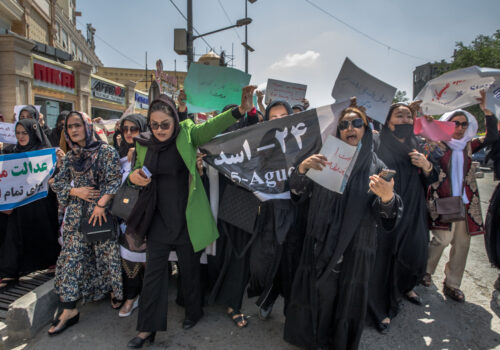
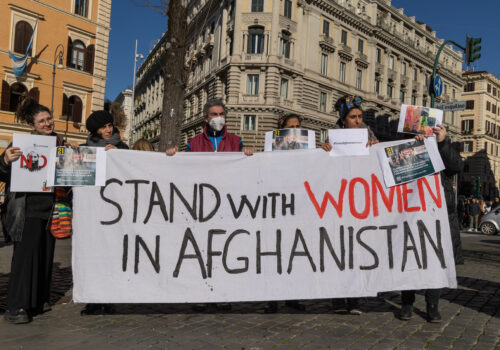
After the Taliban’s return to power on August 15, 2021, women in Afghanistan are treated as second-class citizens, systematically stripped of their rights. Over eighty decrees issued by the Taliban confine women to their homes and ban girls from attending school, turning Afghanistan into a prison for women and girls.

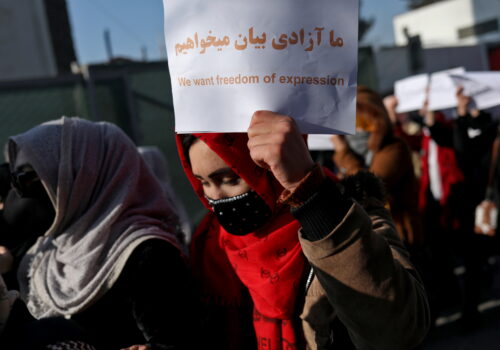
This gender apartheid is reinforced by new educational curricula and severe restrictions on women’s participation in every aspect of society. Women’s protests against these injustices have been met with harsh repression, including imprisonment, torture, and accusations of being influenced by foreign entities.

Inside the Taliban’s gender apartheid, a joint project of the Civic Engagement Project and the Atlantic Council’s South Asia Center, highlights the stories of women who have courageously resisted these injustices—women who have endured imprisonment and brutality for their peaceful demands for basic rights. By refusing to remain silent and shedding light on the violence they face, their testimonies serve as evidence in the fight for justice.

The women who have survived this regime are now calling for international recognition of the Taliban’s gender apartheid as a crime against humanity. This recognition would not only validate their suffering but could also challenge the Taliban’s grip on power and pave the way for transitional justice, offering a potential path to healing and justice for Afghan women and girls. 
The South Asia Center is the hub for the Atlantic Council’s analysis of the political, social, geographical, and cultural diversity of the region. ​At the intersection of South Asia and its geopolitics, SAC cultivates dialogue to shape policy and forge ties between the region and the global community.
Content

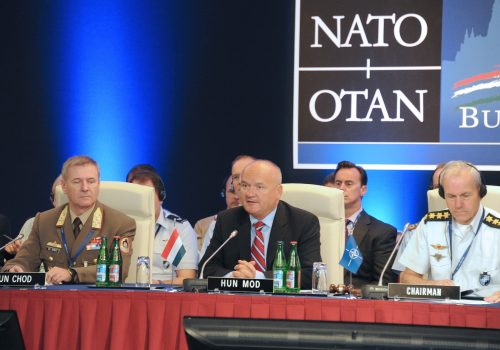
NATO Military Committee Conference 2013, Budapest

NATOSource

Sep 17, 2013

NATO Chiefs of Defense Discuss Afghanistan, Kosovo, and Force Transformation

By NATO

NATO Chiefs of Defence concluded a successful 2013 Military Committee Conference, laying out recommendations to the Defence Ministers, who will meet next month in Brussels.

Afghanistan NATO
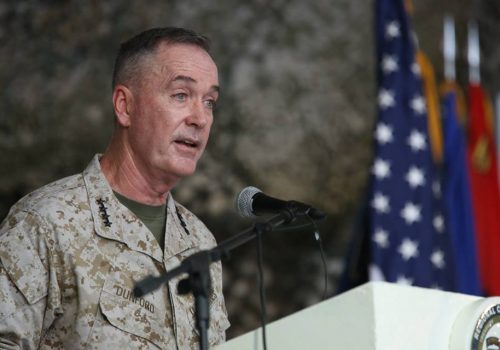
USMC Gen. Joseph Dunford, Commander of ISAF

NATOSource

Sep 3, 2013

NATO Commander: Afghan Forces Suffering Too Many Casualties

By Emma Graham-Harrison, Guardian

Afghanistan’s police and army are losing too many men in battle, and may need up to five more years of western support

Afghanistan NATO
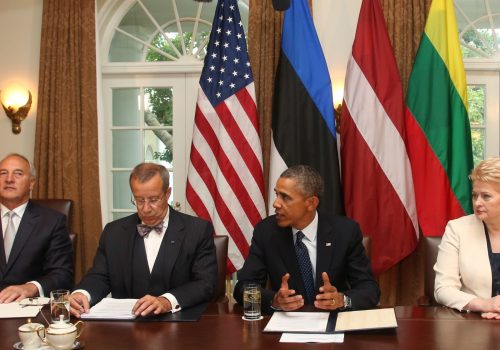
Obama meeting with Baltic leaders at White House

NATOSource

Aug 30, 2013

Obama Highlights Strong Relationships with Nordic-Baltic Countries

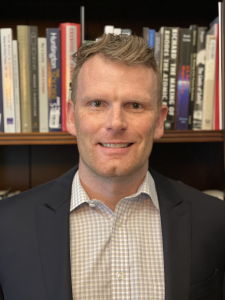
By Magnus Nordenman

President Barack Obama’s meeting in Washington with the presidents of the Baltic states, his trip to Sweden, and his meeting with the Nordic heads of government while there, is a recognition of the broad success story of the region

Afghanistan NATO
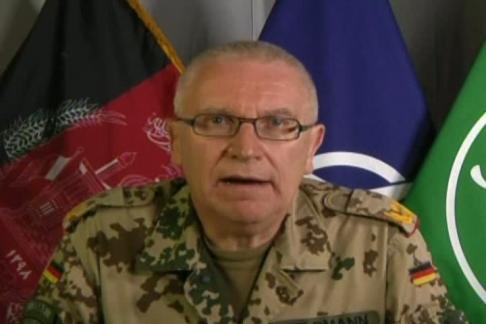
ISAF spokesman Gen. Heinz Feldmann

NATOSource

Aug 22, 2013

NATO has Exited Roughly 90 Percent of its Bases in Afghanistan

By Pajhwok Afghan News

The International Security Assistance Force (ISAF) on Tuesday said foreign soldiers had exited more than 700 military bases ahead of their withdrawal from the country in 2014.

Afghanistan NATO
aco 8 19 13 Ramstein Rover

NATOSource

Aug 19, 2013

NATO Exercise Ramstein Rover Begins Soon in Czech Republic

By Allied Command Operations

From 2 to 20 September 2013 a new edition of NATO’s Ramstein Rover (RARO) exercise series for Forward Air Controllers (FACs) will take place in the Czech Republic, where it had already been conducted last year.

Afghanistan Germany
Russian Deputy Defense Minister Anatoly Antonov

NATOSource

Aug 16, 2013

NATO Pullout From Afghanistan ‘Too Hasty’ – Russian Defense Official

By RIA Novosti

ISAF “has been too hasty about making the final decision to pull out in 2014,” Deputy Defense Minister Anatoly Antonov said, adding that Afghan “domestic security forces capable of countering radical elements have not yet been created.”

Afghanistan NATO

Event Recap

Jul 30, 2013

Debating the United States’ Role in Afghanistan After 2014

The South Asia Center and the Brent Scowcroft Center for International Security hosted a panel of experts to discuss the winding down of the war in Afghanistan, and what role, if any, should the United States play in shaping the future of Afghanistan.

Afghanistan

Transcript

Jul 30, 2013

Transcript: Debating the United States’ Role in Afghanistan After 2014

Full transcript of the July 30 event “Debating the United States’ Role in Afghanistan After 2014” hosted by the Atlantic Council’s South Asia Center and Brent Scowcroft Center on International Security.

Afghanistan United States and Canada

New Atlanticist

Jul 26, 2013

Can Gratitude Improve American Policy in Afghanistan?

By Jeff Lightfoot

General de Gaulle is attributed to have said “Countries have no friends, only interests.” He offered this contribution to international relations theory from his war-time exile in London, where he depended entirely on the hospitality of the British government for the survival of Free France.

Afghanistan Politics & Diplomacy

New Atlanticist

Jul 17, 2013

Operation Irresolute Support

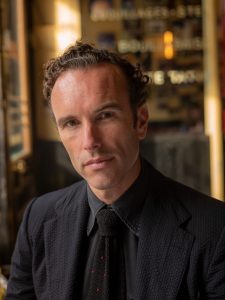
By Julian Lindley-French

In 1842 Sir Charles Napier wrote perhaps the most succinct telegram in military history to mark his success at the end of the First Anglo-Afghan War – “Peccavi,” he wrote, “I have sinned.” It was a play on words as Napier had just conquered what is today the Pakistani province of Sindh. In another play […]

Afghanistan

Experts