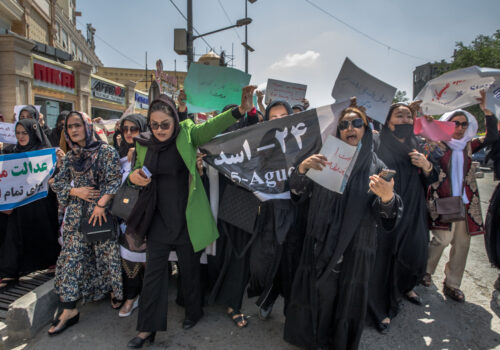
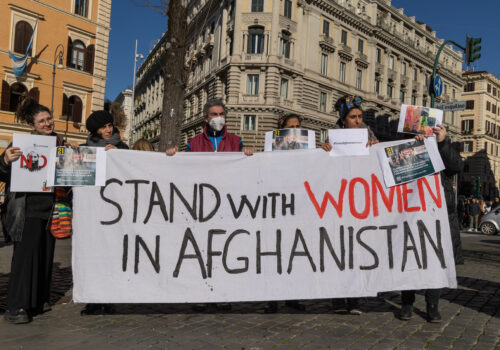
After the Taliban’s return to power on August 15, 2021, women in Afghanistan are treated as second-class citizens, systematically stripped of their rights. Over eighty decrees issued by the Taliban confine women to their homes and ban girls from attending school, turning Afghanistan into a prison for women and girls.

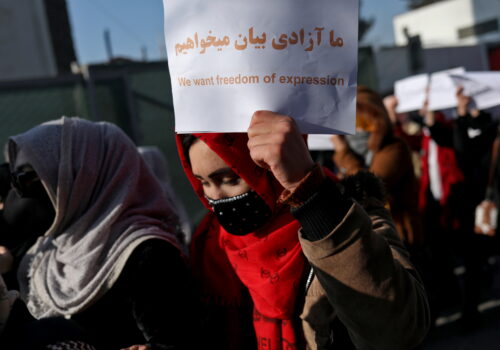
This gender apartheid is reinforced by new educational curricula and severe restrictions on women’s participation in every aspect of society. Women’s protests against these injustices have been met with harsh repression, including imprisonment, torture, and accusations of being influenced by foreign entities.

Inside the Taliban’s gender apartheid, a joint project of the Civic Engagement Project and the Atlantic Council’s South Asia Center, highlights the stories of women who have courageously resisted these injustices—women who have endured imprisonment and brutality for their peaceful demands for basic rights. By refusing to remain silent and shedding light on the violence they face, their testimonies serve as evidence in the fight for justice.

The women who have survived this regime are now calling for international recognition of the Taliban’s gender apartheid as a crime against humanity. This recognition would not only validate their suffering but could also challenge the Taliban’s grip on power and pave the way for transitional justice, offering a potential path to healing and justice for Afghan women and girls. 
The South Asia Center is the hub for the Atlantic Council’s analysis of the political, social, geographical, and cultural diversity of the region. ​At the intersection of South Asia and its geopolitics, SAC cultivates dialogue to shape policy and forge ties between the region and the global community.
Content

In the News

Oct 28, 2021

Nawaz quoted in The News: Bombed judgements – 1

Afghanistan
Crisis Management

In the News

Oct 28, 2021

Cunningham with BBC’s Yalda Hakim on the US withdrawal from Afghanistan

By Atlantic Council

Afghanistan
Conflict

In the News

Oct 28, 2021

Nasr quoted in Verve Times: Iran Wanted U.S. Out Of Afghanistan. It May Be Sorry The Wish Came True.

By Atlantic Council

Afghanistan
Economy & Business

In the News

Oct 28, 2021

Nasr quoted in The New York Times: Iran Wanted U.S. Out of Afghanistan. It May Be Sorry the Wish Came True.

Afghanistan
Iran

In the News

Oct 28, 2021

Sakhi with Notre Dame Events: Prioritizing Afghan Voices: How the International Community Can Assist Afghanistan

By Atlantic Council

Afghanistan
G20

In the News

Oct 28, 2021

Halaimzai and Sakhi in Middle East Institute: Women in Afghanistan: No Hope for Human Rights?

By Atlantic Council

Afghanistan
Politics & Diplomacy

In the News

Oct 26, 2021

Ahmad in The Wall Street Journal: How Pakistan won in Afghanistan

"For decades Islamabad played a double game, hosting the Taliban while posing as a US partner," writes Javid Ahmad in the Wall Street Journal.

Afghanistan
Middle East

In the News

Oct 22, 2021

Nilofar Sakhi writes for 9Dashline: Afghanistan continues to pose a traditional and non-traditional security threat

By Atlantic Council

Afghanistan
Conflict

IranSource

Oct 22, 2021

The Hazara community in Afghanistan is stuck in the middle between Iran and the Taliban

By Saumaun Heiat

With the Taliban having come to their second iteration of power and the announcement of a newly-formed government in Afghanistan in recent weeks, several stakeholders will see a shift in their relationships, namely Iran and Afghanistan’s ethnic Hazara minority

Afghanistan
Iran

In the News

Oct 21, 2021

Sales quoted in Washington Times on the future role of the US in Afghanistan

By Atlantic Council

Afghanistan
Conflict

Experts