Content

The Freedom and Prosperity Equation

Sep 18, 2023

Introduction: The continuing debate about freedom and prosperity

By Dan Negrea, Brad Lips, Kris Mauren

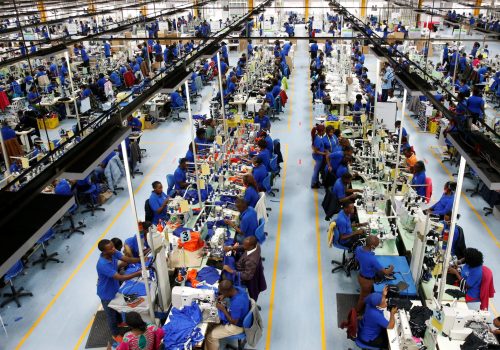
Freedom and prosperity are strongly correlated, and freedom is necessary for sustained economic growth. Some authoritarian regimes have enjoyed some economic success, but the Chinese development model does not provide a sustainable path to prosperity and comes at the expense of human rights and individual freedoms.

Democratic Transitions
Economy & Business

The Freedom and Prosperity Equation

Sep 18, 2023

Pathways to economic prosperity: Theoretical, methodological, and evidential considerations

By Markus Jaeger

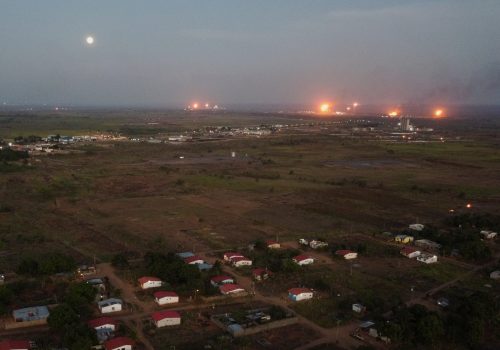
Economic development is a complex, multi-causal phenomenon and it is useful to consider how different elements, including policies and institutions, interact to produce sustained economic growth. Depending on the situation, various reforms can nudge nations toward certain paths.

Freedom and Prosperity
Macroeconomics

The Freedom and Prosperity Equation

Sep 18, 2023

How prepared are conflicting world orders for the next wave of technological innovation?

By Julio Amador Diaz Lopez

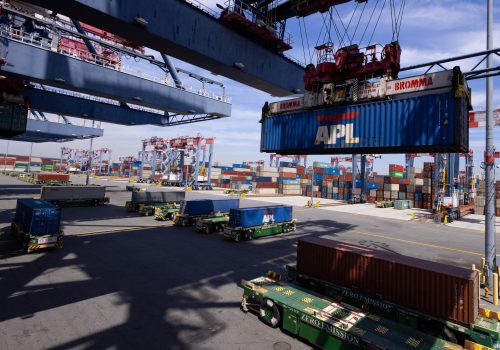
Protecting rule of law, free markets, and diversity of people and ideas remain essential to harnessing new technologies—the key to prosperity in our time.

Entrepreneurship
Freedom and Prosperity

The Freedom and Prosperity Equation

Sep 18, 2023

Prosperity: Freedom and its twin, cooperation

By Michael Klein

Societies need freedoms to prosper, but cooperation is just as important for firms and markets to reach their full potential. The challenge is about finding a balance between the two.

Economy & Business
Freedom and Prosperity

Issue Brief

Sep 18, 2023

Guarantees 2.0: Meeting climate finance needs in the Global South

By Ian Callaghan, George Frampton, Ken Berlin, and Frank Willey

Transforming global energy, manufacturing, and transportation systems for a net-zero future requires a huge investment, but current financial flows toward these goals are vastly insufficient.

Energy & Environment
Energy Markets & Governance
A man rides a boat past toll plaza amid flood water on main Indus highway, following rains and floods during the monsoon season in Sehwan, Pakistan.

Issue Brief

Sep 15, 2023

Empowering Pakistan’s youth to address climate change risks

By Omaer Naeem

Pakistan is highly vulnerable to climate change impacts like flooding and heatwaves. Empowering Pakistani youth in climate adaptation is critical as they will face intensified effects. This brief advocates for greater involvement of youth through grassroots organization, policy advocacy, innovative solutions, and strengthening international cooperation on climate action.

Civil Society
Pakistan

Issue Brief

Sep 11, 2023

The draft ended fifty years ago. Can the all-volunteer force survive another fifty?

By James L. Jones, Jr., Arnold Punaro

Retired Marine Corps Generals James L. Jones and Arnold Punaro argue that in its current form the United States' all-volunteer force is on an unsustainable path.

Civil Society
Defense Policy

Issue Brief

Sep 6, 2023

Strengthening financial inclusion in the Caribbean: Treating correspondent banking relationships as a public good

By Wazim Mowla

To bolster financial inclusion in the Caribbean, the United States must treat corresponding banking relationships as a public good.

Caribbean
Economy & Business

Issue Brief

Sep 6, 2023

Alternative security futures in the High North

By David Auerswald

Climate change, combined with increasing geopolitical competition and hostilities, has focused renewed attention on national security interests in the Arctic. By 2035, how will those variables combine to influence the High North?

China
Climate Change & Climate Action
Solar panels are pictured.

In-Depth Research & Reports

Sep 6, 2023

Policy memo: A NATO-style spending target could fund long-term decarbonization

By Ben Judah, Francis Shin, Rachel Rizzo, Théophile Pouget-Abadie

EU member states and like-minded allies should set national-level spending targets, each based on a percentage of their respective annual GDPs, for decarbonization-related purposes. This would provide the basis of an international coalition that would ramp up global climate spending and set a useful benchmark to anchor high-level diplomatic discussions on the subject.

Climate Change & Climate Action
European Union