

Financial Sanctions and Economic Coercion

Financial sanctions and other forms of economic coercion have become policy tools of choice for the US government to deter illegal activity by international actors or to pressure governments into reversing actions that harm US interests. Yet these instruments and their potential pitfalls are often misunderstood. Restrictive economic measures such as financial sanctions, export controls, tariffs, and investment screening can play an important role in advancing certain policy objectives, but they risk being ineffective if misapplied or poorly implemented. Policymakers must also recognize the impact of economic statecraft on the private sector, which bears many of the compliance burdens and operational costs associated with these measures.

Energy Sanctions Dashboard

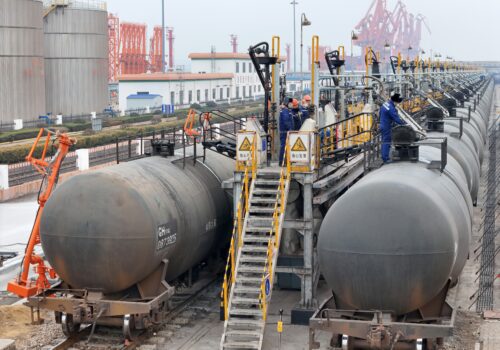
This dashboard focuses on US sanctions and restrictive measures placed on crude oil from Russia, Iran, and Venezuela—including the unintended consequences and the lessons learned.

Econographics

Apr 17, 2025

Russia Sanctions Database

By Kimberly Donovan, Maia Nikoladze, Lize de Kruijf

The Atlantic Council’s Russia Sanctions Database tracks the level of coordination among Western allies in sanctioning Russian entities, individuals, vessels, and aircraft, and shows where gaps still remain.

Eastern Europe Economy & Business

Recent analysis

Programs

At the intersection of economics, finance, and foreign policy, the GeoEconomics Center is a translation hub with the goal of helping shape a better global economic future.

Content

EconoGraphics

Oct 30, 2018

SWIFTly Disconnecting Iran

By Ole Moehr

With the snapback of significant US sanctions against Iran fast approaching on November 5th, speculation is mounting over how the Trump Administration will enforce the sanctions, and how its European allies might attempt to bypass them. The previous EconoGraphic outlined how a Special Purpose Vehicle (SPV) may facilitate trade between European small and medium-sized enterprises (SMEs) and Iran after US sanctions go back into effect. This edition of the EconoGraphic provides a primer on the Society for Worldwide Interbank Financial Telecommunication (SWIFT) and explains why sanctioning the financial messaging service would likely cause more harm than good.

Economy & Business Financial Sanctions and Economic Coercion

New Atlanticist

Oct 29, 2018

The future of the dollar in a post-Iran deal World

By Michael B. Greenwald

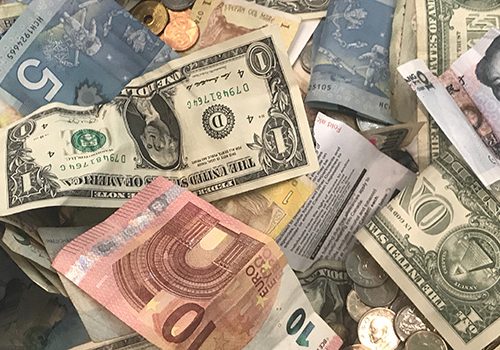
Some argue that if Iran shifted to euro-denominated transactions, it could spark a broader shift within energy exporting countries that would eventually weaken the USD as the reserve currency, as well as undermine the impact of future unilateral US sanctions.

Financial Sanctions and Economic Coercion Iran
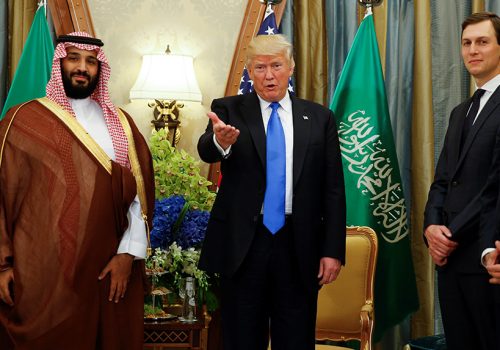
Saudi Crown Prince Mohammed bin Salman meets US President Donald J. Trump and Jared Kushner.

New Atlanticist

Oct 23, 2018

Oil, arms, and counterterrorism: A look at Saudi options and how far the Kingdom may go

By Nabeel Khoury

Given the wide opprobrium in the US Congress, media, and private sector, it is yet to be seen whether the West, particularly the United States, will punish Saudi Arabia with sanctions.

Financial Sanctions and Economic Coercion International Norms

EconoGraphics

Oct 9, 2018

JCPOA in Peril – EU SPV to the Rescue?

By Ole Moehr

The European Union’s (EU) foreign policy chief, Federica Mogherini, recently announced that the EU will set-up a special purpose vehicle (SPV) “to facilitate legitimate financial transactions with Iran and allow European companies to continue to trade with Iran.” In response, our visiting senior fellow, Samantha Sultoon, argued that this SPV will not provide a reliable path around US sanctions, and may undermine the effectiveness of US and EU sanctions in the long-run. This edition of the EconoGraphic explains how the SPV would work in practice and outlines why this mechanism is unlikely to offer Iran enough economic upside to keep the Joint Comprehensive Plan of Action (JCPOA) alive.

Economy & Business European Union

New Atlanticist

Sep 25, 2018

Europe unlikely to avoid Trump’s Iran sanctions

By Samantha Sultoon

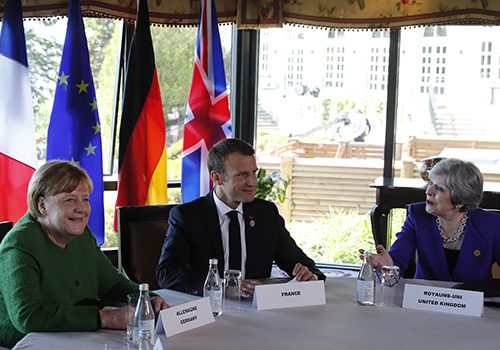
The establishment of a sanctions evasion tool would undermine the EU’s own sanctions enforcement by creating a domestic workaround that could to be applied to any other sanctions program now or in the future.

Financial Sanctions and Economic Coercion France

Event Recap

Sep 5, 2018

Roundtable Discussion with Ambassador Daniel Fried on Russia Sanctions:

By Global Business & Economics Program

On Wednesday, September 5, 2018, the Atlantic Council’s Economic Sanctions Initiative hosted a private roundtable discussion on US Sanctions towards Russia with the Ambassador Daniel Fried.

Economy & Business Financial Sanctions and Economic Coercion

New Atlanticist

Sep 5, 2018

Russian Sovereign debt in the crosshairs

By Brian O'Toole and Josh Rudolph

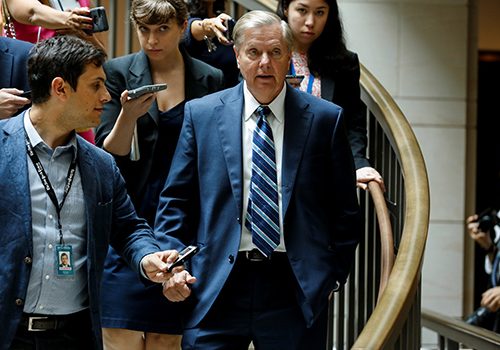
McCain was right. As noted before, inconsistent words and actions have precluded the Trump administration from establishing a sufficient deterrence to Russian aggression.

Financial Sanctions and Economic Coercion Russia

New Atlanticist

Aug 22, 2018

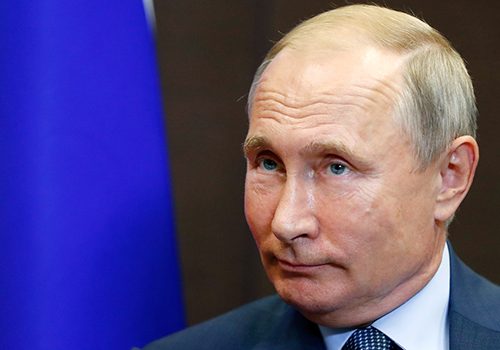
Follow the money: How the United States can stop helping Putin

By Roshni Majumdar

If Putin’s grip on power was to be threatened, his offshore wealth could be critical to defend his political power. Holding onto this financial reserve is key for Putin.

Corruption Financial Sanctions and Economic Coercion

New Atlanticist

Aug 17, 2018

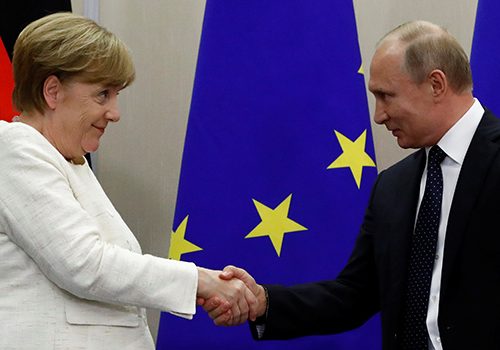
A breakthrough in Berlin? Not so fast.

By Jörn Fleck

Moscow’s vocal reaction to the new US sanctions may also signal Putin’s willingness to pursue a renewed dialogue with Germany.

Financial Sanctions and Economic Coercion Germany

New Atlanticist

Aug 10, 2018

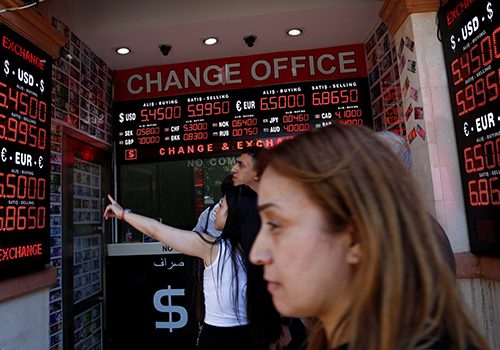
Trump extends feud with Turkey: Now what?

By David Wemer

What does this escalation mean for US-Turkey relations and what should Washington and Ankara do from here?

Financial Sanctions and Economic Coercion Politics & Diplomacy

Experts