Oil & Gas
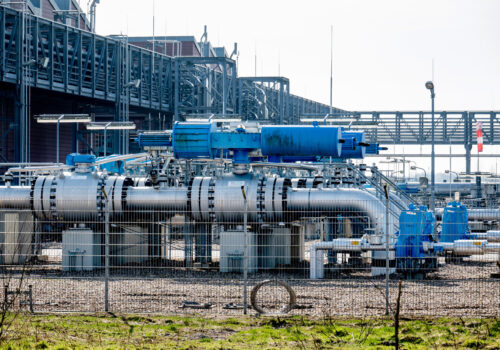
Even in a more carbon-conscious world, oil and gas will continue to play a significant role in the global energy system. From petrochemicals to power generation, oil and gas technologies will be a central player in the “dual challenge” of meeting increased energy demand and the need for low-carbon energy, making oil and gas still critical for international trade, investment, and geopolitics.
Recent analysis
Dispatches
Mar 17, 2026
How the Iran war could trigger a European energy crisis
By
Lisa Basquel
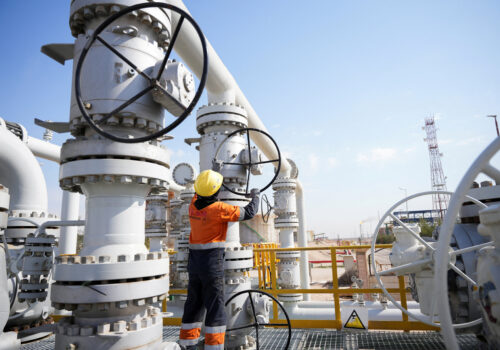
Refilling Europe’s depleted gas storage—already a difficult task given the continent’s efforts to stop purchasing Russian gas—is even more difficult now with the Strait of Hormuz effectively closed.
Dispatches
Mar 12, 2026
Energy under attack: What the Gulf can learn from Ukraine and Iraq
By
Matthew Keating
In their successes and shortcomings, Iraq and Ukraine are cases worth studying by countries currently under attack from Iran.
Dispatches
Mar 5, 2026
What a Middle East oil and LNG crisis means for China and East Asia
By
Joseph Webster, Reid I’Anson, and Kevin Li
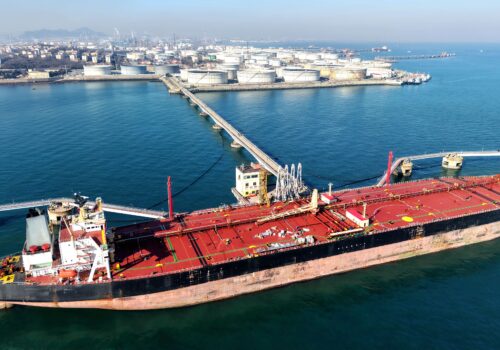
China, Japan, South Korea, and Taiwan would each be affected by a collapse in energy through the Strait of Hormuz, which Iran has effectively closed.
Programs

The Global Energy Center develops and promotes pragmatic and nonpartisan policy solutions designed to advance global energy security, enhance economic opportunity, and accelerate pathways to net-zero emissions.
Events
Global Energy Forum
Jan 9, 2020
European energy diversification: How alternative sources, routes, and clean technologies can bolster energy security and decarbonization
By
Richard L. Morningstar, András Simonyi, Olga Khakova, Irina Markina
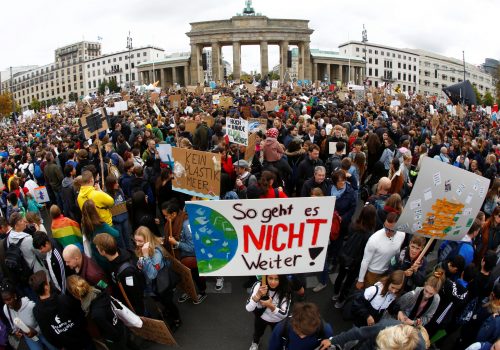
The European Union’s efforts to achieve a carbon-neutral economy present a unique and timely opportunity to strengthen European energy security. What is the EU currently doing to meet its decarbonization goals, address the role of natural gas in Europe’s low-carbon future, and explain the potential for new gas sources, alternative gas routes, and clean energy technologies to reduce carbon emissions? And how can this be done while simultaneously increasing European energy security and opportunities for transatlantic cooperation?
Global Energy Forum
Jan 9, 2020
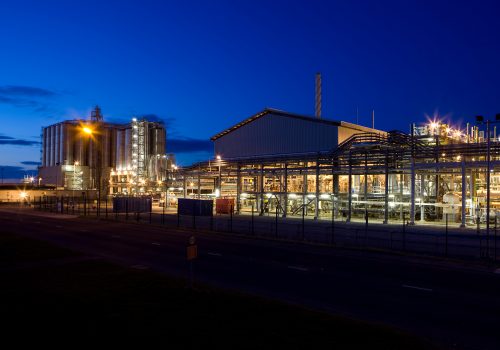
The Saudi Aramco-SABIC merger: How acquiring SABIC fits into Aramco’s long-term diversification strategy
By
Private: Jean-François Seznec
Throughout 2019, financial markets have watched the planned Saudi Aramco initial public offering (IPO), which was finally launched in December. A quieter, but no less significant, story was the Saudi oil company’s acquisition of SABIC. Saudi Aramco strove to have a successful IPO, especially through increased transparency and diversification, and the SABIC acquisition was a key element of Saudi oil company's diversification strategy. Going forward, what does the merger mean for both companies, what is the new relationship between Saudi Aramco and SABIC, and what are the merger’s implications for the intricate relationship between the various bureaucracies and leadership in Saudi Arabia?
Tue, February 4, 2020 • 3:00 pm ET
The global status of CCS: The next wave of carbon capture