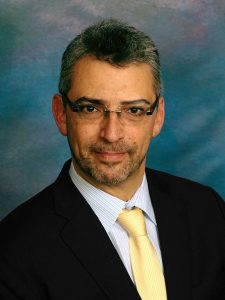
After the Taliban’s return to power on August 15, 2021, women in Afghanistan are treated as second-class citizens, systematically stripped of their rights. Over eighty decrees issued by the Taliban confine women to their homes and ban girls from attending school, turning Afghanistan into a prison for women and girls.
This gender apartheid is reinforced by new educational curricula and severe restrictions on women’s participation in every aspect of society. Women’s protests against these injustices have been met with harsh repression, including imprisonment, torture, and accusations of being influenced by foreign entities.
Inside the Taliban’s gender apartheid, a joint project of the Civic Engagement Project and the Atlantic Council’s South Asia Center, highlights the stories of women who have courageously resisted these injustices—women who have endured imprisonment and brutality for their peaceful demands for basic rights. By refusing to remain silent and shedding light on the violence they face, their testimonies serve as evidence in the fight for justice.
The women who have survived this regime are now calling for international recognition of the Taliban’s gender apartheid as a crime against humanity. This recognition would not only validate their suffering but could also challenge the Taliban’s grip on power and pave the way for transitional justice, offering a potential path to healing and justice for Afghan women and girls.
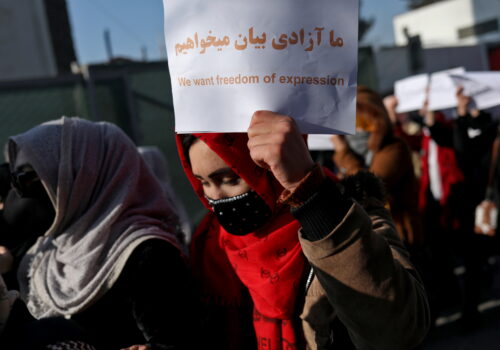
Inside the Taliban’s gender apartheid
Nov 25, 2024
A protester’s story from inside a Taliban prison
By
Narges Sadat
Narges Sadat recounts the conditions she was forced to endure in a Taliban prison for protesting Afghanistan’s gender apartheid regime.
New Atlanticist
Aug 14, 2024
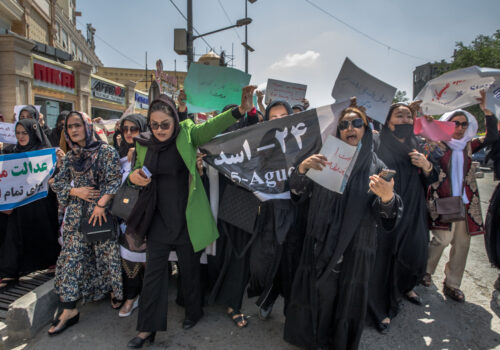
I was imprisoned and tortured by the Taliban for protesting gender apartheid in Afghanistan
By
Zholia Parsi
Zholia Parsi describes protesting against gender apartheid in Afghanistan after the Taliban returned and abuse she faced as a result.
Inside the Taliban’s gender apartheid
Apr 30, 2024
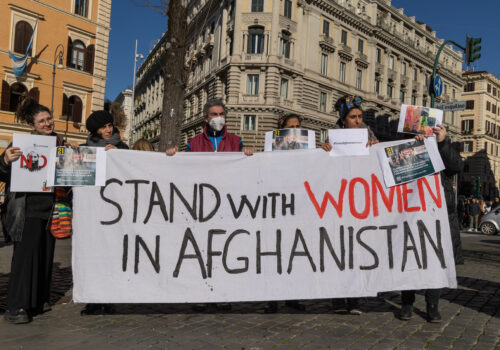
Don’t look away: The Taliban’s mistreatment of women has global ramifications
By
Samira Abrar
The Taliban’s impunity for its violations of international human rights law poses grave risks to women’s rights worldwide.

The South Asia Center is the hub for the Atlantic Council’s analysis of the political, social, geographical, and cultural diversity of the region. At the intersection of South Asia and its geopolitics, SAC cultivates dialogue to shape policy and forge ties between the region and the global community.
Content