Atlantic Council blogs

Atlantic Council blogs provide short-form analyses from Council experts and a wider community of global voices on the world’s most important news stories.
View all
of our blogs
Subscribe to our
newsletters

Latest from across our blogs

New Atlanticist

Oct 30, 2018

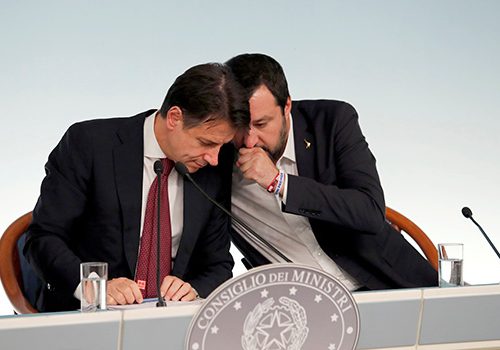
Rome’s options in budget battle with Brussels

By David A. Wemer

The Italian proposal violates a European Commission stipulation that budget deficits must decline year-on-year. Instead, under this proposal, Rome’s deficit would continue to grow.

Eurozone International Organizations

IranSource

Oct 30, 2018

The Future of the Dollar in a Post-Iran Deal World

By Michael B. Greenwald

The European Union’s announcement in September 2018 that it would begin to create a special payments channel with Iran in response to the US withdrawal from the Joint Comprehensive Plan of Action (JCPOA) once again raises the question of the role of the US dollar (USD) in the international economic order. Under the surface of […]

Iran

EconoGraphics

Oct 30, 2018

SWIFTly Disconnecting Iran

By Ole Moehr

With the snapback of significant US sanctions against Iran fast approaching on November 5th, speculation is mounting over how the Trump Administration will enforce the sanctions, and how its European allies might attempt to bypass them. The previous EconoGraphic outlined how a Special Purpose Vehicle (SPV) may facilitate trade between European small and medium-sized enterprises (SMEs) and Iran after US sanctions go back into effect. This edition of the EconoGraphic provides a primer on the Society for Worldwide Interbank Financial Telecommunication (SWIFT) and explains why sanctioning the financial messaging service would likely cause more harm than good.

Economy & Business Financial Sanctions and Economic Coercion

SyriaSource

Oct 29, 2018

In Istanbul, geopolitical maneuvering but no progress

By Aaron Stein & Faysal Itani

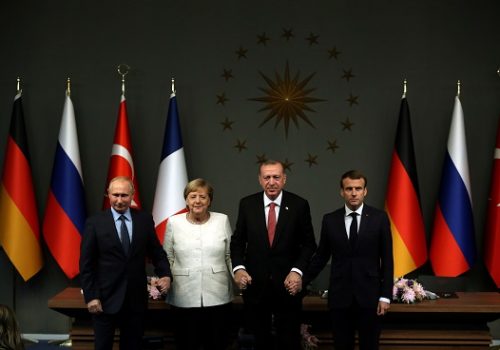
A summit held in Istanbul on Saturday failed to produce any breakthroughs in the core disagreements over the Syrian conflict. It did however have notable geopolitical implications that affect each of the four attendees Russia, Germany, and France, and Turkey – two of whom are new to an effort created to manage Russia and Turkish interests in Syria. Significantly, the United States took no part in the meeting despite the presence of two major European allies and NATO partner, Turkey.

Syria Turkey

SyriaSource

Oct 29, 2018

Strategic change and its challenges

By Frederic C. Hof

During the Obama administration, Syria was treated as a two-part puzzle divided by the Euphrates River. East of the Euphrates, the objective was to degrade and destroy ISIS (ISIL, Daesh, Islamic State). The strategy was to support the anti-ISIS combat operations of a Kurdish (eventually Kurdish-dominated) militia with weapons, ammunition, supplies, and advisors on the ground, and combat aircraft aloft. Although the Trump administration believes it can take credit for having accelerated the anti-ISIS campaign, the objective and strategy in the east have remained constant.

Syria

IranSource

Oct 29, 2018

Why the Iranian Opposition’s Bet on Trump May Fail

By Maysam Behravesh

Much of the Iranian opposition abroad is thrilled with anticipation these days. It is looking forward to the resumption of US secondary sanctions against Iran’s oil industry and Central Bank on November 5, and the hard blow the Iranian economy is expected to take as a result. The opposition, along with some key members of […]

Iran
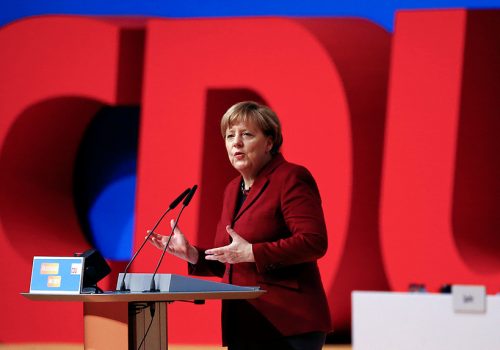
German Chancellor Angela Merkel

New Atlanticist

Oct 29, 2018

Angela Merkel will not seek re-election as Germany’s chancellor in 2021

By Ashish Kumar Sen

"While one should never underestimate Merkel, it may be time to start thinking about her political obituary," said Atlantic Council distinguished fellow, Fran Burwell.

Elections Germany

New Atlanticist

Oct 29, 2018

The future of the dollar in a post-Iran deal World

By Michael B. Greenwald

Some argue that if Iran shifted to euro-denominated transactions, it could spark a broader shift within energy exporting countries that would eventually weaken the USD as the reserve currency, as well as undermine the impact of future unilateral US sanctions.

Financial Sanctions and Economic Coercion Iran

UkraineAlert

Oct 29, 2018

How Ukraine’s Presidential Race Is Shaping Up

By Mykola Vorobiov

Ukraine’s presidential race is in full swing, even though the official campaign period has not yet begun. At this point, incumbent President Petro Poroshenko and former Prime Minister Yulia Tymoshenko may make the second round; no candidate is expected to take 50 percent in the first round. If elections were held now, Tymoshenko would take […]

Ukraine

New Atlanticist

Oct 28, 2018

Brazil Swings right with election of Jair Bolsonaro as President

By Ashish Kumar Sen

"The convincing election of Jair Bolsonaro today shows Brazilians' rejection of the status quo. His election reflects voter disenchantment with corruption, insecurity, and anemic economic growth,” said Jason Marczak, director of the Atlantic Council’s Adrienne Arsht Latin America Center.

Brazil Elections