In-depth research and reports

Our programs and centers deliver relevant, policy-focused research that matters to inform debate and action. Our focus is always on moving debate forward, integrating analysis with active, relevant conclusions throughout our published work.
Issue Brief

Jun 3, 2016

A US strategy for building defense and deterrence in the Baltic states

By DAMON WILSON AND MAGNUS NORDENMAN

Since the start of the Ukraine crisis, the Baltic States have come into sharp focus as a key friction zone between a much more assertive Russia on the one hand, and the United States, NATO, and the broader transatlantic community on the other. NATO and the United States have made promising first steps to better […]

NATO Northern Europe

Issue Brief

Jun 3, 2016

Countering Russian aggression in Eastern Europe

By JONATHAN P. DUNNE

The past decade has witnessed a marked increase in Russian aggression and assertiveness. Many Eastern European nations, the Baltic States in particular, have recognized this disturbing and fundamental change in the European security environment and are responding both nationally and multilaterally. In “Countering Russian Aggression in Eastern Europe,” Jonathan P. Dunne, the Scowcroft Center’s US […]

Eastern Europe NATO

Atlantic Council Strategy Paper Series

Jun 2, 2016

Shape, steer, and sustain: a US strategy for the new global economic order

By Robert D. Hormats

Ten years ago, most observers predicted a period of smooth sailing for the world economy. Today, the world looks very different. To better deal with this new global economic environment, the United States requires a new strategy for the twenty-first century. That strategy should enable the country to shape, steer, and sustain a new global economic order that accomplishes several key objectives underpinning prosperity and stability for greater numbers of Americans.

China Economy & Business

Report

Jun 1, 2016

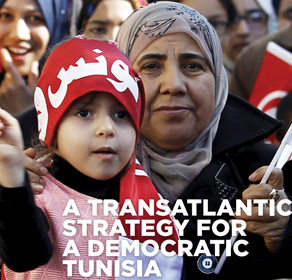
A transatlantic strategy for a democratic Tunisia

By Frances G. Burwell, Amy Hawthorne, Karim Mezran, and Elissa Miller

Five years after Tunisia’s revolution, which ousted longtime authoritarian ruler Zine El Abidine Ben Ali and put the country on the path towards nascent democracy, democratic and economic reforms have stalled. Following the revolution, the United States, the European Union (EU), and EU member states—namely France, Germany, and the United Kingdom—substantially boosted assistance to Tunisia. […]

Democratic Transitions North Africa

Issue Brief

May 26, 2016

Cyber, extended deterrence, and NATO

By Franklin D. Kramer, Robert J. Butler, and Catherine Lotrionte

Cyber is relevant in conflict as well as in lesser circumstances such as espionage and crime. This paper focuses on a conflict, both conventional and hybrid, with an adversary, such as Russia, that has advanced cyber capabilities (Tier V/VI as designated by the Defense Science Board) and includes a conflict with an improving, but less capable nation-state such as Iran.

Cybersecurity Europe & Eurasia

Report

May 25, 2016

Pacific Alliance 2.0: Next Steps in Integration

By Jason Marczak and Samuel George, with María Fernanda Pérez Argüello, Andrea Saldarriaga Jiménez

The Pacific Alliance–an innovative pact among Chile, Colombia, Mexico, and Peru–has unprecedented opportunity to capitalize on political changes in Brazil and Argentina and move the region into a new era of regional integration. A new publication by the Atlantic Council’s Adrienne Arsht Latin America Center and the Bertelsmann Foundation, released just weeks ahead of the […]

Mexico

Issue Brief

May 11, 2016

Will Iran’s Human Rights Record Improve?

By Barbara Slavin

Read the Publication (PDF) In the aftermath of the Joint Comprehensive Plan of Action (JCPOA), a major question has been whether the landmark nuclear deal would have any impact on Iran’s other policies, including its record on human rights. While US President Barack Obama’s administration stressed that in negotiating the JCPOA its focus was on […]

Issue Brief

May 11, 2016

Congo blues: Scoring Kabila’s rule

By Pierre Englebert

Across Africa, leaders are tinkering with term limits and prolonging their tenures. In an increasingly unstable Central African region, Joseph Kabila, President of the Democratic Republic of the Congo (DRC), appears poised to be the next African leader to sidestep the relinquishing of power and the election of his successor, constitutionally mandated for November 2016. […]

Africa Civil Society

Report

May 10, 2016

Last Call for TTIP: The Views of European Diplomats in Washington, DC

By Marie Kasperek and Andrea Montanino

After more than three years of negotiations to forge a Transatlantic Trade and Investment Partnership (TTIP), many elements of the agreement are still far from settled. However, it is possible to reach agreement in 2016. The negotiators are determined, and there is mounting awareness that an agreement that underscores the importance of the transatlantic economic […]

Economy & Business European Union

Issue Brief

May 10, 2016

NATO’s hollowing values agenda

By Stanley Sloan

When NATO leaders convene for the Warsaw summit this July, their agenda will be dominated by external threats—from an aggressive Russia, to the Islamic State of Iraq and al-Sham (ISIS), to the refugee crisis that has spread from the Middle East and North Africa throughout Europe. Yet an equally important issue, though not explicitly on […]

Issue Brief

May 6, 2016

NATO’s next consortium: Maritime patrol aircraft

By Magnus Nordenman

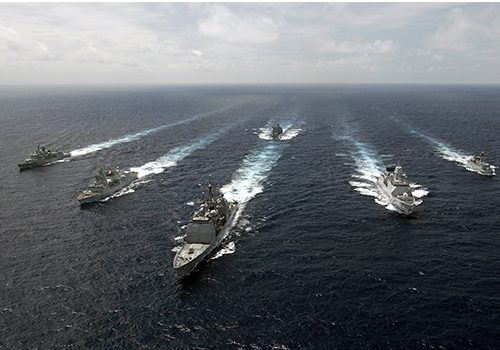
Airborne systems to provide MDA, and maritime patrol aircraft (MPAs) in particular, stand out among the most important and urgent maritime requirements. Maritime patrol aircraft fulfill a number of roles, from high-end Anti-Submarine Warfare and Anti-Surface Warfare (ASuW) to maritime Intelligence, Surveillance, and Reconnaissance (ISR), and search and rescue at sea. NATO members must now recapture these capabilities and invest in a robust maritime patrol aircraft fleet.

Europe & Eurasia Maritime Security

Issue Brief

May 6, 2016

Stolen Future

By Diane Francis

Diane Francis’ new issue brief, “Stolen Future,” exposes the depth and breadth of the economic devastation a corruption fueled oligarchy has wrought in Ukraine. In the wake of the Euromaidan Revolution, Ukraine has the opportunity to break the cycle of wealth appropriation which has plagued both Russia and Ukraine since the collapse of the Soviet […]

Corruption Democratic Transitions

Report

May 6, 2016

Effective Defense of the Baltics

By Franklin D. Kramer and Bantz J. Craddock

Read the Publication (PDF) NATO has the capacity to win a conventional war in the Baltics, if appropriate steps are taken. Effective defense of the Baltic nations of Estonia, Latvia, and Lithuania—and deterrence built upon such defensive capabilities—is one of the key challenges facing NATO and its member nations. Russia’s actions, geopolitical rhetoric, and geographic […]

Issue Brief

May 5, 2016

Islam and sharia law

By Yussef Auf

With the meteoric rise of Islamic political movements in 2011, the issue of Sharia law has come to the forefront of a debate around the role of religion in governance. In his issue brief “Islam and Sharia Law,” Atlantic Council’s Nonresident Fellow Yussef Auf identifies and explains the challenges of incorporating Sharia law into the […]

Report

May 3, 2016

The waning of Petrocaribe? Central America and Caribbean energy in transition

By David L. Goldwyn, Cory R. Gill

Petrocaribe, Caracas’ eleven-year-old energy and diplomatic alliance, is weakening. As Venezuela spirals closer to economic demise, the United States and the international community have an unprecedented opportunity to support Central America and the Caribbean’s transition away from Petrocaribe. How can the United States, Central America, and the Caribbean to advance together toward a more sustainable energy future?

Energy & Environment Energy Markets & Governance

Issue Brief

May 3, 2016

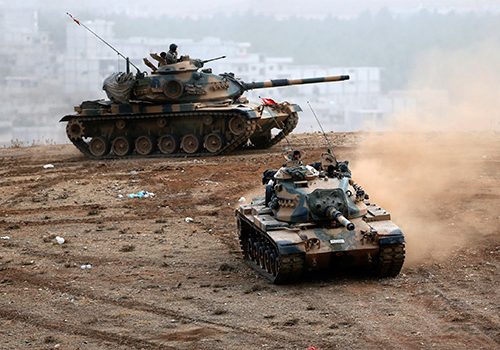
Turkey’s Syria predicament

By Faysal Itani and Aaron Stein

Turkey has been the most engaged regional player in northern Syria and is the external actor most responsible for the emergence of the opposition to the Syrian regime. In “Turkey’s Syria Predicament,” authors Faysal Itani and Aaron Stein of the Atlantic Council’s Rafik Hariri Center for the Middle East examine Turkey’s involvement, its implications for […]

Syria Turkey
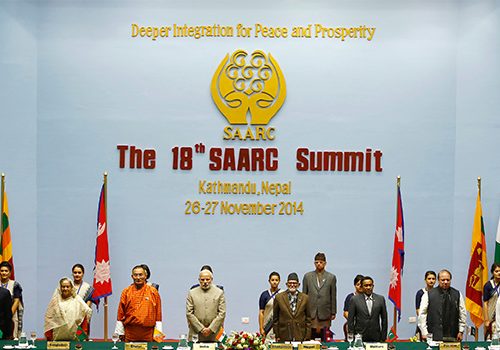
The 18th SAARC Summit

Issue Brief

Apr 26, 2016

Cooperation in South Asia: The case for redefining alliances

By MANJARI CHATTERJEE MILLER AND BHARATH GOPALASWAMY

Political mistrust in the South Asian Association for Regional Cooperation (SAARC) is high and this, in turn, has historically led to shortsighted economic policies and disjointed coordination. As India asserts itself as a global economic player, its leadership, specifically in SAARC, may lead to the political successes necessary to ensure broader connectivity and cooperation in […]

Politics & Diplomacy South Asia

Report

Apr 21, 2016

Ten Arguments for TTIP and the Concerns to Address

By Andrea Montanino, Earl Anthony Wayne

The United States and the European Union (EU) share the largest trade and investment relationship in the world, with more than $5.5 trillion in commerce every year and up to fifteen million jobs generated on both sides of the Atlantic. Currently under negotiations, the Transatlantic Trade and Investment Partnership (TTIP) will bolster this key partnership, […]

Economy & Business European Union

Report

Apr 18, 2016

After hub-and-spoke: US hegemony in a new Gulf security order

By Bilal Y. Saab

The era of Pax Americana in the Gulf, and perhaps in the broader Middle East, is changing. Regional transformation and chaos resulting from the Arab uprisings, the rise of ISIS and its global terrorist reach, shifting US priorities around the world, and the rise of other outside powers in the Gulf have contributed to an […]

Middle East Security & Defense

Issue Brief

Apr 14, 2016

Embracing Impact: How Africa Can Overcome the Emerging Market Downturn

By J. Peter Pham and Aubrey Hruby

In January 2016, oil prices fell to their lowest levels in more than a decade. Meanwhile, China, the world’s second-largest economy, is experiencing its most sluggish growth in a quarter-century—dragging down commodity prices and dampening the global economic outlook. The effects of this broad slowdown will hurt African economies more than most, because China and […]

Africa Angola