stay updated


Featured Reading

featured events

The Russia Tomorrow series
In-depth Research & reports
programs

The Europe Center promotes the transatlantic leadership and strategies required to ensure a strong Europe.
The Eurasia Center’s mission is to enhance transatlantic cooperation in promoting stability, democratic values and prosperity in Eurasia, from Eastern Europe and Turkey in the West to the Caucasus, Russia and Central Asia in the East.
Within the Atlantic Council’s longstanding commitment to strengthening the transatlantic relationship, the Atlantic Council Turkey Program conducts research, provides thought leadership, and offers a platform for strategic dialogue between the US, Turkey, and NATO allies to address the region’s toughest challenges and explore opportunities, including in the fields of energy, business & trade, technology, defense, and security.

Explore the Power Vertical podcast
Explore the Debrief series
Content
New Atlanticist

Mar 18, 2013

The Saga of US-Poland Missile Defense Cooperation

By Ian Brzezinski

Missile defense cooperation stands among the most prominent dimensions of the strategic relationship between the United States and Poland.  Both Washington and Warsaw have been strong advocates of missile defense within NATO.  Poland has enthusiastically accepted US requests to base missile interceptors on its territory, and recently made the acquisition of air and missile defense capability its […]

Missile Defense Poland

New Atlanticist

Mar 15, 2013

Power, Prejudice, and Paranoia

By Julian Lindley-French

“The ides of March have come” says Shakespeare’s Julius Caesar. Standing in the Vatican’s Saint Peter’s Square Tuesday, watching on a big, incongruous screen the princes of the Roman Universal Church file into mass I was struck by the power of this moment when a new pope is chosen to lead the world’s 1.3 billion […]

China Europe & Eurasia

NATOSource

Mar 14, 2013

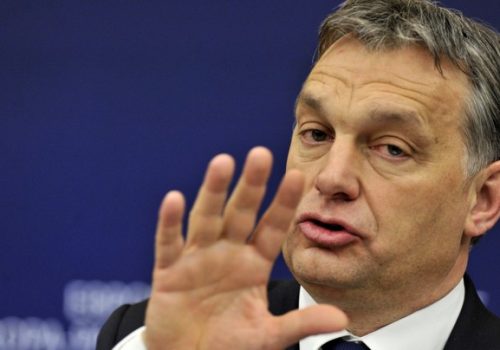
Viktor Orbán’s Hungarian power grab

By Editorial Board of the Washington Post

From Editorial Board of the Washington Post:  Hungarian Prime Minister Viktor Orbán triggered alarm bells around Europe in 2011 when he used a two-thirds majority in parliament to push through a series of measures that concentrated political power, weakened checks and balances and restricted the freedom of the media, religious groups and minorities.

European Union International Organizations

Issue Brief

Mar 13, 2013

Six Months of Georgian Dreams: The State of Play and Ways Forward

By Laura Linderman

The latest Dinu Patriciu Eurasia Center issue brief, “Six Months of Georgian Dreams: The State of Play and Ways Forward,” by assistant director Laura Linderman, reviews key developments following Georgia’s October democratic transfer of power.Download the PDF

The Caucasus

NATOSource

Mar 13, 2013

The transatlantic community needs a common vision

By Isabelle Francois, New Atlanticist

From Isabelle Francois, New Atlanticist:  Eminent American strategic thinkers indeed consider that their country is at a crucial juncture of human history and have advised the Obama administration to seize the opportunity towards collaborative partnerships with its most stalwart allies in Europe

Economy & Business European Union

NATOSource

Mar 12, 2013

The Putin Doctrine

By Leon Aron, Foreign Affairs

From Leon Aron, Foreign Affairs:  The first imperative of Russia’s foreign policy consensus is maintaining the country’s position as a nuclear superpower. The centrality of preserving Russia’s parity with the only other nuclear superpower, the United States, explains Moscow’s eagerness to engage in strategic arms control negotiations with Washington. At the same time, Putin’s assertive […]

Energy & Environment Russia

NATOSource

Mar 12, 2013

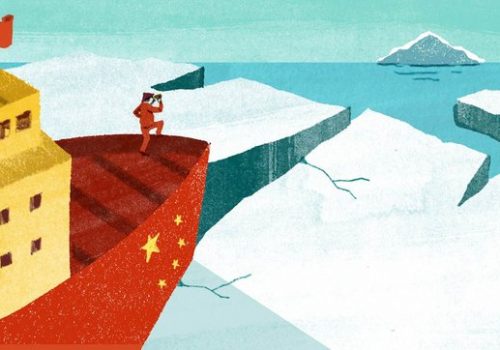
China’s growing interest in Iceland and the Arctic

By Einar Benediktsson and Thomas R. Pickering, New York Times

From Einar Benediktsson and Thomas R. Pickering, New York Times:  According to a 2008 estimate by the U.S. Geological Survey, 13 percent of all the unexploited oil, 30 percent of natural gas and 20 percent of the natural gas liquid resources are located under the seabed of the Arctic.

Energy & Environment European Union

NATOSource

Mar 11, 2013

U.S., British, and French soldiers training Syrian rebels in Jordan

By Julian Borger and Nick Hopkins, Guardian

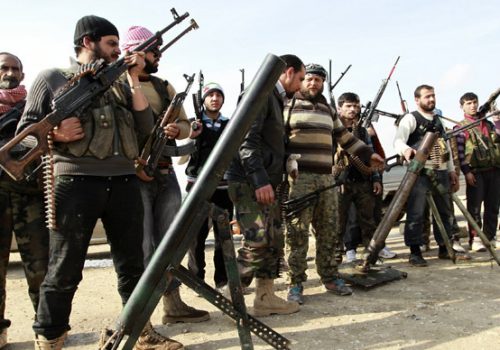
From Julian Borger and Nick Hopkins, Guardian:  Western training of Syrian rebels is under way in Jordan in an effort to strengthen secular elements in the opposition as a bulwark against Islamic extremism, and to begin building security forces to maintain order in the event of Bashar al-Assad’s fall.

United Kingdom

NATOSource

Mar 11, 2013

Britain’s Parachute Regiment ending most of its jump training due to budgets cuts

By Mark Nicole, Mail on Sunday

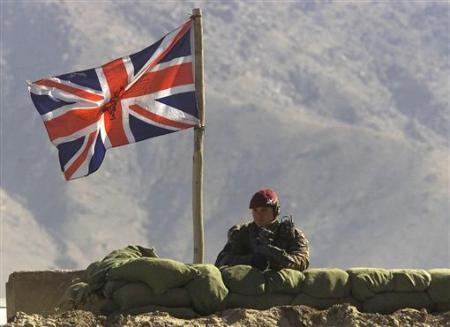
From Mark Nicole, Mail on Sunday:  [C]ost cutting means the Paras will no longer be trained to use their chutes, the Mail on Sunday can reveal. The regiment, whose most famous sortie during the Second World War was immortalised in the film A Bridge Too Far, has been targeted by Ministry of Defence accountants keen […]

United Kingdom

NATOSource

Mar 11, 2013

Britain risks NATO pledge if defense budget cut, panel says

By Kitty Donaldson, Bloomberg

From Kitty Donaldson, Bloomberg:  Chancellor of the Exchequer George Osborne risks breaching a NATO agreement to keep U.K. defense spending at 2 percent of gross domestic product if he cuts the Ministry of Defence budget, a panel of lawmakers said.

United Kingdom

Experts

Events