Projects

Close up of tiger

The Tiger Project: War and deterrence in the Indo-Pacific

Explore the Atlantic Council’s work on current and enduring defense and deterrence issues in the Indo-Pacific, featuring expert commentary, multimedia content, and in-depth analysis.

Explore the programs

The Global China Hub tracks Beijing’s actions and their global impacts, assessing China’s rise from multiple angles and identifying emerging China policy challenges. The Hub leverages its network of China experts around the world to generate actionable recommendations for policymakers in Washington and beyond.

The Indo-Pacific Security Initiative (IPSI) informs and shapes the strategies, plans, and policies of the United States and its allies and partners to address the most important rising security challenges in the Indo-Pacific, including China’s growing threat to the international order and North Korea’s destabilizing nuclear weapons advancements. IPSI produces innovative analysis, conducts tabletop exercises, hosts public and private convenings, and engages with US, allied, and partner governments, militaries, media, other key private and public-sector stakeholders, and publics.
Events

Content

alanwolff

Insights & Impact

Jun 1, 2019

Global Trade Developments and the Future of the World Trade Organization

The Global Business and Economics (GBE) program co-hosted, with the South Asia Center, a discussion with WTO Deputy Director-General Ambassador Alan Wolff. The conversation focused on the latest global trade developments and the future of the WTO. South Asia Center Senior Fellow Mark Linscott moderated the session. In addition, Marie Kasperek, deputy director of the […]

Economy & Business International Financial Institutions

Inflection Points

Jun 1, 2019

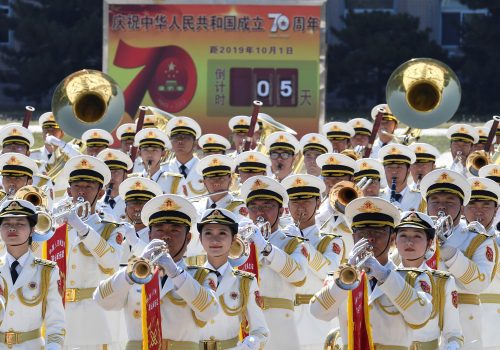
Special edition: Xi and Putin’s budding bromance

By Frederick Kempe

For now, what binds them together is common cause against US global leadership, their shared interest in political survival, their similarly autocratic systems and the personal closeness that has grown between leaders who have acted to concentrate more power in their own hands.

China Russia

EnergySource

May 30, 2019

Energy governance and China’s bid for global grid integration

By Phillip Cornell

Energy projects have always been a major part of China’s Belt and Road Initiative (BRI) infrastructure mega-plan for Eurasia. The enormity of that plan was on display at the BRI Forum last month, where an official report was released estimating that energy investments in BRI countries would add up to $27 trillion by 2050, with […]

China Energy Markets & Governance

IranSource

May 29, 2019

US oil embargo stalls Iran-India energy relations

By Omid Shokri Kalehsar

Before the Trump administration decided to target Tehran’s oil exports, Iran and India experienced a positive trend in relations.

India Iran

New Atlanticist

May 23, 2019

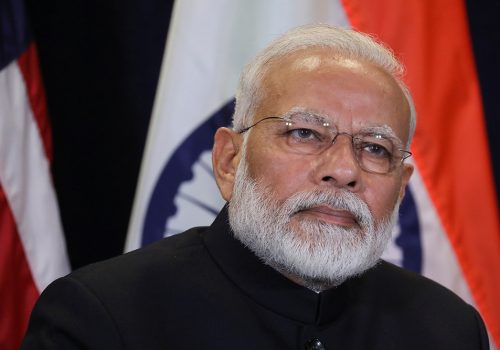
Narendra Modi wins big. What’s next for India?

By Nidhi Upadhyaya

The big question now is how Modi will use his second five-year term at the helm of the world’s largest democracy. India faces plenty of challenges: a high unemployment rate, slow economic growth, changing geopolitical relationships, border security issues, and a deepening religious divide.

Elections India

In the News

May 22, 2019

Tran Quoted in the Financial Times on Shifting Trade and Supply Chains

Read the full article here.

China

Event Recap

May 22, 2019

Brazilian VP in China: A turning point for Brazil-China relations?

By Paulina Ornelas

Brazilian Vice President, Hamilton Mourão, was in China for a six-day trip ahead of President Jair Bolsonaro’s trip to the country later this year. The Atlantic Council’s Adrienne Arsht Latin America Center held a conference call just before the China–Brazil High-Level Cooperation and Commission (COSBAN) meeting to assess expectations and possible key outcomes to Brazil-China […]

Brazil China

New Atlanticist

May 20, 2019

The Christchurch call and the failure of US leadership

By Emerson T. Brooking

The United States’ snubbing of the document represents a retreat from previous counterterrorism pledges. It also reveals a dangerous divide between the White House and US allies regarding the growing threat of white ethno-nationalist extremism.

Disinformation English

New Atlanticist

May 15, 2019

Dial 911: Trump’s telecommunications national emergency

By Ashish Kumar Sen

US President Donald J. Trump on May 15 declared a “national emergency” that gives his administration the power to prevent US companies from doing business with foreign suppliers, including, potentially, Chinese telecommunications giant Huawei.

China Defense Technologies

New Atlanticist

May 15, 2019

Coherent US strategy seen key to effective sanctions

By David A. Wemer

“Sanctions can be a useful, precise, and effective tool of US foreign policy, so long as they are treated as a tool to implement a clear policy and a thought-out strategy,” David Mortlock said.

Financial Sanctions and Economic Coercion Iran

Experts

Events