North Africa

The North Africa region, sometimes called the Maghreb, holds strategic and political importance for the United States and Europe with its geographic crossroad between Europe, Africa, and the Middle East. Destabilized by the tumultuous uprisings of the Arab Spring, the developments in these countries are reasons for concern as well as hope, as different political, security, and economic conditions take shape in each country.

Programs

Middle East Programs

Working with our allies and partners in Europe and the wider Middle East to protect US interests, build peace and security, and unlock the human potential of the region.

Libya
Content

MENASource

Dec 16, 2014

Rewriting Libya’s Post-Revolution Narrative

By Lydia Sizer

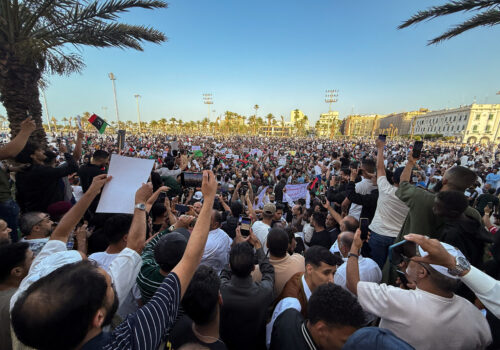
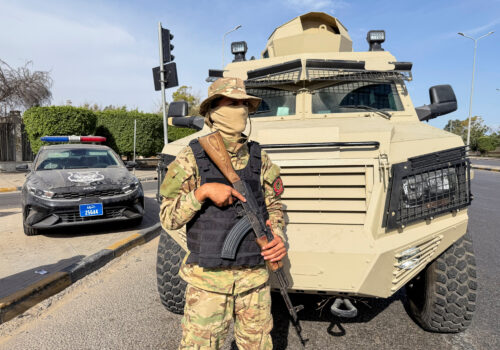
Since the ouster of Muammar Qaddafi in 2011, the United States and its allies have pressed the society he divided to engage in dialogue necessary for durable peace and national unity. Respected Libyans have tried to advance such efforts; however, instead of pursuing opportunities for mutual benefit, rival factions compete to control the country’s post-revolution […]

Libya

MENASource

Dec 15, 2014

Searching for Youth to Save Education

By Jayson Casper

Egypt has a youth problem. According to official statistics, 31 percent of the population is under the age of 14, and 24 percent of the population is between 18 and 29. Integrating them into the social and political fabric of society is expected to be challenging, especially given the raised expectations of the revolution. Egypt […]

North Africa

MENASource

Dec 12, 2014

Egypt’s New Terrorism Law

By Ryan J. Suto

Egyptian president Abdel Fattah al Sisi approved a new terrorism law earlier this month. While disturbing, the law is not surprising when viewed in the context of Egypt’s consistent rhetoric of its war against terror. With the Egyptian militant organization Ansar Bayt al-Maqdis recently pledging allegiance to the Islamic State of Iraq and al-Sham (ISIS), […]

North Africa

Event Recap

Dec 11, 2014

What Do the Presidential Elections Mean for Tunisia’s Future?

By Rafik Hariri Center for the Middle East

On December 21, Tunisians will cast their ballots in the runoff presidential election between Interim President Moncef Marzouki and Nidaa Tounes leader Beji Caid Essebsi. The landmark vote will close the first chapter of a delicate political transition, but perhaps more importantly, will mark the beginning of real governance challenges.

Elections North Africa

MENASource

Dec 11, 2014

Top News: Congress Expected to Adopt Bill Allowing Obama to Reopen Military Aid to Egypt

By EgyptSource

The long-term spending bill that Congress is expected to adopt this week would allow the State Department to resume military aid to Egypt despite ongoing concerns with the country’s human rights record.

North Africa Political Reform

MENASource

Dec 10, 2014

So Who Killed the Protesters?

By Sonia Farid

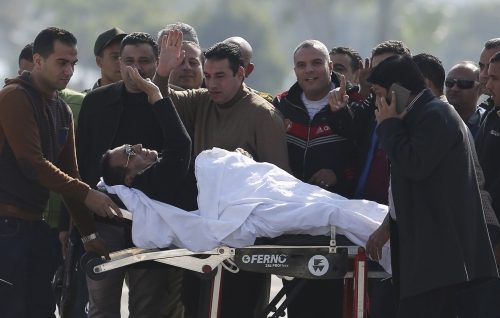
Who killed the protesters? This question was the headline of almost every major Egyptian newspaper, after charges against former president Hosni Mubarak were dropped, and his interior minister Habib al-Adly, and six ministry aides were cleared of charges in what was known as “the trial of the century.” In addition to corruption charges, Mubarak was […]

North Africa

In the News

Dec 8, 2014

Eljarh on Oil Revenues in Libya

By Mohamed Eljarh

The Financial Times quotes Rafik Hariri Center Nonresident Fellow Mohamed Eljarh on disputes over who is controlling Libya and how that has affected the country’s oil revenues:

Libya

MENASource

Dec 8, 2014

The Week in Egypt [December 8, 2014]

By Shiyun Lu

Catch up on the latest out of Egypt every week, with analysis, news updates, photos, videos, and more.

North Africa

MENASource

Dec 8, 2014

A Legal Look into the Libyan Supreme Court Ruling

By Azza K. Maghur

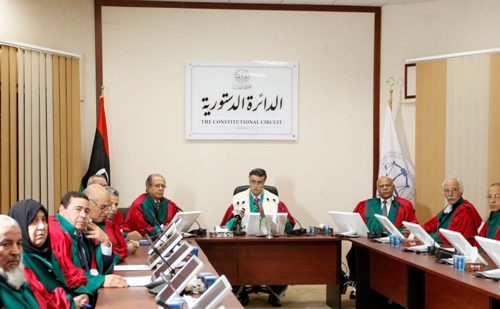
Shortly after the newly elected Libyan House of Representatives (HoR) convened in the eastern city of Tobruk in August 2014, two constitutional claims were brought before the Libyan Supreme Court (LSC).

Libya

MENASource

Dec 5, 2014

The Difference between Them and Us: On the Predominance of the Executive Authority

By Amr Hamzawy

All over the world, executive authorities constantly seek to exert control over their citizens by undermining their rights and freedoms.  They similarly seek to encroach on civil society by subjecting non-governmental organizations to governmental controls and oversight.  Executive authorities further seek to subjugate the legislative and judicial authorities in their countries, either by controlling them […]

North Africa

Experts