Featured commentary & analysis

Programs


Perspectives on North Africa

The North Africa Initiative at the Atlantic Council’s Rafik Hariri Center for the Middle East analyzes the strategic, political, and economic importance of the region for the United States and its allies. Since the 2011 Arab Spring uprisings, North Africa has undergone political and economic transformations that have impacted stability and security in the region. With its geographic crossroad between Europe, Africa, and the Middle East, North Africa continues to be an integral partner in addressing shared interests and concerns.

Learn more about the Middle East programs
Middle East Programs

Working with our allies and partners in Europe and the wider Middle East to protect US interests, build peace and security, and unlock the human potential of the region.
Content

MENASource

Oct 4, 2018

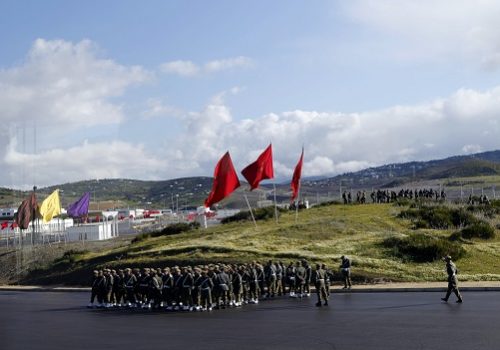
Moroccan conscription: An unfinished process

By Sarah Alaoui and Leila Hanafi

If passed by the country’s two parliamentary chambers, an expedited draft law 44.18 would reinstate mandatory military service for both Moroccan men and women between the ages of nineteen and twenty-five by the end of next year.

Morocco North Africa

In the News

Sep 27, 2018

Ellinas Quoted in Financial Times on Israeli Gas Exports to Egypt

By Charles Ellinas

Read the full article here.

North Africa

MENASource

Sep 26, 2018

Egypt’s options in the development of the Ethiopian dam

By Hafsa Halawa

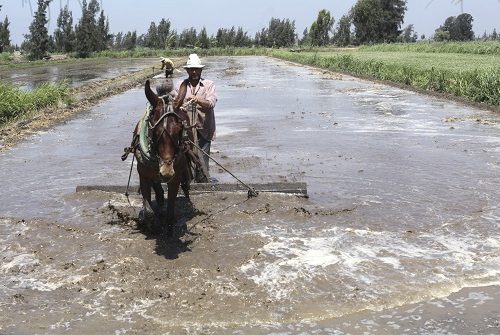
For decades, Egypt focused primarily on its foreign policy in the Middle East and North Africa, and in the process neglected its Horn of Africa policy. Meanwhile, Ethiopia began construction on the Grand Ethiopian Renaissance Dam (GERD) on the Nile River. Problems along the Nile continue for Egypt as droughts, rising temperatures, and general effects of climate change demand a response to Egypt’s growing water needs.

North Africa

In the News

Sep 22, 2018

Mezran Quoted in VOA on Libya

By Karim Mezran

Read the full article here.

Libya

MENASource

Sep 17, 2018

One year later, the UN Action Plan for Libya is dead

By Elissa Miller

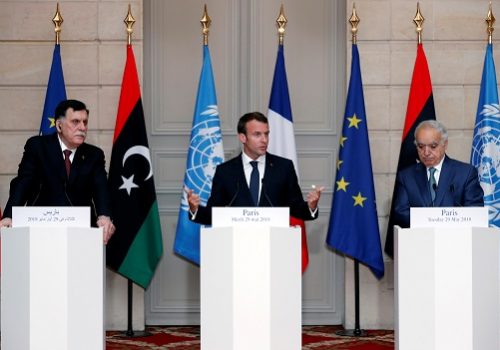
In September 2017, on the sidelines of a gathering of global leaders at the UN General Assembly (UNGA), Special Representative of the UN Secretary General to Libya Ghassan Salame presented an “action plan” for Libya that aimed to surmount Libya’s political stalemate and address persistent instability.

Libya

New Atlanticist

Sep 10, 2018

Six years after a US Ambassador was killed in Benghazi, Libya remains mired in Chaos

By Ashish Kumar Sen

Libya today has two power centers—an internationally recognized government based in Tripoli and an internationally recognized parliament based in eastern city of Tobruk.

Conflict Libya

MENASource

Sep 6, 2018

Can Plan B save Libya? Here are the obstacles it must overcome

By Emadeddin Muntasser and Mohamed Fouad

There is no denying that Libya is in a far worse state than at any time since the 2011 revolution. In a country of vast oil and gas wealth, basic services are frequently interrupted as armed gangs control the capital in the west. In the east, once feared leaders like Khalifa Haftar find their forces […]

Libya

MENASource

Sep 5, 2018

Finding salvation through the chaos in Libya

By Karim Mezran and Federica Saini Fasanotti

On the night of September 2nd, most of the personnel from the Italian embassy in Libya—the only operating embassy—were quickly evacuated on a ship bound for Malta.

Libya

MENASource

Aug 28, 2018

Egypt leads the pack in internet censorship across the Middle East

By Elissa Miller

Internet censorship around the world, including in the Middle East, is not a new phenomenon. Freedom of expression facilitated by the internet can pose a threat to authoritarian leaders around the world who seek to maintain strict control over both the content their citizens consume and the content they post. A clear pattern of authoritarian […]

Internet Media

MENASource

Jul 12, 2018

To stabilize Libya, redistribute oil revenue

By Nate Mason

Debate over Libya currently focuses on whether elections should be held in advance of a political agreement or to move forward in the absence of one. This debate is irrelevant. There are no governments or political leaders in Libya with the authority to conclude a political agreement that militias will recognize, nor are those same […]

Geopolitics & Energy Security Libya

Experts