The Gulf

As many of the Arab Gulf states make strides to reduce their dependence on oil and implement social and economic reforms, they continue to face political and security challenges from external and internal threats. The Gulf states must respond to evolving external relationships, threats from Iran, terrorism, and civil conflict spillover while also harnessing the powers of technological advances and innovative reforms to modernize their economies. A new generation of leadership must adapt to a booming, educated, and globally-connected youth population, often unemployed and increasingly raising concerns about the rule of law and their role as citizens.

Featured commentary & analysis

Counterterrorism Study Group

The Counterterrorism Study Group is a forum for former counterterrorism officials to review the latest threats, to understand emerging trends and future predictions, and to explore creative new proposals for improving the effectiveness of current policies and operations.

Podcast series

Listen to the latest episode of the China-MENA podcast, featuring conversations with academics, government leaders, and the policy community on China’s role in the Middle East.
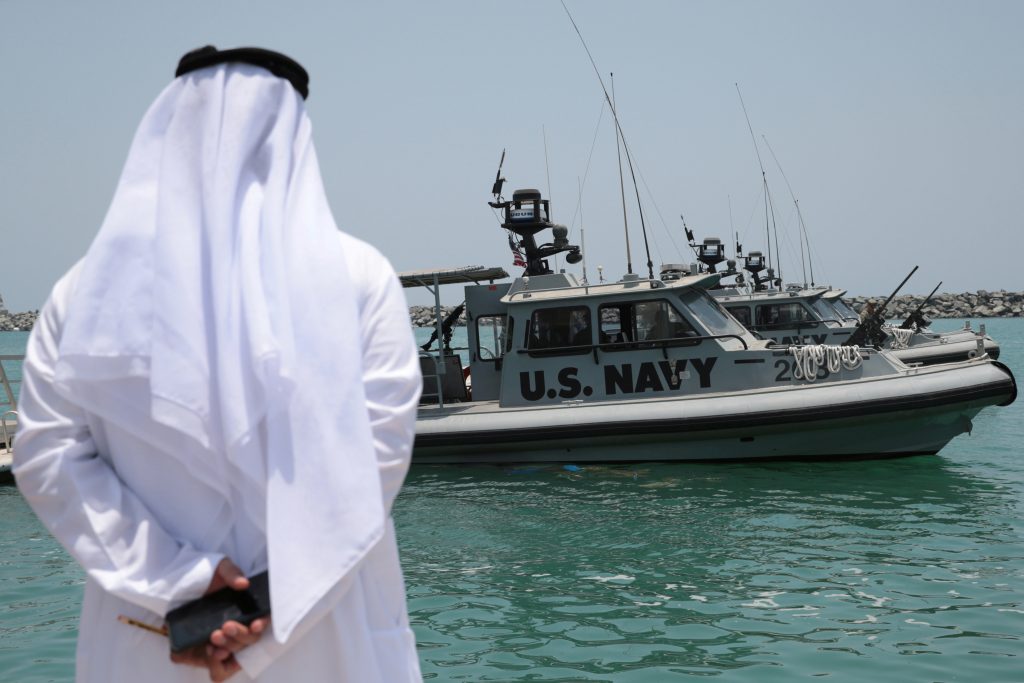

Gulf Security Task Force

The Gulf Security Task Force is revisiting the question of how to best protect US interests in this sensitive, always relevant region. Our goal is to provide US decision-makers with an updated, fact-based strategy for protecting US interests in the air and maritime domain from the Persian Gulf to the Red Sea, and ensuring Gulf partners’ ability to assume this responsibility, with the assistance and leadership of the United States.
Content

New Atlanticist

Jan 8, 2020

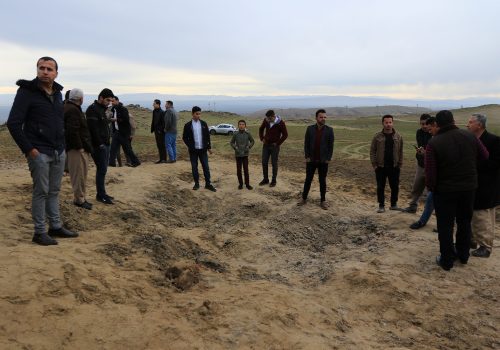
Iran’s missiles may have avoided the worst outcome

By Thomas S. Warrick

If there had been significant US casualties, the world would have awoken to the dawn of a regional war, because the Trump administration would have been compelled to attack the launch sites in Iran—and probably other targets in Iran, also. If the present news holds, the situation is slightly less dangerous, if still perilous.

Conflict Geopolitics & Energy Security

New Atlanticist

Jan 8, 2020

Washington and Tehran can step back – if they want to

By William F. Wechsler

After the January 8 Iranian missile attacks on Iraq, a successful tactical de-escalation requires both that the Iranian leadership intends for its military actions not to be escalatory and that the Trump administration perceives those actions as they were intended. In the absence of direct communications between the United States and Iran, however, the potential for misunderstanding and thus the risk of miscalculation remains high.

Conflict Geopolitics & Energy Security
Stock exchange

EnergySource

Dec 30, 2019

The Aramco IPO isn’t quite enough to realize MBS’s diversification ambitions

By Randolph Bell

After significant delays and a number of setbacks, Aramco finally listed shares representing 1.5 percent of the company’s total value on the domestic Tadawul exchange. The $25.6 billion that the IPO raised is nothing to scoff at, but it still is not enough to fully realize MBS’ ambitions. Where does the IPO go from here?

Energy Markets & Governance Energy Transitions

New Atlanticist

Dec 24, 2019

Saudi failure to convict Saud al-Qahtani is glaring

By Kirsten Fontenrose

For a purported lack of sufficient evidence, Saud al-Qahtani was not even brought to trial. This tells us one of three things: One, Saudi Arabia no longer values its relationship with the United States; two, the US intelligence community sees greater value in monitoring al-Qahtani’s activities than in seeing him imprisoned; or three, the Saudi court system is, impressively, more evidence-based than we knew.

Saudi Arabia

In the News

Dec 18, 2019

Cohen in Forbes: Saudi Aramco IPO Hits $2 Trillion Mark Amid Guarded Forecast

By Atlantic Council

Energy Markets & Governance Middle East

New Atlanticist

Dec 6, 2019

Détente in the Gulf?

By Kirsten Fontenrose

The National Security Council’s policy process aimed at designating the Muslim Brotherhood a terrorist organization may accidentally contribute to a resolution of the Gulf rift.

Politics & Diplomacy Terrorism

IranSource

Dec 5, 2019

Assessing US policy toward Iran

By Kenneth Katzman

The effectiveness of any US policy needs to be measured against the primary objective it is seeking to accomplish. A policy might be changing some conditions in a target country, but not others. The conditions that are being changed by US policy might be material to US interests, or they might not. The key question […]

Financial Sanctions and Economic Coercion Iran

In the News

Nov 26, 2019

Khoury quoted in Al-Monitor on the possibility of US-Saudi negotiations with Houthis

By Atlantic Council

Security & Defense The Gulf

In the News

Nov 26, 2019

Cohen in Forbes: Making History: U.S. Exports More Petroleum Than It Imports In September and October

By Atlantic Council

Energy & Environment Energy Markets & Governance

In the News

Nov 15, 2019

Cohen in Forbes: Investors Evaluating Aramco IPO As Iran Claims Discovery Of New Oil Field

By Atlantic Council

Economy & Business Geopolitics & Energy Security

Experts

Events