Econographics

Econographics is the GeoEconomics Center’s in-depth look at key trends in the global economy utilizing state-of-the-art data visualization tools.

Featured analysis

Latest analysis

EconoGraphics

Jul 23, 2019

My Way or the Huawei: 5G at the Center of US-China Strategic Competition

By OLE MOEHR | GRAPHICS BY MARIANNA ASLUND, NICK BROWN, ANDREW LASCALEIA

On July 22, President Trump met with a group of major tech CEOs to discuss the easing of some restrictions on US companies supplying high-tech parts to Chinese telecommunications company Huawei. In May, the US Commerce Department banned US companies from selling any products to Huawei. The Chinese company’s position as the world’s leading provider of 5G technology has made it a focal point of the escalating great power competition between China and the United States. This edition of the EconoGraphic explains the US government’s move to blacklist Huawei, outlines the ban’s potential costs, and describes why US allies are conflicted about banning Huawei.

China Economy & Business

EconoGraphics

Jun 3, 2019

US Cuba policy: EU and Canadian firms to suffer?

By BY OLE MOEHR | GRAPHICS BY SHIQING HUA, FRANCIS AUBEE, AND NICK BROWN

On April 17 2019, US Secretary of State Michael Pompeo announced an important change in the United States’ policy toward Cuba: Title III of the Cuban Liberty and Democracy Solidarity Act of 1996 (LIBERTAD Act) would no longer be suspended. As a result of this decision, US claimants can now seek compensation for property confiscated by the Castro government. The move has important implications for US and foreign companies doing business in Cuba. This edition of the EconoGraphic explains the history and purpose of the LIBERTAD Act, evaluates the policy’s potential impact on US allies’ economic interests in Cuba, and highlights its implications for the pressure campaign against the Maduro regime in Venezuela.

Cuba Economy & Business

EconoGraphics

Apr 29, 2019

Central Bank Independence Under Scrutiny

By Ole Moehr | Graphics by Shiqing Hua and Francis Aubee

On April 26, following stronger than expected US economic growth numbers, the White House’s National Economic Council director, Larry Kudlow, urged the Federal Reserve (Fed) to cut interest rates by 50 basis points.

Economy & Business Financial Regulation

EconoGraphics

Feb 6, 2019

A Breakdown of the Sanctions Deal between the United States and Oleg Deripaska

By Ole Moehr | Graphics by Shiqing Hua and Zachary Coles

On January 16, a US Senate resolution to maintain US sanctions on the Russian aluminum giant RUSAL and its holding company EN+ failed to garner the necessary 60 votes to pass. As a result, the Trump administration lifted its economic sanctions on RUSAL and EN+ on January 27.

Economy & Business Financial Sanctions and Economic Coercion

Blogs

Dec 21, 2018

Economic Outlook for 2019

By Global Business & Economics Program

December 2018 is set to become the worst year-end finish for US markets since 1931. A yield curve inversion combined with the fourth annual rate hike by the US Federal Reserve (Fed) and growing geo-political uncertainty, triggered widespread angst among US investors about an economic slowdown and the increasing probability of a recession. This edition of the EconoGraphic assesses key economic indicators to make a case that while a slowing of the US economy seems certain, a recession in the next two years remains unlikely.

China Economy & Business

EconoGraphics

Dec 5, 2018

Trade Disrupted: US and China Need More Than a Truce

By Ole Moehr

At this year’s G20 summit in Buenos Aires, the trade dispute between China and the United States took center stage. Chinese President Xi and his US counterpart President Donald Trump agreed to avoid further escalations of the ongoing bilateral trade war for the next 90 days. The temporary deal does not assuage the escalatory measures already taken, leaving the existing tariffs in place. This edition of the EconoGraphic explores how the brewing trade conflict is impacting manufacturing supply chains, soybean cargo routes, and trade flows of liquefied petroleum gas (LPG) among the United States, China, and the rest of the world.

China Economy & Business

EconoGraphics

Oct 30, 2018

SWIFTly Disconnecting Iran

By Ole Moehr

With the snapback of significant US sanctions against Iran fast approaching on November 5th, speculation is mounting over how the Trump Administration will enforce the sanctions, and how its European allies might attempt to bypass them. The previous EconoGraphic outlined how a Special Purpose Vehicle (SPV) may facilitate trade between European small and medium-sized enterprises (SMEs) and Iran after US sanctions go back into effect. This edition of the EconoGraphic provides a primer on the Society for Worldwide Interbank Financial Telecommunication (SWIFT) and explains why sanctioning the financial messaging service would likely cause more harm than good.

Economy & Business Financial Sanctions and Economic Coercion

EconoGraphics

Oct 9, 2018

JCPOA in Peril – EU SPV to the Rescue?

By Ole Moehr

The European Union’s (EU) foreign policy chief, Federica Mogherini, recently announced that the EU will set-up a special purpose vehicle (SPV) “to facilitate legitimate financial transactions with Iran and allow European companies to continue to trade with Iran.” In response, our visiting senior fellow, Samantha Sultoon, argued that this SPV will not provide a reliable path around US sanctions, and may undermine the effectiveness of US and EU sanctions in the long-run. This edition of the EconoGraphic explains how the SPV would work in practice and outlines why this mechanism is unlikely to offer Iran enough economic upside to keep the Joint Comprehensive Plan of Action (JCPOA) alive.

Economy & Business European Union

EconoGraphics

Sep 17, 2018

Turkish Outbreak: Risk of Emerging Market Contagion?

By Christina Gay and Ole Moehr

With the strengthening of the US dollar in the wake of continued interest rate increases by the US Federal Reserve and brewing pressures in a number of emerging market (EM), portfolio flows into EM countries slowed from $13.7 billion in July to just $2.2 billion in August. Companies and banks in both Argentina and Turkey borrowed heavily in dollar denominated debt while interest rates were low and are now faced with mounting debt burdens, which, if not backed by sufficient reserves puts them at risk for default if investors lose confidence. The Turkish lira has fallen over 40 percent in 2018. Its sharp decline in August raised concern of contagion to other markets, as the Indonesian rupiah, the South African rand, and the Indian rupee have also come under pressure. This edition of the Econographic compares situation in Turkey with the Asian financial crisis in 1997, analyzes root causes of the current pressures in Turkey, and assesses the broader implications for EM economies.

Economy & Business European Union

EconoGraphics

Aug 8, 2018

JEEPA – Japan-EU Free Trade Agreement Leaves the US Out in the Cold

By Cecilia Pan and Ole Moehr

While President Trump is pursuing a protectionist trade agenda – halting negotiations for the Transatlantic Trade and Investment Partnership (TTIP), pulling out of the Trans-Pacific Partnership (TPP), and threatening trade wars against adversaries and allies – Japanese Prime Minister Shinzo Abe has been doing just the opposite. As part of Abenomics’ third arrow, the Prime Minister is forging global partnerships between Japan and other leading economies to foster economic growth. Case in point, the Japan-EU Economic Partnership Agreement (JEEPA) signed on July 17, 2018. This edition of the EconoGraphic will review this ambitious bilateral free trade agreement, assess its impact on the US economy, and explore the consequences of the United States’ retreat from its role as the global leader for free trade.

Economy & Business European Union

Content

Econographics

Mar 12, 2026

By threatening the Strait of Hormuz, Iran turns geography into a global economic weapon

By Alex Mills

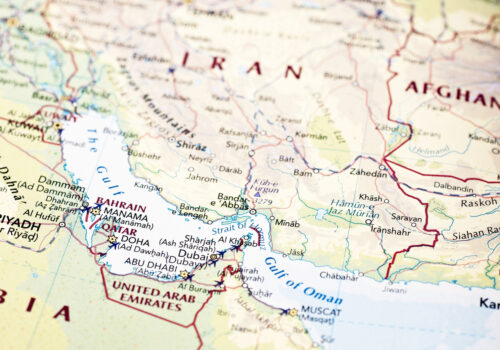
Iran’s threat to attack vessels in the Strait of Hormuz has effectively shut down one of the world’s most critical energy shipping routes, turning geography into a powerful economic weapon.

Economy & Business Energy & Environment

Econographics

Mar 10, 2026

The renminbi is winning over Africa—but can it rival the dollar?

By Lize de Kruijf

In recent years, African governments have taken steps to reduce reliance on the dollar, but progress on their regional payment system has been slow—and in the meantime, China’s renminbi is quietly making inroads across Africa’s trade and finance networks.

Africa China

Econographics

Mar 9, 2026

Middle powers are rewriting the playbook for gender‑equal growth

By Nicole Goldin

Middle powers are advancing gender-equal growth by pairing domestic economic reforms with coalition leadership in global institutions.

Economy & Business Inclusive Growth

Econographics

Feb 25, 2026

The US and Mexico need stronger financial cooperation to disrupt illicit financial flows

By Phil Lovegren

Killing cartel leaders grabs headlines, but lasting progress in curbing the illicit drug trade requires following the money. If the United States and Mexico truly want to tackle organized crime, they must deepen cooperation to disrupt the financial flows that sustain it.

Economy & Business Financial Crimes & Illicit Trade

Econographics

Feb 24, 2026

In Munich, a reminder that economic security is national security

By Kimberly Donovan, Lize de Kruijf

Policymakers at this year's MSC raised economic security as an issue that they cannot cordon off separately from traditional security issues.

Economy & Business European Union

Econographics

Feb 24, 2026

The European Central Bank’s next president may decide the fate of the digital euro

By Alisha Chhangani, Jacopo Pastorelli

The four frontrunners don't oppose the digital euro, but their positions differ on pace, framing, and the risks they're most concerned about.

Digital Currencies Economy & Business

Econographics

Feb 20, 2026

To bridge the transatlantic productivity divide, Europe needs structural reforms—and AI

By Hung Tran

Policymakers and investors should actively incentivize laggard firms to adopt productivity-enhancing practices and technologies.

Economy & Business Europe & Eurasia

Econographics

Feb 12, 2026

Despite US exemptions, the show goes on for a global minimum corporate tax

By Jeff Goldstein

The United States may have carved out protections for its multinationals, but the global minimum tax continues to move forward. With more than sixty-five countries implementing the OECD framework, policymakers are betting imperfect progress will prevent a relapse into corporate tax competition.

Economy & Business Europe & Eurasia

Econographics

Feb 10, 2026

China’s warning on US Treasuries—and why its timing matters

By Jeremy Mark, Josh Lipsky

Beijing has joined the conversation on the dollar. It was leaked this week that Chinese regulators have been urging domestic financial institutions to cut back on US Treasuries, and this timing is no coincidence.

China Dollar Dominance

Econographics

Feb 6, 2026

Iran can still normalize its economy—but the path will be painful and slow

By Bart Piasecki

Iran’s inflation crisis is driven by persistent exchange‑rate instability, entrenched fiscal dominance, and international sanctions. Despite these structural challenges, there remains a clear—but difficult—path toward economic normalization.

Dollar Dominance Economy & Business