In-depth research and reports

Our programs and centers deliver relevant, policy-focused research that matters to inform debate and action. Our focus is always on moving debate forward, integrating analysis with active, relevant conclusions throughout our published work.

Report

Mar 4, 2016

A US strategy for sustainable energy security

By David Koranyi

The national energy system of the United States is aging and has to be renewed in a dynamic fashion to adapt to the transformative changes in the world of energy. Failure to do so will result in substantial economic disadvantage and national security vulnerabilities, and risk the United States’ position as the leading global power […]

Climate Change & Climate Action Energy & Environment

Report

Feb 26, 2016

Alliance at risk

By Jorge Benitez

Despite Russian aggression in Ukraine and growing threats along NATO’s southern flank, many European allies find it difficult to increase their defense capabilities and meet the commitments they made at the Wales Summit. To address this important challenge, the Atlantic Council produced its Alliance at Risk report, which draws together noted experts and former senior […]

Europe & Eurasia NATO

Report

Feb 24, 2016

Five Steps to Grow the Cuban Economy: What the US and Cuba Can Do in Obama’s Final Year

By Adrienne Arsht Latin America Center

Twenty-five days before US President Barack Obama touches down in Havana, the Atlantic Council’s Adrienne Arsht Latin America Center launched a new report that lays out the next step for Cuba’s continued progress. For the United States and Cuba to continue building on progress in the bilateral opening, the two countries must work to integrate […]

Cuba

Report

Feb 18, 2016

Security and public order

By The Middle East Strategy Task Force

The security situation facing the Middle East is grave and appears to be trending toward greater violence and instability. The Middle East Strategy Task Force's Security and Public Order report, published in cooperation with the Brookings Institution, demonstrates that states of the region have tended to focus on traditional, external threats but the internal threats they face—from domestic unrest, state failure, and civil war—have become both more common and dangerous.

Middle East Security & Defense

Issue Brief

Feb 10, 2016

Enhanced Defense Cooperation

By Johan Raeder

Read the Publication (PDF) In recent years, the ambitious Russian military build-up, coupled with revanchist Russian rhetoric and increasingly aggressive behavior, has made it clear that the security environment in the Baltic Sea region has changed. This situation is likely to last for a long time, emphasizing the need for a coherent response and deeper […]

Issue Brief

Feb 9, 2016

Post-sanctions economic opportunities and risks in Iran

By Robert D. Hormats

On January 16, 2016, the International Atomic Energy Agency verified that Iran had implemented key measures under the Joint Comprehensive Plan of Action. As a result, nuclear-related sanctions previously imposed by the United Nations, the European Union, and the United States were lifted. The removal of these sanctions opens up a wide range of possibilities […]

Books

Feb 5, 2016

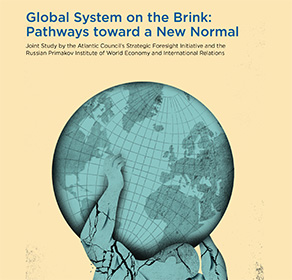
Global System on the Brink: Pathways toward a New Normal

By Brent Scowcroft Center

Read the Book (PDF) Following the release of a short report in December 2015, the Atlantic Council and the Primakov Institute of World Economy and International Relations (IMEMO) have now released the full volume of research behind the report, Global System on the Brink: Pathways toward a New Normal. The longer book goes in-depth on […]

Issue Brief

Feb 3, 2016

The renewed Russian nuclear threat and NATO nuclear deterrence posture

By Matthew Kroenig

Over the past decade, Russia has made nuclear weapons a predominant element of its national security strategy and military doctrine, while NATO has consciously de-emphasized its nuclear posture.

NATO Nuclear Deterrence

Report

Feb 3, 2016

Economic recovery and revitalization

By Middle East Strategy Task Force

Even as the specter of political instability weighs heavily on the region, the Middle East is quietly experiencing a technological and societal transformation that could hold the keys to a better future.

Economy & Business Education

Issue Brief

Jan 29, 2016

Harnessing Communications and Public Diplomacy

By Mark Seip

Read the Issue Brief (PDF) Largely neglected after the end of the Cold War, the use of information and public diplomacy to influence audiences and help achieve national objectives is making a comeback. This comeback however is not from the United States, but from actors such as ISIS, Russia, and China, whose objectives often run […]

Report

Jan 20, 2016

Surging liquefied natural gas trade: How US exports will benefit European and global gas supply diversity, competition, and security

By Bud Coote

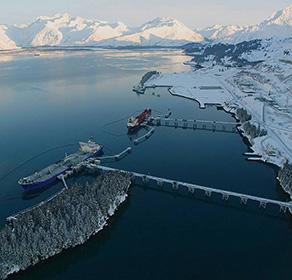
The EU's move toward a freer energy market and a global shift toward gas by climate-conscious consumers are likely to help fuel growing demand for US liquefied natural gas (LNG) in the coming years

Energy & Environment Europe & Eurasia

Issue Brief

Jan 11, 2016

Nigeria’s oil revenue crunch

By Aaron Sayne and Aubrey Hruby

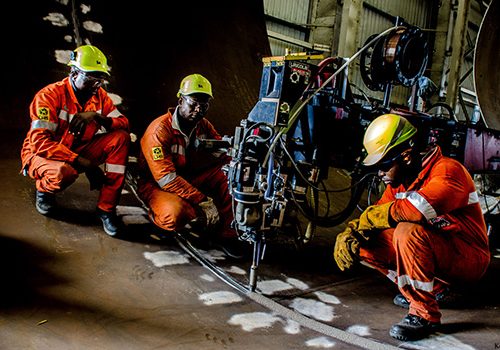
As oil prices fall to their lowest in decades, Nigeria's oil revenue has plummeted nearly $2 billion since the start of 2014. What is the impact of falling oil prices and increased competition on the economy and stability in Nigeria?

Africa Corruption

Report

Dec 16, 2015

Diversifying African Trade: The road to progress

By Aubrey Hruby

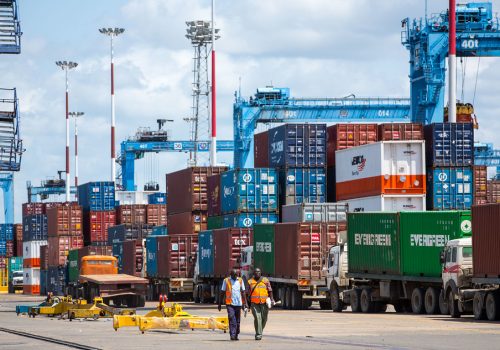
As World Trade Organization members meet in Nairobi, Kenya, for their 2015 Ministerial, the potential economic impact of African trade—for Africa, but also the rest of the world—has never been more relevant. Home to thirty-three of the world’s least developed countries and only responsible for 3 percent of global trade, Africa stands to reap enormous […]

Africa East Africa

Issue Brief

Dec 3, 2015

ISIS war game III: The final phase

By Bilal Y. Saab

September 2015 marked the one-year anniversary of President Barack Obama’s speech outlining the administration’s strategy to “degrade and ultimately destroy” the Islamic State of Iraq and al-Sham (ISIS). Yet, ISIS celebrated in June its own first-year anniversary of setting up a state by conducting three nearly simultaneous terrorist operations in three different countries—France, Tunisia, and […]

Iraq Middle East

Report

Dec 2, 2015

Global system on the brink: pathways toward a new normal

By Dr. Mathew Burrows and Professor Alexander Dynkin

In keeping with previous forecasting works published by the Atlantic Council and the IMEMO, the study examines current trends and potential scenarios for global developments over the next twenty years.

Conflict Russia

Issue Brief

Dec 1, 2015

Renewable energy’s coming of age: A disruptive technology?

By Robert A. Manning

The eyes of the world are on the United Nations Climate Conference, also known as COP21, as leaders from around the world are gathered in Paris in an effort to combat the effects of climate change. It's one of the best chances we have to mitigate these harmful effects are renewable technologies, so what is the future of adopting renewable energy?

Climate Change & Climate Action Energy & Environment

Issue Brief

Nov 24, 2015

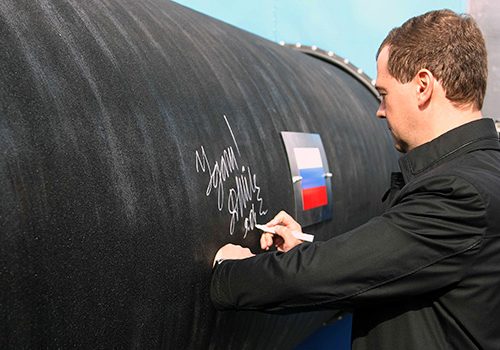
Nordstream 2: Too many obstacles, legal, economic, and political to be delivered?

By Alan Riley

While Nordstream 2 may once have seemed a politically and economically viable project, the Ukraine crisis has so altered the landscape that Gazprom may have taken on a project that is undeliverable.

Energy & Environment Europe & Eurasia

Report

Nov 23, 2015

The Korean Pivot and the Return of Great Power Politics in Northeast Asia

By Sungtae Jacky Park

As China reemerges, Japan revitalizes, and the United States rebalances toward Asia, competition over Korea will likely return. In The Korean Pivot and the Return of Great Power Politics in Northeast Asia, Sungtae Jacky Park examines Korea’s strategies toward great powers, discusses the future of the strategic dynamic on the Korean peninsula, explores the potential […]

Korea

Report

Nov 18, 2015

Developing a western energy strategy for the Black Sea region and beyond

By Ariel Cohen

In Developing a Western Energy Strategy for the Black Sea Region and Beyond, Senior Fellow at the Atlantic Council’s Dinu Patriciu Eurasia Center and Global Energy Center Ariel Cohen addresses the urgent need for a European policy on Black Sea energy following Russia’s annexation of Crimea. Dr. Cohen, himself a native of Yalta in Crimea, […]

Russia Ukraine

Report

Nov 16, 2015

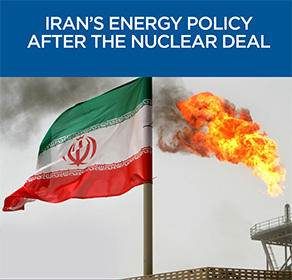
Iran’s energy policy after the nuclear deal

By Sara Vakhshouri

Following the lifting of sanctions on Iran's all-important gas and oil sector, Tehran will seek to develop an "economy of resistance" by building out commercial relationships that increase other states' reliance on it.

Energy & Environment Energy Markets & Governance