

Financial Sanctions and Economic Coercion

Financial sanctions and other forms of economic coercion have become policy tools of choice for the US government to deter illegal activity by international actors or to pressure governments into reversing actions that harm US interests. Yet these instruments and their potential pitfalls are often misunderstood. Restrictive economic measures such as financial sanctions, export controls, tariffs, and investment screening can play an important role in advancing certain policy objectives, but they risk being ineffective if misapplied or poorly implemented. Policymakers must also recognize the impact of economic statecraft on the private sector, which bears many of the compliance burdens and operational costs associated with these measures.

Energy Sanctions Dashboard

This dashboard focuses on US sanctions and restrictive measures placed on crude oil from Russia, Iran, and Venezuela—including the unintended consequences and the lessons learned.

Econographics

Apr 17, 2025

Russia Sanctions Database

By Kimberly Donovan, Maia Nikoladze, Lize de Kruijf

The Atlantic Council’s Russia Sanctions Database tracks the level of coordination among Western allies in sanctioning Russian entities, individuals, vessels, and aircraft, and shows where gaps still remain.

Eastern Europe Economy & Business

Recent analysis

Programs

At the intersection of economics, finance, and foreign policy, the GeoEconomics Center is a translation hub with the goal of helping shape a better global economic future.

Content

Event Recap

May 22, 2019

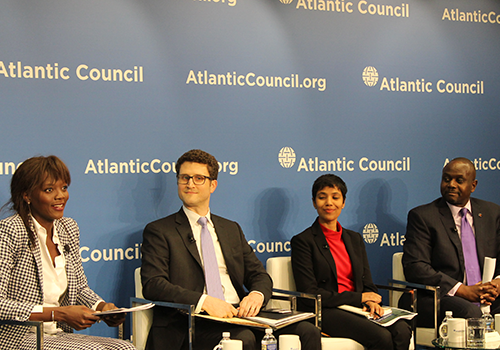
Covert capital: Illicit finance in the DR Congo

By Africa Center

On Wednesday, May 22, the Africa Center partnered with The Sentry at the Enough Project to host a discussion on illicit finance operations in the Democratic Republic of the Congo (DRC), occasioned by the release of the group’s new report: Covert Capital: The Kabila Family’s Secret Investment Bank. Ms. Bronwyn Bruton, Africa Center director of […]

Africa Corruption

New Atlanticist

May 21, 2019

How to push back against Kremlin’s malign influence

By David A. Wemer

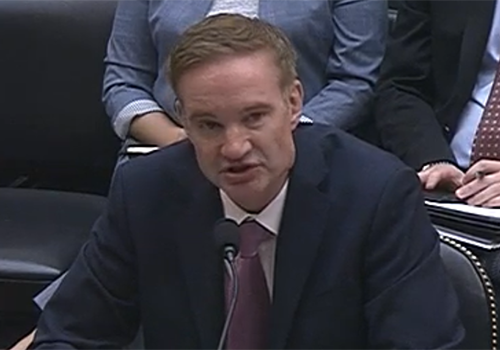
The United States needs to do more to push back against Russia’s attempts to disrupt democratic societies around the world, Michael Carpenter, a senior fellow in the Atlantic Council’s Eurasia Center, told US lawmakers on May 21.

Financial Sanctions and Economic Coercion Russia

New Atlanticist

May 15, 2019

Coherent US strategy seen key to effective sanctions

By David A. Wemer

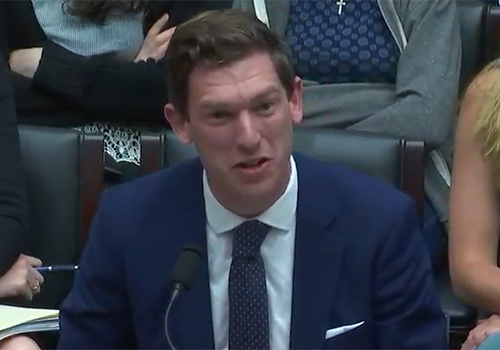
“Sanctions can be a useful, precise, and effective tool of US foreign policy, so long as they are treated as a tool to implement a clear policy and a thought-out strategy,” David Mortlock said.

Financial Sanctions and Economic Coercion Iran

New Atlanticist

May 8, 2019

Policing terror finance in an era of great competition

By Michael B. Greenwald

The United States' sanctions strategy is increasingly burdened by the involvement of systemically important financial institutions and sovereign investors in global financial statecraft.

China Financial Regulation

New Atlanticist

May 1, 2019

How the West can confront a resurgent Russia

By David A. Wemer

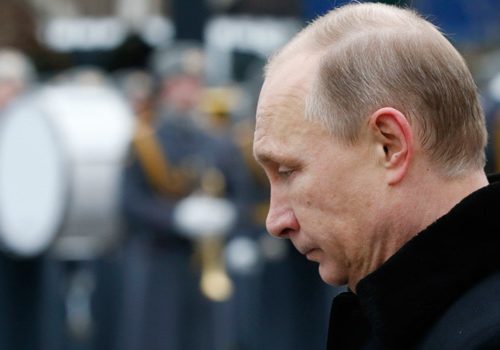
The United States, working with its allies and democratic partners, can push back against Russian aggression, which has been marked by interference in elections in the United States and Europe; the harassment, invasion, and annexation of neighbors; and the propping up of despots in places such as Syria and Venezuela.

Defense Policy Disinformation

UkraineAlert

Apr 25, 2019

10 ways the west should engage with Ukraine after 2019 elections

By Chatham House

Five years after the annexation of Crimea and the instigation of conflict in the Donbas, the reasons for continued sanctions on Russia have not gone away. Crimea is still occupied. War grinds on in the Donbas. Ukraine held presidential elections this spring and will hold parliamentary elections in the fall. Whatever the results, events in […]

Defense Policy Disinformation

New Atlanticist

Apr 25, 2019

Spotlight: Next steps with Venezuela

By Samantha Sultoon

The Trump administration is nearing the limits of what it can achieve in Venezuela through sanctions alone and a reconsideration of the current strategy is warranted.

Financial Sanctions and Economic Coercion Venezuela

New Atlanticist

Apr 22, 2019

Trump’s inconsistent approach to Iran oil waivers means he can’t have his cake and eat it too

By Randolph Bell

The United States had achieved one of its goals—bringing oil prices down—but only partially achieved its goal of inflicting “maximum pressure” on Iran.

Financial Sanctions and Economic Coercion Geopolitics & Energy Security

New Atlanticist

Apr 22, 2019

A look at the implications of Trump’s decision to end sanctions waivers for countries importing Iranian oil

By Ashish Kumar Sen

The mover could spark backlash from Iran and the countries that continue to buy Iranian oil.

Financial Sanctions and Economic Coercion Geopolitics & Energy Security

New Atlanticist

Apr 19, 2019

Congressional Russia sanction push needs to maximize cooperation with allies

By David A. Wemer

Transatlantic coordination can mitigate unintended consequences from potential sanctions.

European Union Financial Sanctions and Economic Coercion

Experts