


Financial Sanctions and Economic Coercion

Financial sanctions and other forms of economic coercion have become policy tools of choice for the US government to deter illegal activity by international actors or to pressure governments into reversing actions that harm US interests. Yet these instruments and their potential pitfalls are often misunderstood. Restrictive economic measures such as financial sanctions, export controls, tariffs, and investment screening can play an important role in advancing certain policy objectives, but they risk being ineffective if misapplied or poorly implemented. Policymakers must also recognize the impact of economic statecraft on the private sector, which bears many of the compliance burdens and operational costs associated with these measures.

Energy Sanctions Dashboard

This dashboard focuses on US sanctions and restrictive measures placed on crude oil from Russia, Iran, and Venezuela—including the unintended consequences and the lessons learned.

Econographics

Apr 17, 2025

Russia Sanctions Database

By Kimberly Donovan, Maia Nikoladze, Lize de Kruijf

The Atlantic Council’s Russia Sanctions Database tracks the level of coordination among Western allies in sanctioning Russian entities, individuals, vessels, and aircraft, and shows where gaps still remain.

Eastern Europe Economy & Business

Recent analysis

Programs

At the intersection of economics, finance, and foreign policy, the GeoEconomics Center is a translation hub with the goal of helping shape a better global economic future.

Content

UkraineAlert

Mar 18, 2019

Too little, too late

By Anders Åslund

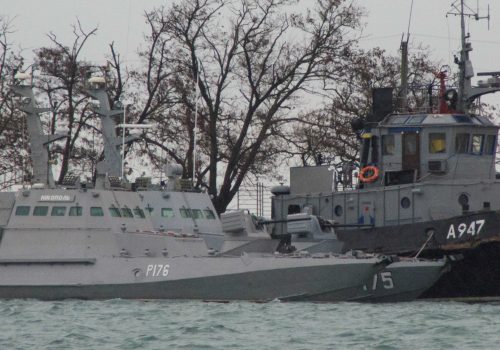
On November 25, the Russian Coast Guard attacked and illegally seized three Ukrainian naval vessels on international waters in the Black Sea. The twenty-four Ukrainian sailors on board were arrested for having violated Russian territorial waters and jailed in the nineteenth century KGB prison Lefortovo in Moscow. These Ukrainian sailors were on Ukrainian vessels going […]

Conflict European Union

New Atlanticist

Mar 13, 2019

Trump’s new Cuba policy threatens to reignite historic disagreement with key allies

By Samantha Sultoon

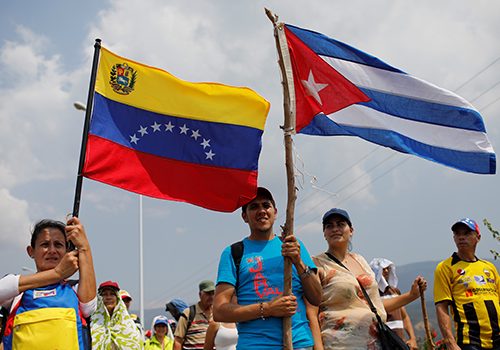
While the Trump administration is right to support human rights and shifts to democracy in both Cuba and Venezuela, this is a shortsighted, ineffective way to achieve such laudable policy objectives.

Cuba Financial Sanctions and Economic Coercion

New Atlanticist

Mar 4, 2019

One year since the Skripals were poisoned, Russia has not given up its confrontational policy toward the West

By Ashish Kumar Sen

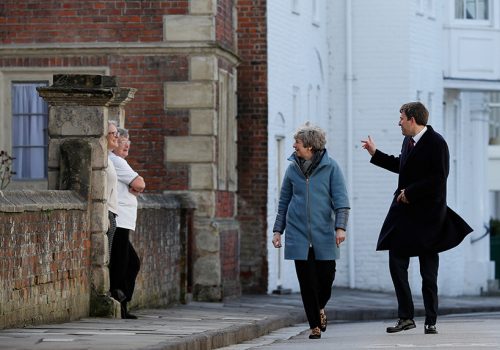
One year later, “Russia shows no sign of rethinking its confrontational policy toward the West,” said Alexander Vershbow.

Financial Sanctions and Economic Coercion Russia

Event Recap

Mar 4, 2019

Zimbabwe’s finance minister discusses reform agenda

By Africa Center

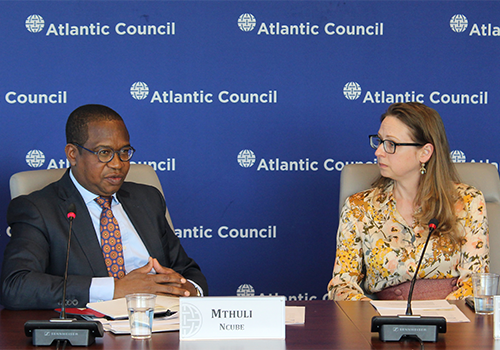
On Monday, March 4, the Atlantic Council’s Africa Center hosted a discussion with H.E. Dr. Mthuli Ncube, minister of finance and economic development of the Republic of Zimbabwe. Focusing on Zimbabwe’s short-term stabilization plan, Ncube presented the progress made on key economic reforms since he was appointed to the finance ministry by President Emmerson Mnangagwa […]

Africa Economy & Business

Event Recap

Feb 26, 2019

Using Sanctions Against Human Rights Abusers and Kleptocrats

By Global Business & Economics

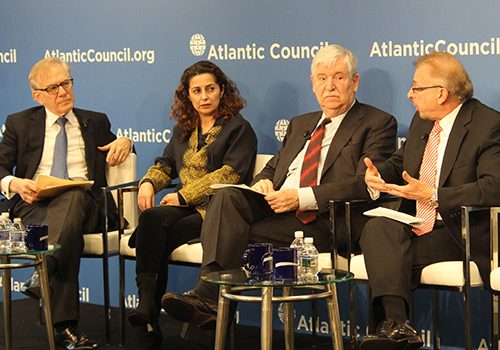
On Tuesday, February 26, the Atlantic Council’s Global Business & Economics Program’s Economic Sanctions Initiative hosted a public discussion featuring Ms. Andrea Gacki, Director of the US Treasury Department’s Office of Foreign Assets Control (OFAC), on the Global Magnitsky Act’s uses, misuses, and lessons for business.

Economy & Business Financial Sanctions and Economic Coercion

Event Recap

Feb 22, 2019

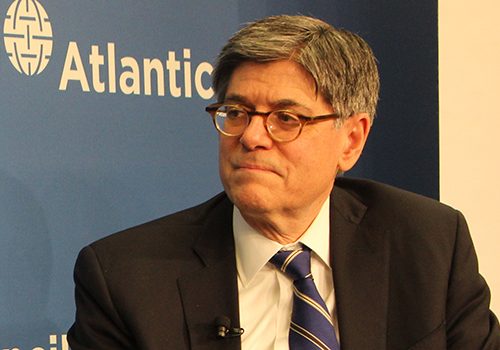
A Conversation with Former Treasury Secretary Jacob J. Lew

By Global Business & Economics

On Tuesday, February 19, the Atlantic Council’s Global Business and Economics program’s Economic Sanction Initiative hosted a public discussion featuring former US Treasury Secretary Jacob J. Lew.

Economy & Business Financial Sanctions and Economic Coercion

New Atlanticist

Feb 19, 2019

Buy-In from allies critical for effective sanctions, says former US Treasury Secretary Lew

By David A. Wemer

Sanctions can only be effective, Lew argued, if the sanctioned country believes there will be “meaningful and lasting relief” once it changes its behavior.

Financial Sanctions and Economic Coercion Iran

New Atlanticist

Feb 18, 2019

New legislation presents impactful but measured way forward on Russia sanctions

By Brian O'Toole and Samantha Sultoon

New legislation contains several provisions that will have a serious impact on Moscow, provide deterrence in other key areas, and has removed some of the sanctions that caused serious alarm among European allies.

Financial Sanctions and Economic Coercion Russia

New Atlanticist

Feb 12, 2019

What to expect from the US-Polish summit on the Middle East

By David A. Wemer

"The Trump administration waffled about the aims of the conference. But the truth is this conference is very much about Iran and a symbolic act to show that the world is united again Tehran—particularly Arab countries and Israel.

Financial Sanctions and Economic Coercion Iran

New Atlanticist

Feb 12, 2019

The US-Iranian relationship: let’s try engagement

By David A. Wemer

“I simply do not see the conditions for another revolution.” He saw “no evidence that there is a social base in Iran that wants to see a radical change," said Mohsen Milani, executive director of the University of South Florida’s Center for Strategic and Diplomatic Studies.

Financial Sanctions and Economic Coercion Iran

Experts