
The Digital Forensic Research Lab (DFRLab) is a first of its kind organization with technical and policy expertise on disinformation, connective technologies, democracy, and the future of digital rights. Incubated at the Atlantic Council in 2016, the DFRLab has conducted over 1,000 investigations exposing influence operations and emerging digital threats worldwide.

With a team rooted in diverse regional expertise and subject-matter knowledge, the DFRLab works to promote digital resilience, defend democratic institutions, and ensure that objective fact remains central to public discourse in an increasingly contested information space.

Read the DFRLab’s latest case studies, learn about our initiatives, and more at DFRLab.org

STAY CONNECTED

Receive the latest research, along with discussions about disinformation and tech issues.

ABOUT US

Programs

The Democracy + Tech Initiative creates policy practices that align global stakeholders toward tech and governance that reinforces, rather than undermines, open societies. It builds on the DFRLab’s established track record and leadership in the open-source field, empowering global communities to promote transparency and accountability online and around the world.

The Atlantic Council Technology Programs comprises five existing efforts—the Digital Forensic Research Lab (DFRLab), the GeoTech Center, the Cyber Statecraft Initiative, the Democracy + Tech Initiative, and the Capacity Building Initiative. These operations work together to address the geopolitical implications of technology and provide policymakers and global stakeholders necessary research, insights, and convenings to address challenges around global technology and ensure its responsible advancement.

LATEST RESEARCH

PROJECTS

Upcoming & Recent Events
Employment opportunities

There are no employment opportunities currently open.

From the archives

Experts

Content

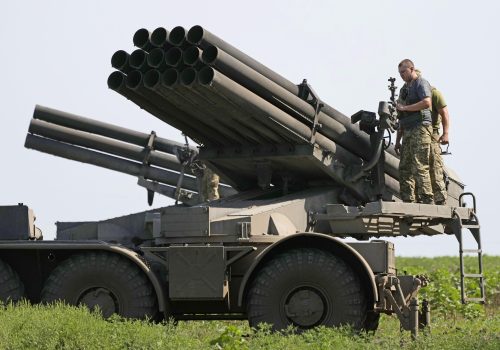
Ukrainian forces deploy a HIMARS precision rocket launching system on July 5, 2022. (Source: EYEPRESS via Reuters Connect)

New Atlanticist

Jul 8, 2022

Russian War Report: Ukraine uses HIMARS effectively to hit Russian ammo dumps

By Digital Forensic Research Lab

Ukranian forces are using M142 HIMARS multiple rocket launchers to systematically target Russian ammunition storage facilities behind the frontlines.  

Disinformation
Migration
New satellite imagery taken this morning June 30, 2022 shows smoke coming from the contested Snake Island (45.255721, 30.204173) which Russia announced its withdrawal from June 30. Russian forces have left Snake Island in the Black Sea, the Ukrainian Armed Forces said on Thursday June 30, after carrying out what they said was a successful operation. The Ukrainian Armed Forces said that the enemy hastily evacuated the remnants of the garrison in two speedboats and probably left the island. (Maxar via EYEPRESS)

New Atlanticist

Jul 1, 2022

Russian War Report: Russia claims Snake Island losses were ‘gesture of goodwill’

By Digital Forensic Research Lab

Plus, Russian diplomatic accounts spread a questionable story about anti-Russian stickers placed at an Auschwitz memorial.

Conflict
Cybersecurity

New Atlanticist

Jun 24, 2022

Russian War Report: Pro-Kremlin Russian outlet refers to Russian troops in Mariupol as ‘occupiers’ 

By Digital Forensic Research Lab

News outlet Moskovsky Komsomolets published an article that referred to Russian soldiers in Mariupol as "occupiers," but it was quickly deleted. Meanwhile, fires strike Russian oil and power plants, and Chinese media report on Russia-Lithuania dispute.

China
Conflict
Ukrainian service members fire a BM-21 Grad multiple rocket launch system, amid Russia's attack on Ukraine, near the town of Bakhmut, Donetsk region Ukraine June 12, 2022. REUTERS/Gleb Garanich

New Atlanticist

Jun 17, 2022

Russian War Report: Russian governor accuses Ukraine of launching multiple attacks on Kursk 

By Digital Forensic Research Lab

The governor of Russia's Kursk Oblast accused Ukrainian forces of opening fire on two locations in the region. Meanwhile, pro-Kremlin Telegram channels recycle narratives about Western weapon sales again.

Disinformation
Eastern Europe

New Atlanticist

Jun 8, 2022

Don’t let digital authoritarians lead the way in connecting the world

By Jochai Ben-Avie

The democracies of the world aren't stepping up enough to connect billions of unconnected people. Here's what they can do.

Digital Policy
Economy & Business

360/OS

Jun 7, 2022

360/OS Contested Realities | Connected Futures day 2 round-up

By Layla Mashkoor and Nishtha Gupta

All the highlights from the second day of the Digital Forensic Research Lab's 360/OS event in Brussels.

Disinformation
Internet

Transcript

Jun 7, 2022

These organizations are on the front lines of internet equity—and countering China’s influence

By Atlantic Council

Will democracies make the investments in digital equity needed to expand access to health and education, political participation, and economic opportunity?

Civil Society
Cybersecurity

New Atlanticist

Jun 7, 2022

Digital violence is the number one barrier to women participating in public life. Here’s how to start fixing it.

By Nick Fouriezos

Just 16 percent of women in politics said they received a timely and effective response to escalations of digital violence. It's time to fix that, say panelists at 360/Open Summit.

Africa
Europe & Eurasia

Transcript

Jun 7, 2022

The war in Ukraine shows the disinformation landscape has changed. Here’s what platforms should do about it.

By Atlantic Council

Panelists at the 360/Open Summit discuss whether information threats like malign foreign influence or disinfo-for-hire firms are becoming more diffuse.

Civil Society
Cybersecurity

Transcript

Jun 7, 2022

Blinken on protecting human rights online: It’ll take ‘day-in and day-out vigilance’

By Atlantic Council

Secretary of State Antony Blinken joins Maria Ressa for a conversation on stopping democratic backsliding online at 360/Open Summit.

Civil Society
Cybersecurity