Rafik Hariri Center & Middle East Programs

The Rafik Hariri Center and Middle East Programs are leading the way in providing a forum for informing and galvanizing the transatlantic community to shape a stable and prosperous Middle East and North Africa. We have been at the vanguard of promoting peace and security and unlocking the region’s economic and human potential through the ideas we publish, the solutions we generate, and the communities we influence.

Featured Initiatives

Regions in focus
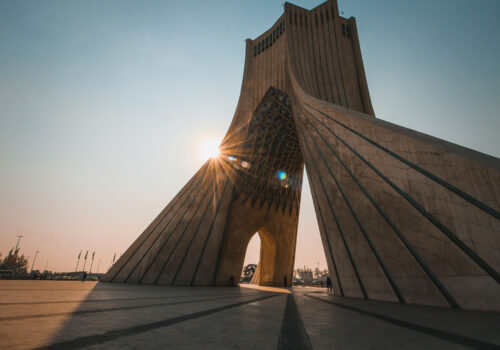
commentary & analysis

Our online publications feature thoughtful reflections and opinions on current events in the Middle East & North Africa.
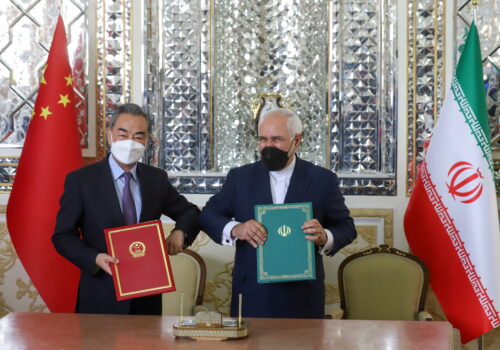
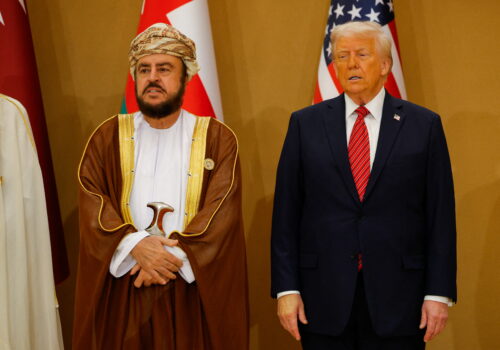
In-depth research & reports

Our reports feature policy-relevant analysis that focuses on transatlantic priorities while centering the concerns of citizens in the Middle East.
Podcasts
Explore our online publications

Our inspiration
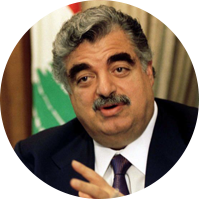
The Atlantic Council’s work on social, economic and human development issues in the Middle East honors the legacy of Rafik Hariri and his life’s mission to unlock the human and economic potential of the Arab world.

The Atlantic Council’s work on Middle East security honors the legacy of Brent Scowcroft and his tireless efforts to build a new security architecture for the region.

Leadership


Upcoming events

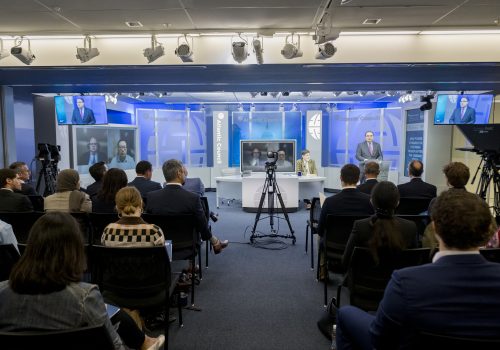
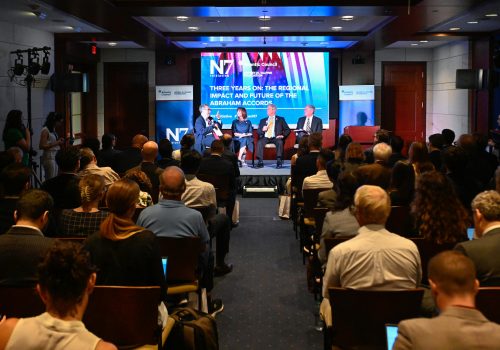
We convene the most important stakeholders on issues of primary concern to the transatlantic community when it comes the Middle East and North Africa, from senior US and Middle East government officials to civil society activists and budding entrepreneurs.
Past events

Stay Updated

Content

Report

Aug 3, 2023

Egypt’s stability is the GCC’s top priority in the region. Here’s why. 

By H.A. Hellyer

After the 2011-2013 revolution in Egypt, the author discussed the GCC's relationship with Egypt with a senior minister, who emphasized the importance of Egypt's stability. This sentiment has been shared by most GCC leaders over the past decade, though the way it has been expressed may have evolved. Political nuances in Cairo were considered less crucial, while the focus remained on the pragmatic and straightforward need for stability in Egypt.

Defense Policy Economy & Business

Report

Aug 3, 2023

Gulf engagement in Tunisia: Past endeavor or future prospect? 

By Sebastian Sons

Gulf states such as Saudi Arabia, the United Arab Emirates (UAE), and Qatar regard Tunisia as an important foreign policy partner within their regional sphere of influence. They also welcome Tunisia’s current autocratization under President Kais Saïed. However, Gulf states no longer pursue strategic goals there. As the region is undergoing a geopolitical shift toward more conflict management and reconciliation, the Gulf states consider Tunisia as a partner of choice in regional stability but no longer as a partner of necessity in terms of economic investment or development cooperation.

Civil Society Democratic Transitions

Report

Aug 3, 2023

The Western Sahara conflict: A fragile path to negotiations

By Riccardo Fabiani

The long-dormant conflict over Western Sahara has resurged in recent years, challenging regional stability. Diplomatic tensions between the main sides, coupled with the collapse of the 1991 UN-brokered cease-fire and US recognition of Moroccan sovereignty in 2020, have complicated the situation. The appointment of UN envoy Staffan de Mistura in 2021 offers hope for the revival of cease-fire talks, while the UN and the United States aim to stabilize the conflict through renewed diplomatic efforts.

Conflict International Organizations

Report

Aug 3, 2023

Libya: Back to the future?

By Karim Mezran and Alessia Melcangi

The current Libyan situation is complex, influenced by numerous factors, including the conditions of the 2011 revolution. The misconception of it being a whole people's revolution led to a focus on elections instead of national reconciliation, hindering the rebuilding of consensus and a new social contract.

Civil Society Conflict

Report

Aug 3, 2023

Irregular migration from North Africa: Shifting local and regional dynamics

By Matteo Villa and Alissa Pavia

Irregular migration from North Africa to Europe, especially through the Central Mediterranean route connecting Libya and Tunisia to Italy, is increasing once more. Italy has witnessed a surge in irregular arrivals, with approximately 136,000 migrants disembarking between June 2022 and May 2023, almost comparable to the high arrival period of 2014-2017 when around 155,000 migrants landed each year.

Human Rights Italy

MENASource

Aug 3, 2023

Mubarak for president of Egypt? Nostalgia may be on the upcoming Egyptian presidential ballot.   

By Shahira Amin

While Gamal's plans to succeed his father had fueled public anger in the last years of Hosni Mubarak's rule a lot has changed since.

Middle East North Africa

IranSource

Aug 3, 2023

Khamenei is the best option to negotiate over Iran’s nuclear program. The next Supreme Leader won’t be so willing. 

By Danny Citrinowicz  

Considering the new leader's need to accede to IRGC demands, it seems Iran's future Supreme Leader won’t be able to satisfy the West.

Iran Middle East

In the News

Aug 3, 2023

Arbit and Shalomov in Foreign Policy: Women Will Be the Biggest Victims of Israel’s Judicial Reforms

Israel Middle East

In the News

Jul 31, 2023

Svetlova quoted in Newsroom Post wishing a full recovery for a Yazidi girl who reunited with her family after nine years under ISIS captivity

By Atlantic Council

Extremism Middle East

In the News

Jul 31, 2023

Arbit quoted in The Herald on the role of Israel’s Supreme Court prior to the judicial overhaul

By Atlantic Council

Israel Middle East