About the center

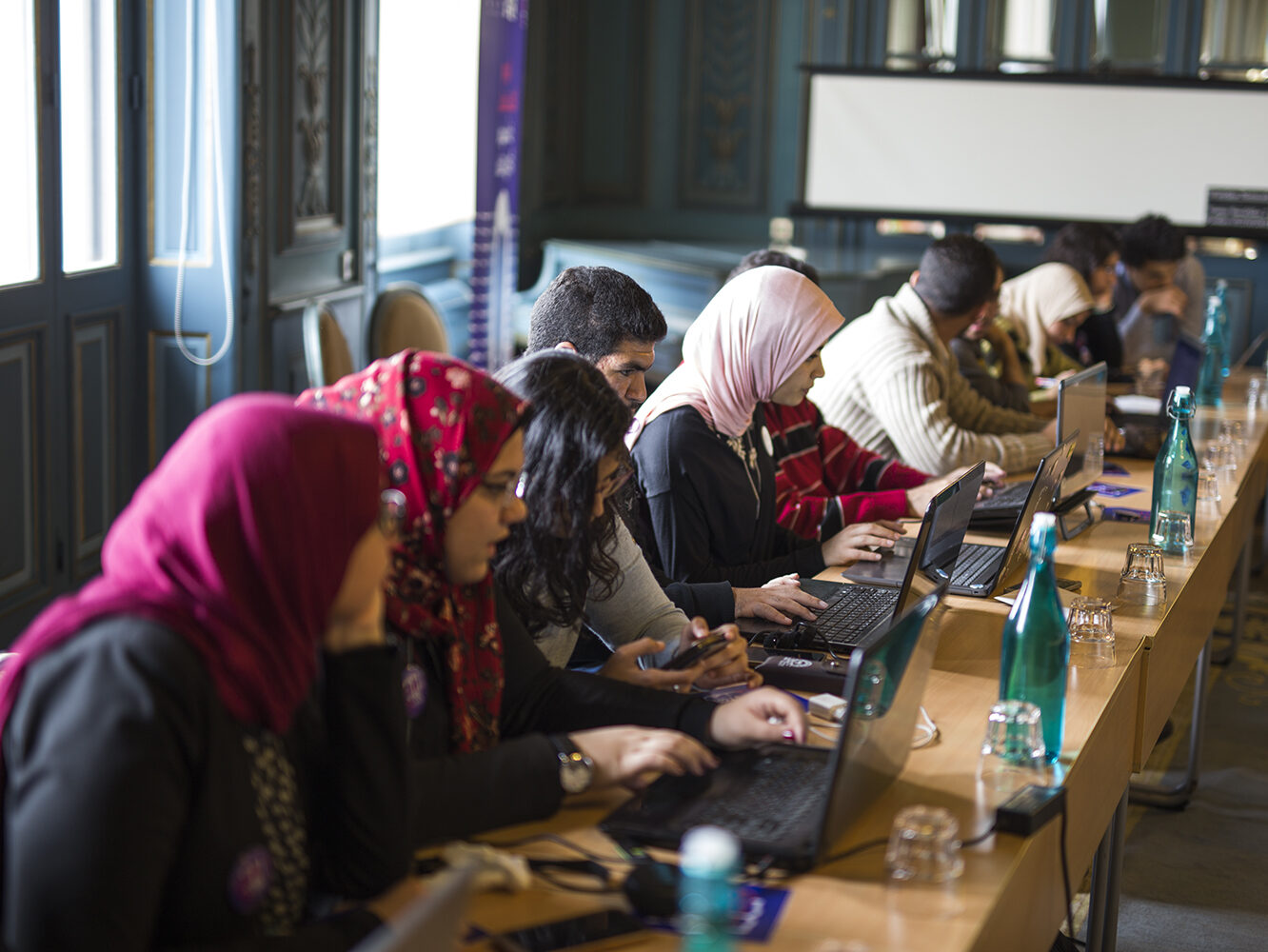
The Rafik Hariri Center for the Middle East examines the barriers preventing many people in the region from reaching their fullest potential. Our work also highlights success stories of individuals and institutions who overcame significant challenges in pursuit of social, economic, and political progress. Inspired by these examples, we delineate practical and implementable policy recommendations that policymakers in the United States, Europe, and the Middle East can implement to unleash the region’s economic and human potential.

Featured commentary & analysis
Featured in-depth research & reports
Leadership

Subscribe to get the latest analysis straight to your inbox

Events

We convene the most important stakeholders on issues of primary concern to the transatlantic community when it comes the Middle East and North Africa, from senior US and Middle East government officials to civil society activists and budding entrepreneurs.

Past events

Content

MENASource

Feb 13, 2019

Concerning Iran, the United States should go back to ‘speaking softly and carrying a big stick’

By Borzou Daragahi

Top officials of the administration of Donald J. Trump love to talk tough on Iran. Last year Trump warned in an all-capitals tweet that Iran “would suffer consequences the likes of which few throughout history have ever suffered before” if it threatened the US.  

Iran

SyriaSource

Feb 1, 2019

Post-conflict, how will Iran preserve its presence in Syria?

By Ghaith al-Ahmad

The Youth Sports Club, once considered one of the most prominent soccer clubs in Deir Ezzor city in eastern Syria, now marks the beginning of Iran’s cultural penetration project in Syria.

Iran Syria

SyriaSource

Jan 31, 2019

American policy at the crossroads

By Frederic C. Hof

Those who believe that Tehran and Moscow consider themselves home free, gleefully celebrating the political survival of their Syrian client without a care in the world, underestimate the knowledge and sophistication of Iranian and Russian officials.

Syria

SyriaSource

Jan 30, 2019

Consequences of the HTS take-over in northwest Syria

By Phillip James Walker, Esq.

While the Trump administration’s flip-flops on Syria and the looming withdrawal of US personnel from the country's northeast have rightly drawn a great deal of public attention, important developments have simultaneously unfolded without much notice in the northwest. Specifically, while all eyes have been on the territories held by the Kurds and their allies to the east, the Salafist Hay’at Tahrir al-Sham (HTS) militia has seized control of Idlib province and the adjacent opposition-held portions of western Aleppo and northern Hama, routing the Turkish-backed National Liberation Front (NLF).

Syria

MENASource

Jan 28, 2019

New technologies for a new Tunisia

By Wafa Ben-Hassine

With the new Start-Up Act, passed on April 2, 2018, Tunisia has started to clear the path for innovation that could lead to economic growth. The Act removed several bureaucratic hurdles that innovative projects faced when creating new business structures—vestiges of a system implemented in colonial times.

North Africa

MENASource

Jan 25, 2019

Yemen: Women, war & political marginalization

By Afrah Nasser

When Yemen’s last peace talks in Stockholm took place in December 2018, only one female delegate was at the negotiation table. Assistant Secretary of the Yemeni Popular Nasserist Party, Rana Ghanem was the only female member, in the Yemeni government delegation. Over the past three Yemen peace talks, only three women have sat at the negotiation table.

Yemen

MENASource

Jan 24, 2019

The Egyptian revolution: Eight years later

By Dr. H.A. Hellyer

Eight years ago today, a small group of Egyptians protested against their government. The protest grew, and led to millions of Egyptians coming to the streets across their country, eventually resulting in Hosni Mubarak resigning the presidency.

North Africa

SyriaSource

Jan 23, 2019

Consequences of the US withdrawal from Syria: the French perspective

By Ambassador Michel Duclos

French authorities were undoubtedly upset, if not very surprised, by US President Donald Trump’s sudden announcement of a withdrawal from the northeast of Syria. On several occasions during his talks with President Trump, especially when he came to Washington for a state visit in April 2018, French President Emmanuel Macron was very insistent that the US and their allies should stay, ultimately he did not change the American president’s decision and campaign commitment to end America’s wars abroad.

Syria

SyriaSource

Jan 17, 2019

The influence of domestic politics on foreign policy in Syria

By Emily Burchfield

On January 13, Prime Minister Benjamin Netanyahu announced that Israeli forces attacked Iranian weapons warehouses in Damascus the day prior, confirming similar reports by Syrian state media. What is unusual about Netanyahu’s statement is not the content—indeed, Israeli officials previously acknowledged carrying out hundreds of strikes on thousands of Iranian targets in Syria—but the context. The announcement broke with a “policy of ambiguity” under which Israel refuses to claim responsibility immediately after a specific attack; the rationale being to safeguard against potential retaliation. 

Israel Syria

SyriaSource

Jan 15, 2019

Can anything be salvaged?

By Frederic C. Hof

President Trump’s impulsive “out of Syria” tweet of December 19, 2018 may have sacrificed high value, low cost American leverage in eastern Syria for precisely nothing.  Russian, Iranian, and Assad regime alarm that the West would work with local Syrians in areas liberated from ISIS (ISIL, Daesh, Islamic State) to create the long-awaited governance alternative to Bashar al-Assad, family, and friends have all-but-evaporated. 

Syria