About the center

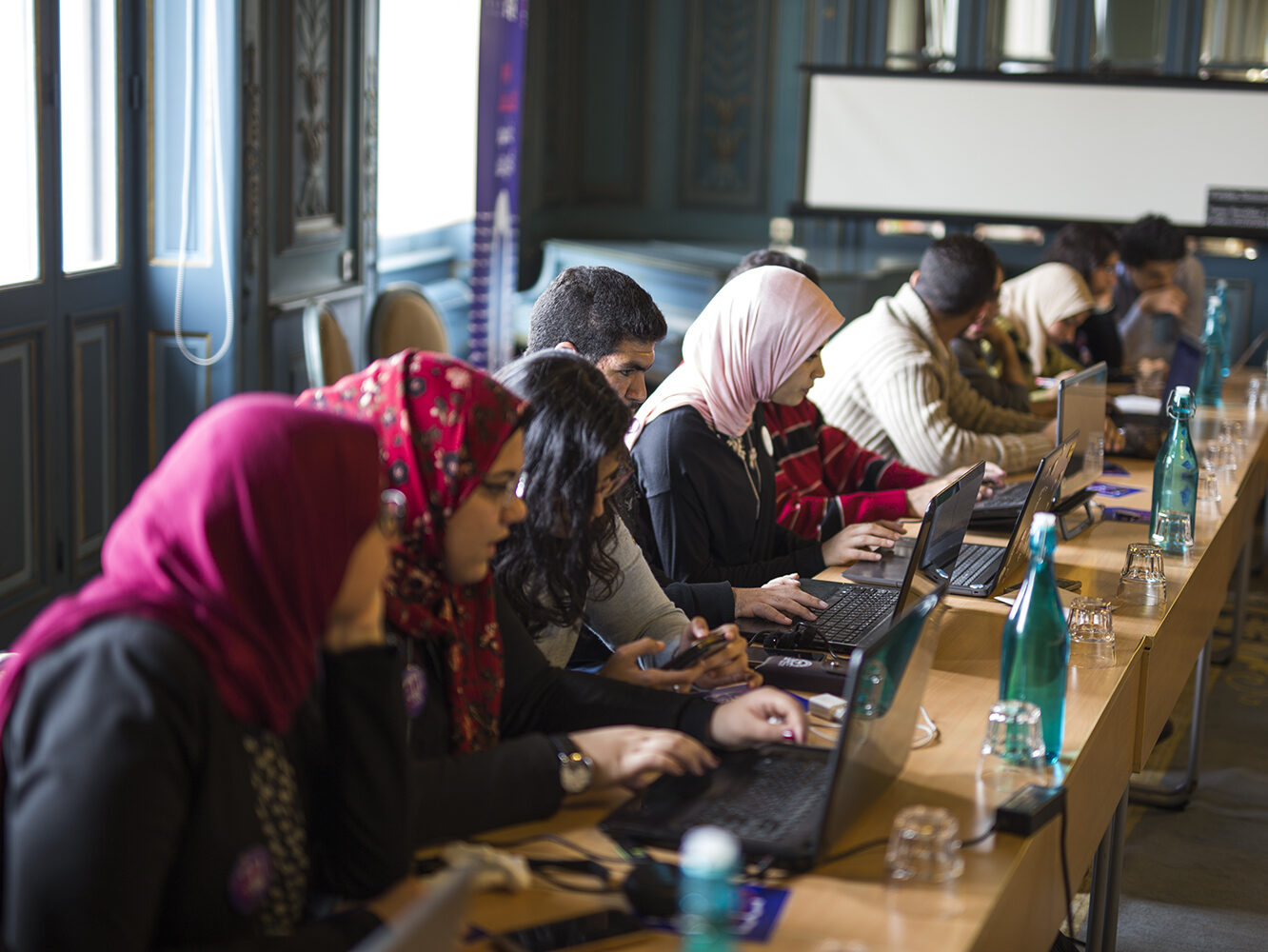
The Rafik Hariri Center for the Middle East examines the barriers preventing many people in the region from reaching their fullest potential. Our work also highlights success stories of individuals and institutions who overcame significant challenges in pursuit of social, economic, and political progress. Inspired by these examples, we delineate practical and implementable policy recommendations that policymakers in the United States, Europe, and the Middle East can implement to unleash the region’s economic and human potential.

Featured commentary & analysis
Featured in-depth research & reports
Leadership

Subscribe to get the latest analysis straight to your inbox

Events

We convene the most important stakeholders on issues of primary concern to the transatlantic community when it comes the Middle East and North Africa, from senior US and Middle East government officials to civil society activists and budding entrepreneurs.

Past events

Content

SyriaSource

Oct 29, 2018

Strategic change and its challenges

By Frederic C. Hof

During the Obama administration, Syria was treated as a two-part puzzle divided by the Euphrates River. East of the Euphrates, the objective was to degrade and destroy ISIS (ISIL, Daesh, Islamic State). The strategy was to support the anti-ISIS combat operations of a Kurdish (eventually Kurdish-dominated) militia with weapons, ammunition, supplies, and advisors on the ground, and combat aircraft aloft. Although the Trump administration believes it can take credit for having accelerated the anti-ISIS campaign, the objective and strategy in the east have remained constant.

Syria

SyriaSource

Oct 26, 2018

War games in Syria: a lesson in futility

By Aaron Stein

The conflict in Syria is not comparable to global thermonuclear war, or tic-tac-toe. However, the ultimate point of Joshua’s game with himself is to learn a critical lesson: futility. 

Syria

SyriaSource

Oct 23, 2018

What is the future of HTS in Idlib?

By Hosam al-Jablawi

In mid-September, Russia and Turkey signed an agreement regarding Idlib province in northern Syria. The agreement establishes a nine to twelve mile demilitarized zone (DMZ) between the Syrian regime and opposition forces along Idlib’s border. As part of the deal, Turkey pledged to find a solution to extremist groups in the province, withdraw heavy weapons from the region, and evacuate any presence of Hay’at Tahrir al-Sham (HTS)—an independent Salafi-jihadi group—fighters or moderate elements of the Syrian opposition by mid-October.

Syria

MENASource

Oct 22, 2018

The Khashoggi reset

By Frederic C. Hof

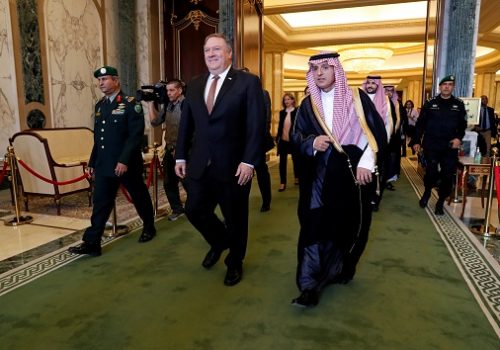
The murder of Jamal Khashoggi—a resident of the United States and a citizen of a Kingdom that owed him protection—highlights the purely transactional nature of the relationship between Riyadh and Washington.

Saudi Arabia

MENASource

Oct 19, 2018

Murder in Istanbul and the Turkish Saudi rivalry

By Aaron Stein

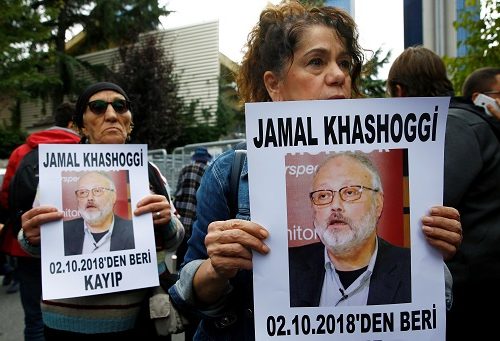
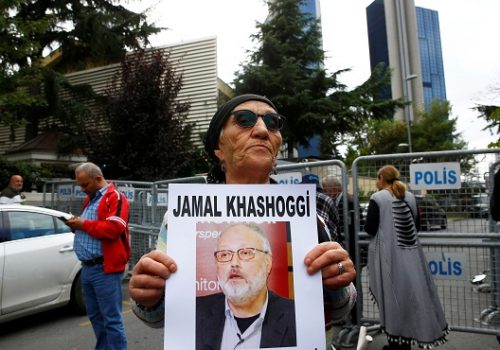
On October 2, 2018, Jamal Khashoggi, a Saudi national living in self-exile in the United States, walked into the Saudi consulate in Istanbul. That was the last time he was seen alive.

Saudi Arabia Turkey

SyriaSource

Oct 18, 2018

Consequences of the cold shoulder: US refugee policy and Middle East instability

By Seth Hershberger

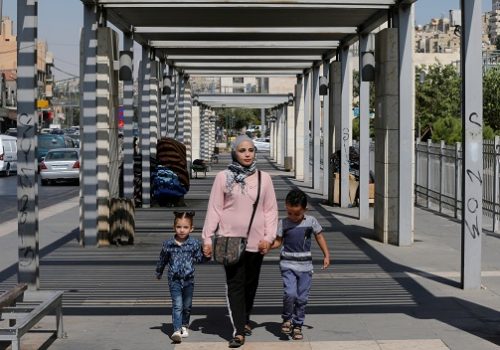
On October 4, President Trump officially approved a refugee cap of 30,000—an all-time low. In August, despite previously increasing aid to Jordan, the US decided to end all UNRWA funding for Palestinian refugees in Jordan, Lebanon, Syria, and Palestine. This summer, the Supreme Court upheld Trump’s controversial travel ban that affects refugees and immigrants alike. Of the eight countries listed, five are in the Middle East/North Africa.

Middle East

MENASource

Oct 16, 2018

The chilling effect of the Khashoggi case: A trigger for Arabs living in fear

By Tuqa Nusairat

Since the apparent murder-disappearance of Saudi journalist Jamal Khashoggi on October 2, analysts have focused primarily on the implications for US-Saudi relations and the future of Crown Prince Mohammed Bin Salman’s vision for domestic reforms. Absent from policy discussions and analysis is the impact of brutally silencing a mild critic of an autocratic regime on the psyche of 450 million Arabs, most of whom still live under regimes that severely limit freedoms of speech, protest, political participation, and religion.

Saudi Arabia

MENASource

Oct 15, 2018

The Khashoggi affair: Back to the future

By Nabeel Khoury

From the abuses of the male guardianship in Saudi Arabia to arrest and torture of dissenters in Egypt and the jailing of environmentalists and journalists in Iran, the Middle East is rife with human rights abuses. Nor is this something new.

Saudi Arabia

SyriaSource

Oct 10, 2018

Discontent among Assyrians in Syria’s northeast

By Ammar Hammou and Madeline Edwards for Syria Direct

Prominent Assyrian Christian writer and dissident Souleman Yusph was in his home in northeastern Syria’s Qamishli last Sunday night when local security personnel reportedly burst in, arrested him, and carried off his laptop and cell phones with them. By the following Thursday night, sixty-one year old Yusph—a vocal critic of the majority-Kurdish Self-Administration that controls the vast majority of […]

Syria

MENASource

Oct 9, 2018

A case in context: From the Lebanese Civil War to the Special Tribunal for Lebanon

By Faysal Itani and Anthony Elghossain

The Special Tribunal for Lebanon has just heard the closing arguments in Ayyash et. al, on September 21, 2018; a case in which prosecutors charged four members or associates of Hezbollah with the assassination of former Lebanese Prime Minister Rafic Hariri. Thirteen years after the assassination, judges are in the process of making their judgement.

Middle East Syria