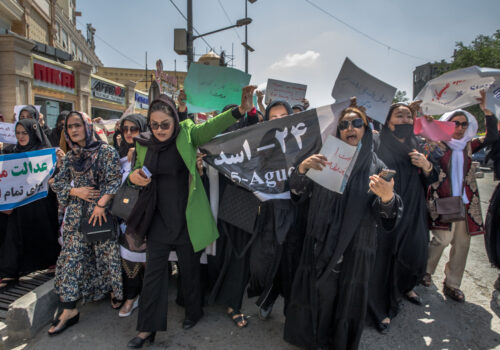
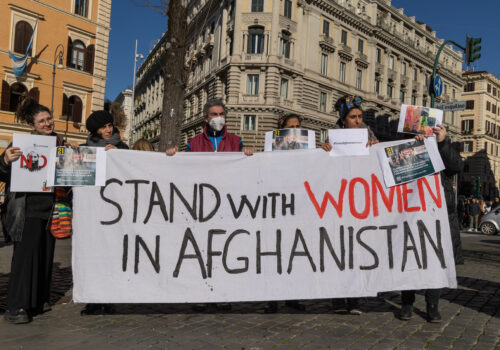
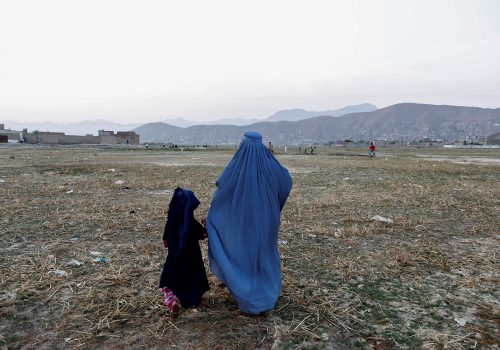
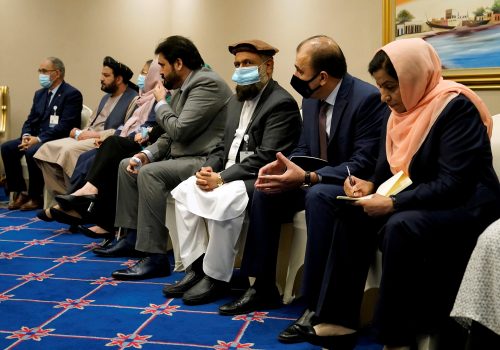
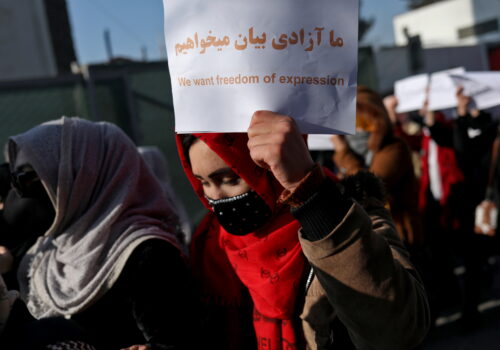
After the Taliban’s return to power on August 15, 2021, women in Afghanistan are treated as second-class citizens, systematically stripped of their rights. Over eighty decrees issued by the Taliban confine women to their homes and ban girls from attending school, turning Afghanistan into a prison for women and girls.

This gender apartheid is reinforced by new educational curricula and severe restrictions on women’s participation in every aspect of society. Women’s protests against these injustices have been met with harsh repression, including imprisonment, torture, and accusations of being influenced by foreign entities.

Inside the Taliban’s gender apartheid, a joint project of the Civic Engagement Project and the Atlantic Council’s South Asia Center, highlights the stories of women who have courageously resisted these injustices—women who have endured imprisonment and brutality for their peaceful demands for basic rights. By refusing to remain silent and shedding light on the violence they face, their testimonies serve as evidence in the fight for justice.

The women who have survived this regime are now calling for international recognition of the Taliban’s gender apartheid as a crime against humanity. This recognition would not only validate their suffering but could also challenge the Taliban’s grip on power and pave the way for transitional justice, offering a potential path to healing and justice for Afghan women and girls. 
The South Asia Center is the hub for the Atlantic Council’s analysis of the political, social, geographical, and cultural diversity of the region. ​At the intersection of South Asia and its geopolitics, SAC cultivates dialogue to shape policy and forge ties between the region and the global community.
Content

In the News

Apr 28, 2021

Theros and Halaimzai in Chatham House: US withdrawal will not end the forever war

By Atlantic Council

Afghanistan
Defense Policy

New Atlanticist

Apr 23, 2021

Hope amid a ‘window of uncertainty’ for Afghanistan

By Larry Luxner

“The Taliban have a choice to make at this time; they can, in fact, be pragmatic or they can be permanent pariahs,” former US Secretary of State Madeleine Albright said at the launch of the "Transatlantic charter on Afghan sovereignty, security, and development."

Afghanistan
Conflict

Feature

Apr 22, 2021

A transatlantic charter for peace and security in Afghanistan

By South Asia Center

The Atlantic Council’s South Asia Center presents the exclusive launch of the Transatlantic Charter on Afghanistan as part of the Strategic Dialogues on and with Afghanistan.

Afghanistan
Europe & Eurasia

In the News

Apr 21, 2021

Ashford in Inkstick: A promise to end America’s war in Afghanistan

By Atlantic Council

On April 21, Emma Ashford published an op-ed in Inkstick, which highlighted the importance of the Biden administration choosing Sept. 11. 2021 as the withdrawal date from Afghanistan. She argues that the choice of Sept. 11 makes it far more certain that this time, the withdrawal is for real. “The American war in Afghanistan is […]

Afghanistan
Politics & Diplomacy

In the News

Apr 21, 2021

Akhtar in Pakistan Politico: Come September: Holding stakeholders responsible for the chaos in Afghanistan

By Atlantic Council

Afghanistan
Central Asia

In the News

Apr 18, 2021

Peek in NY Daily News: “Salute Biden’s bravery on Afghanistan”

Afghanistan
Conflict

SouthAsiaSource

Apr 16, 2021

Dignity and fair negotiations is what we Afghans want

By Ejaz Ahmad Malikzada

When the United States and its allies entered Afghanistan following the 9/11 attacks, it did not merely sign up to bring human rights to the Afghan people or to fight a local insurgent group. Indeed, the intervention was driven just as much by the US-led global war on terror, a fight in which we, the people of Afghanistan, have bled and sacrificed thousands of military and civilian lives alongside our US and NATO partners.

Afghanistan
Peacekeeping and Peacebuilding

In the News

Apr 16, 2021

Kroenig and Ashford debate US withdrawal from Afghanistan and Russia’s intentions behind a military buildup on the Ukrainian border

By Atlantic Council

On April 16, Foreign Policy published a biweekly column featuring Scowcroft Center deputy director Matthew Kroenig and New American Engagement Initiative senior fellow Emma Ashford discussing the latest news in international affairs. In this column, they discuss Biden’s plan to withdraw all US forces from Afghanistan by September 11, the significance of Russia military buildup on the border […]

Afghanistan
Central Asia

SouthAsiaSource

Apr 15, 2021

Khuda hafez Afghanistan and maybe Pakistan!

By Shuja Nawaz

20 years after invading Afghanistan to punish the Taliban for harboring Osama bin Laden, President Joe Biden is saying goodbye to Afghanistan. Regardless of the main reason why President Biden is extracting the US military and hence NATO from Afghanistan, the people of Afghanistan may end up being sacrificed and left to the depredations of the Taliban and Islamic State.

Afghanistan
Pakistan

In the News

Apr 15, 2021

Nawaz quoted in Nikkei Asia on President Biden’s orders of military withdrawal from the Afghan war

By Atlantic Council

Afghanistan
Peacekeeping and Peacebuilding

Experts