About the Council

The Atlantic Council promotes constructive leadership and engagement in international affairs based on the Atlantic Community’s central role in meeting global challenges. The Council provides an essential forum for navigating the dramatic economic and political changes defining the twenty-first century by informing and galvanizing its uniquely influential network of global leaders. Through the papers we write, the ideas we generate, and the communities we build, the Council shapes policy choices and strategies to create a more secure and prosperous world.

NATO 20/2020

Twenty bold ideas to reimagine the Alliance after the 2020 US election

More than two decades after NATO’s inspired decision to invite former adversaries to join its ranks, the Alliance is in need of equally captivating ideas. The essays in this volume are intended to push the Alliance to think boldly and creatively in the service of recapturing the public’s imagination.
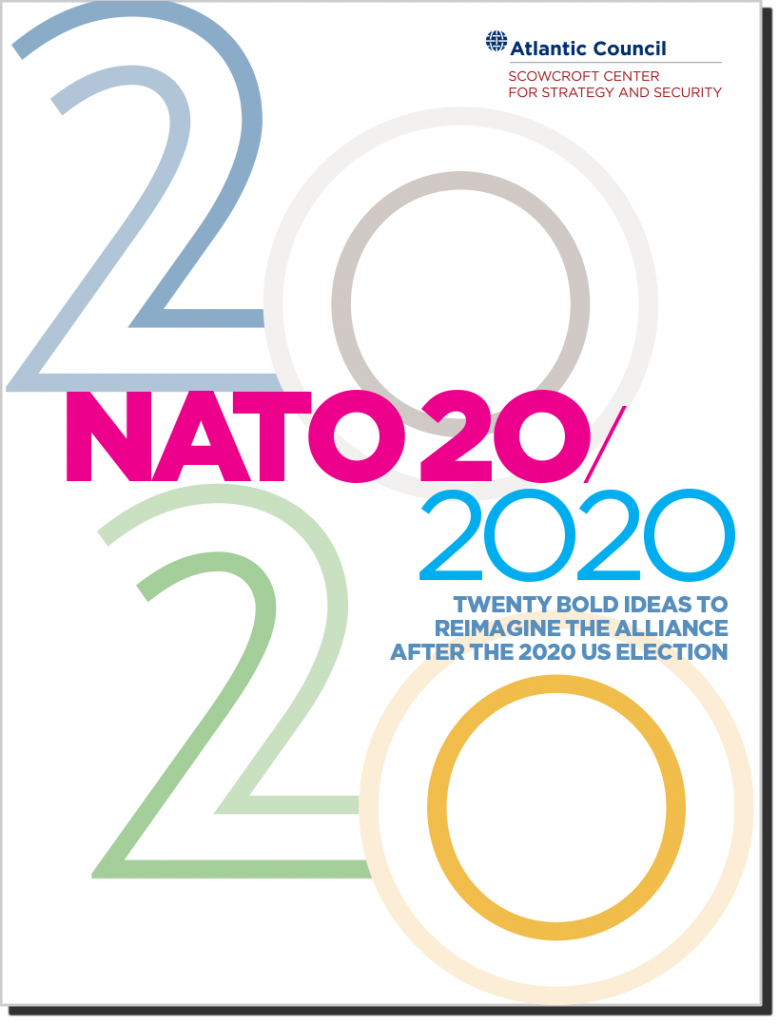
Read our provocative essays on the future of NATO

Explore the podcast series

Making a difference

Learn more about the Atlantic Council’s insights & impact through these stories of how our regional and thematic programs are making a difference not only in shaping how we view global issues but also in shaping their outcome.
Latest commentary and analysis

Latest in-depth research and reports

Content

In the News

Jul 1, 2021

Qaddour in Foreign Policy: When Humanitarian Aid Becomes a Bargaining Chip

By Atlantic Council

Human Rights International Organizations

In the News

Jul 1, 2021

Ashford in H-Diplo: When Donald Met Washington

By Atlantic Council

On July 1, Emma Ashford’s essay on Donald Trump’s foreign policy legacies was published in the ISSF/H-Diplo series on America and the world after Trump. “It is not true that America has nothing to fear from China and Russia, or that the U.S. can be sure of their benign intentions.  Yet Trump’s time in office […]

China English

In the News

Jul 1, 2021

Eftimiades in Voice of America on Chinese cyber attacks

By Atlantic Council

Voice of America interviews Forward Defense Nonresident Senior Fellow Nicholas Eftimiades on Chinese cyberattacks in Afghanistan.

Afghanistan China

In the News

Jul 1, 2021

D’Anieri and Posner in The National Interest: Why Russia should reconsider its ban against Bard College

By Atlantic Council

Politics & Diplomacy Rule of Law

In the News

Jun 30, 2021

Nurkin in the Sydney Morning Herald on a space-based conflict with China

By Atlantic Council

Forward Defense Nonresident Senior Fellow Tate Nurkin quoted in an article in the Sydney Morning Herald titled "If the US went to war with China, who would win? It depends how it starts."

China Defense Industry

In the News

Jun 30, 2021

Sadat quoted by SpaceNews on transfers to Space Force

By Atlantic Council

Forward Defense Nonresident Senior Fellow Mir Sadat quoted in an article for Space News titled "U.S. Army, Navy, Marine Corps service members selected to transfer to Space Force"

Space Space Security

In the News

Jun 30, 2021

Lipner quoted in Sarkul Avsat on Israel-US relations

By Atlantic Council

Crisis Management Israel

In the News

Jun 30, 2021

Zarkadakis in Fortune: How selling our personal data can fund universal basic income

By the GeoTech Center

UBI used to be a fringe idea, but the COVID-19 pandemic has put it firmly in the spotlight. The trillions of dollars spent on both sides of the Atlantic to keep people out of the office during lockdowns have been a massive experiment in UBI. So where do we go from here?

Technology & Innovation

GeoTech Cues

Jun 30, 2021

Raghuveera with the Turkish Heritage Organization: A discussion on cryptocurrency at the global scale

By the GeoTech Center

In a recent discussion with with the Turkish Heritage Organization, Nikhil Raghuveera highlights the geopolitical implications of cryptocurrencies and central bank digital currencies (CBDC). He explains the three ways blockchain technology affects foreign policy and global alliances. First, CBDC creates the opportunity for a separate payment system from the US dollar, which provides countries like China more political power and the ability to bypass US sanctions. Second, the lack of a standard regulatory framework around digital assets domestically and internationally exposes consumers to cyberattacks and financial risks. Third, many new applications will build upon existing decentralized financial technologies, which will require new international partnerships and relations. In order to create a more equitable world, Raghuveera advocates for the inclusion of marginalized communities and a broader consideration of stakeholders when creating these new technologies and subsequent regulatory policies.

Digital Currencies Technology & Innovation

In the News

Jun 30, 2021

Fontenrose quoted in Cleveland Jewish News on Iran’s intentions to acquire a nuclear bomb in the future

By Atlantic Council

Defense Policy Iran