

Financial Sanctions and Economic Coercion

Financial sanctions and other forms of economic coercion have become policy tools of choice for the US government to deter illegal activity by international actors or to pressure governments into reversing actions that harm US interests. Yet these instruments and their potential pitfalls are often misunderstood. Restrictive economic measures such as financial sanctions, export controls, tariffs, and investment screening can play an important role in advancing certain policy objectives, but they risk being ineffective if misapplied or poorly implemented. Policymakers must also recognize the impact of economic statecraft on the private sector, which bears many of the compliance burdens and operational costs associated with these measures.


Energy Sanctions Dashboard

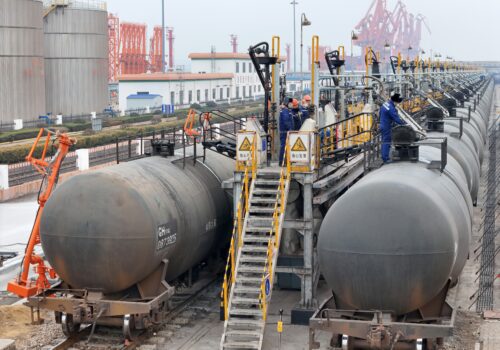
This dashboard focuses on US sanctions and restrictive measures placed on crude oil from Russia, Iran, and Venezuela—including the unintended consequences and the lessons learned.


Econographics

Apr 17, 2025

Russia Sanctions Database

By
Kimberly Donovan, Maia Nikoladze, Lize de Kruijf

The Atlantic Council’s Russia Sanctions Database tracks the level of coordination among Western allies in sanctioning Russian entities, individuals, vessels, and aircraft, and shows where gaps still remain.

Eastern Europe
Economy & Business

Recent analysis

Programs

At the intersection of economics, finance, and foreign policy, the GeoEconomics Center is a translation hub with the goal of helping shape a better global economic future.
Content

New Atlanticist

Jun 24, 2019

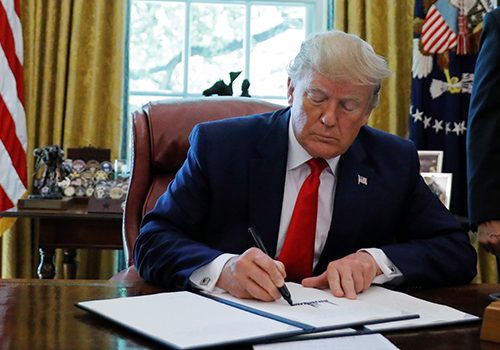
Trump sanctions Iran’s Supreme Leader

By Ashish Kumar Sen

The executive order allows US Treasury Secretary Steven Mnuchin to impose sanctions on officials appointed by Iranian Supreme Leader Ali Khamenei and those who provide material support to his office.

Financial Sanctions and Economic Coercion Iran

Event Recap

Jun 20, 2019

Russian influence in Venezuela: What should the United States do?

By Domingo Sadurni

On June 20, the Atlantic Council’s Adrienne Arsht Latin America Center and its Eurasia Center co-hosted a public event to discuss the extent of Russian involvement in Venezuela, Moscow’s motivations and possible next moves, and how the United States should react. As a wave of international and domestic support for a democratic transition is sweeping […]

English Financial Sanctions and Economic Coercion

New Atlanticist

Jun 19, 2019

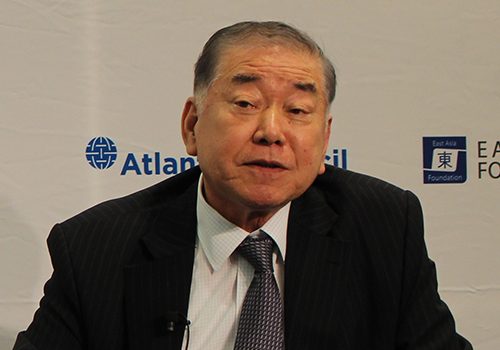
North Korea must regain Washington’s trust, South Korean official says

By David A. Wemer

Special adviser to South Korean President Moon Jae-in argues that diplomatic and security assurances—not sanctions relief—are the key to achieving North Korean denuclearization

Financial Sanctions and Economic Coercion Korea
BRexit Sanctions

Program Impact Story

Jun 12, 2019

Britain’s sanction post-Brexit

By Atlantic Council

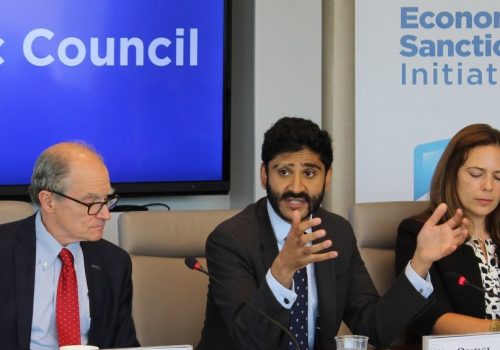
On June 12, the Global Business and Economics Program’s Economic Sanctions Initiative hosted a private roundtable on the implications of Brexit for the United Kingdom’s sanctions policy, featuring Qudsi Rasheed, sanctions envoy for the UK government. He explained in detail the UK’s new institutional set-up for sanctions policy. Mr. Rasheed also discussed UK-US-EU cooperation on […]

Economy & Business European Union

Event Recap

Jun 11, 2019

Sanctions Lunch with Brian Hook: Prospects for the United States’ Maximum Pressure Campaign on Iran

By Global Business & Economics

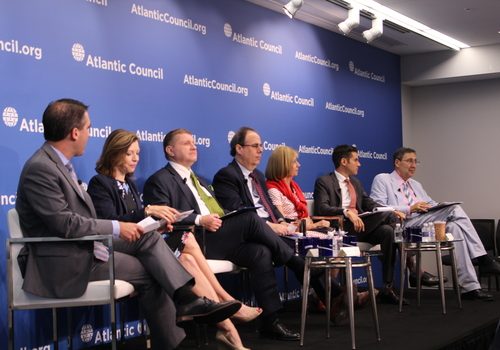
On June 11, the Atlantic Council’s Global Business & Economics Program’s Economic Sanctions Initiative hosted a roundtable discussion on the prospects of the United States’ maximum pressure campaign on Iran, featuring Brian Hook, US Special Representative for Iran and Senior Policy Advisor to the Secretary of State.

Economy & Business European Union
Lunch with Hook and Sanctions

Program Impact Story

Jun 11, 2019

Sanctions lunch with Brian Hook: Prospects for the Untied States’ maximum pressure campaign on Iran

By Atlantic Council

The Global Business and Economics (GBE) program hosted Brian Hook, US Special Representative for Iran and Senior Policy Advisor to the Secretary of State. The conversation focused on current US sanctions strategy regarding Iran, and he outlined the Trump administration’s rationale behind both the withdrawal from the Iran Nuclear Deal and the maximum pressure campaign. […]

Financial Sanctions and Economic Coercion Iran

Event Recap

Jun 10, 2019

Transatlantic Ties After the EU Elections: Prospects for Transatlantic Cooperation in Trade and Sanctions

By Global Business & Economics Program

On June 10, the Atlantic Council’s Global Business & Economics Program’s and Future Europe Initiative hosted a roundtable discussion on the current state and the future of transatlantic ties featuring Caroline Vicini, Deputy Head of the EU Delegation to the United States. The event also served as a farewell to Ms. Vicini, who after several years of distinguished leadership in her current position will be soon leaving Washington, DC.

Economy & Business European Union

EconoGraphics

Jun 3, 2019

US Cuba policy: EU and Canadian firms to suffer?

By BY OLE MOEHR | GRAPHICS BY SHIQING HUA, FRANCIS AUBEE, AND NICK BROWN

On April 17 2019, US Secretary of State Michael Pompeo announced an important change in the United States’ policy toward Cuba: Title III of the Cuban Liberty and Democracy Solidarity Act of 1996 (LIBERTAD Act) would no longer be suspended. As a result of this decision, US claimants can now seek compensation for property confiscated by the Castro government. The move has important implications for US and foreign companies doing business in Cuba. This edition of the EconoGraphic explains the history and purpose of the LIBERTAD Act, evaluates the policy’s potential impact on US allies’ economic interests in Cuba, and highlights its implications for the pressure campaign against the Maduro regime in Venezuela.

Cuba Economy & Business

New Atlanticist

May 31, 2019

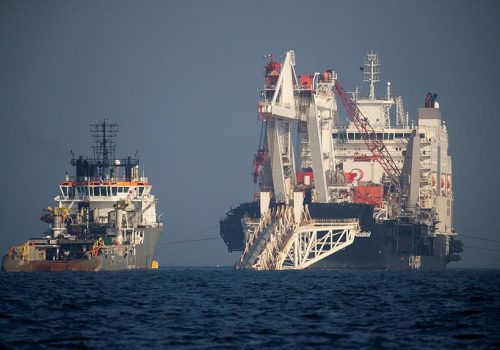
US Congress would undermine transatlantic alliance with Nord Stream 2 sanctions

By Samantha Sultoon

Despite touting its role as the pro-transatlantic alliance arm of the US government, Congress is threatening to undermine critical European partners with new legislation that would impose sanctions on key allies.

European Union Financial Sanctions and Economic Coercion

UkraineAlert

May 23, 2019

Critical questions for Ukraine’s new president

By Andreas Umland

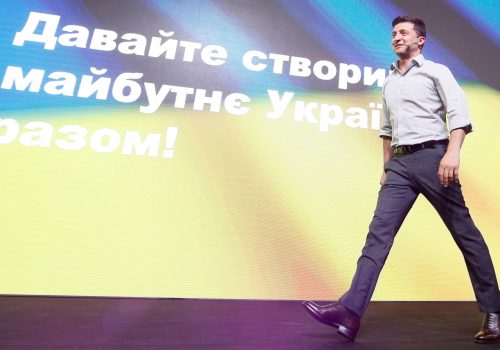
Ukraine’s domestic politics will change fundamentally in 2019. On May 20, Volodymyr Zelenskiy was inaugurated as president of Ukraine. The country’s upcoming parliamentary elections this summer or autumn will likely reconfigure much of the governing elite, and lead to deep changes in the country’s legislative, executive, and judicial branches. Five major topics will keep Kyiv […]

Conflict Eurozone

Experts