Eurasia Center

The Atlantic Council’s Eurasia Center promotes policies that secure vital American interests by strengthening stability, opposing aggression by US adversaries, and supporting democratic values and economic opportunities from Eastern Europe to the South Caucasus to Russia to Central Asia.

stay updated

Signup to receive the latest on events, news, and publications for all of Eurasia.

our regions in focus
Flagship publications

Featured events
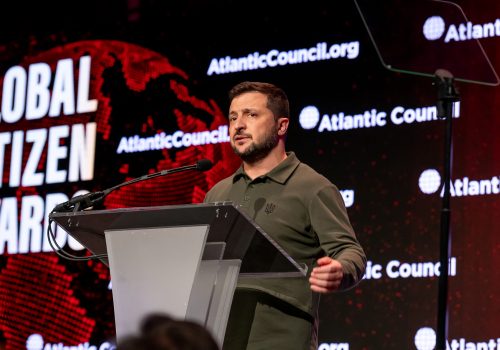
The Eurasia Center regularly convenes with regional leaders and key global figures to galvanize support international support a free, prosperous, and peaceful future in Eurasia.

Leadership

Follow us on social media and support our work

Experts

Content

BelarusAlert

Feb 17, 2021

Soviet-style Belarus dictator goes back to the future

By Vladislav Davidzon

Belarus dictator Alyaksandr Lukashenka's recent People's Assembly was a Soviet-style affair designed to help him reclaim leadership of the country following six months of nationwide pro-democracy protests.

Belarus Civil Society

BelarusAlert

Feb 17, 2021

Innovative opposition defies Belarus dictator Lukashenka

By Brian Whitmore

The adaptive tactics of the Belarusian street, combined with the emergence of dissident security service veterans, illustrate that the Lukashenka regime and its Kremlin allies have lost the initiative.

Belarus Civil Society

BelarusAlert

Feb 17, 2021

Exploring Belarusian civil society

By Andrew D’Anieri

For more than six months, Belarus has been rocked by an unprecedented wave of pro-democracy protests. This brief guide aims to introduce some the NGOs active in Belarus as the country seeks historic change.

Belarus Civil Society

UkraineAlert

Feb 16, 2021

Putin the Poisoner

By Peter Dickinson

Putin the Poisoner: Russian President Vladimir Putin has adopted a poisonous approach to international politics in a bid to defend his own authoritarian regime by dividing, discrediting, and destabilizing the democratic world.

Disinformation European Union

UkraineAlert

Feb 16, 2021

Why is Ukraine still not in NATO?

By Dmytro Kuleba

Ukrainian President Volodymyr Zelenskyy said recently that he'd like to ask US President Joe Biden, "Why is Ukraine still not in NATO?" Ukraine's Foreign Minister Dmytro Kuleba agrees that this question has never been more pertinent.

Conflict NATO

UkraineAlert

Feb 16, 2021

IMF puts Ukraine on pause over corruption concerns

By Anders Åslund

A recent IMF mission to Ukraine ended without reaching any decision on a new tranche. IMF concerns over Ukraine's anti-corruption efforts will increase the pressure on President Zelenskyy.

Corruption International Financial Institutions

Issue Brief

Feb 16, 2021

Russia’s nuclear activity in 2019: Increasing strength and pressure

By Maxim Starchak

Russia's nuclear arsenal is a cornerstone of its political and military influence. 2019 stands out as a year with notable shifts in activity, with key indications that nuclear forces will remain a critical mechanism for Moscow to exert pressure.

Conflict Nuclear Deterrence

New Atlanticist

Feb 12, 2021

The rebirth of the State Department’s Office of Sanctions Coordination: Guidelines for success

By Daniel Fried, Edward Fishman

While sanctions are increasingly a tool of first resort in US foreign policy, the State Department has lacked a disciplined process for coordinating sanctions policy. But the new Office of Sanctions Coordination is an opportunity to fix this problem.

Economy & Business Financial Sanctions and Economic Coercion

In the News

Feb 12, 2021

Snegovaya quoted by Troy on impact of Russian information operations in the US

By Atlantic Council

Digital Policy Disinformation

UkraineAlert

Feb 11, 2021

Rising EU-Russia tensions are good news for Ukraine

By Oleksiy Goncharenko

European foreign policy chief Josep Borrell's disastrous recent visit to Moscow has sparked a crisis in Russia-EU relations that could end up being to Ukraine's advantage.

Conflict European Union